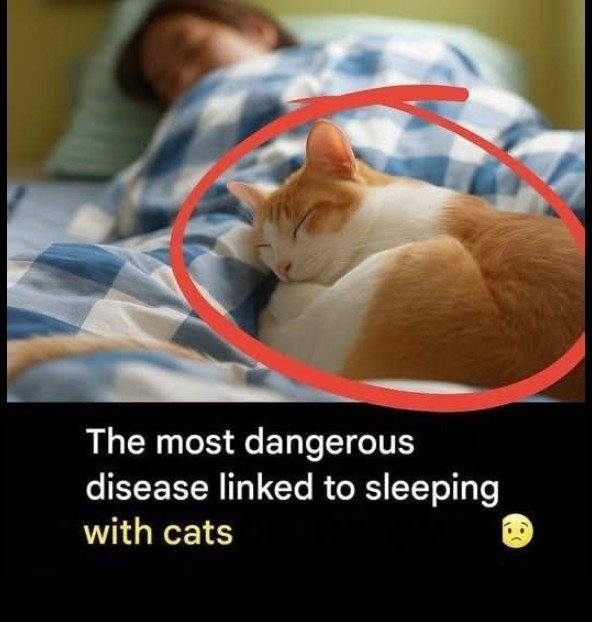
The Most Serious Illness from Sleeping with Cats: What You Need to Know and How to Prevent It
Sleeping with cats can be cozy, but it may carry health risks. Learn about the most serious illness associated with cats and tips to stay safe while enjoying your feline friend.
Cozy Companions—or Hidden Risks?
Sharing your bed with a cat is a comforting ritual for many pet owners.
-
The soft purring
-
The warmth
-
The emotional comfort
But while cats are generally clean and loving, they can carry certain parasites or infections that may be transmitted to humans.
The most serious illness linked to sleeping closely with cats is toxoplasmosis, caused by the parasite Toxoplasma gondii.
What Is Toxoplasmosis?
Toxoplasmosis is an infection caused by a single-celled parasite that can live in cats.
-
Cats shed the parasite in their feces
-
Humans can become infected through accidental ingestion of contaminated materials
How It Spreads
-
Cleaning a litter box without proper hygiene
-
Contact with contaminated soil or surfaces
-
Rarely, through contaminated food
Sleeping with a cat doesn’t automatically transmit toxoplasmosis—but if contaminated litter or outdoor dirt comes into contact with bedding, it can increase risk.
Who Is Most at Risk?
While most healthy adults experience mild or no symptoms, certain groups should be especially cautious:
-
Pregnant women – Toxoplasmosis can cause birth defects or miscarriage
-
Immunocompromised individuals – Can lead to severe complications, including brain or organ involvement
-
Older adults or people with chronic illnesses may also experience more severe symptoms
Symptoms to Watch For
Most people do not notice symptoms, but some may experience:
-
Mild flu-like symptoms (fever, fatigue, swollen lymph nodes)
-
Muscle aches
-
Severe cases can affect the brain, eyes, or other organs
Pregnant women or immunocompromised individuals should seek medical advice if exposed.
Prevention Tips for Cat Lovers
You don’t have to give up sharing your bed, but safety precautions matter.
1. Keep Litter Boxes Clean
-
Scoop daily using gloves
-
Wash hands thoroughly afterward
-
Pregnant women or high-risk individuals should avoid handling litter
2. Wash Hands Often
-
After touching your cat
-
After gardening or touching soil
-
After handling raw meat, which can also harbor Toxoplasma
3. Keep Cats Indoors
-
Indoor cats are less likely to hunt infected prey
-
Reduces exposure to soil-borne parasites
4. Maintain a Clean Bedroom
-
Wash bedding regularly in hot water
-
Keep the sleeping area free of litter or dirt
-
Vacuum floors and furniture frequently
5. Regular Vet Checkups
-
Ensure your cat is healthy and dewormed
-
Regular vet visits reduce risk of parasites and infections
6. Avoid Feeding Raw Meat
-
Cats eating raw meat are more likely to harbor parasites
-
Cook meat thoroughly or use high-quality commercial food
Real-Life Scenario
Sarah, a cat owner, enjoyed her nightly routine of sleeping with her two cats.
-
She always washed her hands after cleaning the litter
-
Vacuumed and washed bedding weekly
Even though she shared her bed, she remained healthy, demonstrating that precautions significantly reduce risk.
Common Misconceptions
-
“Cats are dirty” – Most domestic cats are very clean and groom themselves
-
“You can catch toxoplasmosis just by petting” – Unlikely if you practice proper hygiene
-
“Pregnant women must abandon cats” – Not necessary with proper precautions
Signs You Should See a Doctor
Seek medical attention if you notice:
-
Persistent flu-like symptoms after exposure
-
Vision changes or eye pain
-
Fever or fatigue in immunocompromised conditions
-
Concern about exposure during pregnancy
A simple blood test can confirm exposure to Toxoplasma gondii.
Sleeping with your cat is generally safe for most people—but toxoplasmosis is the most serious illness to be aware of.
-
Practice good hygiene
-
Keep cats indoors and well-fed
-
Clean litter boxes carefully
-
Take extra precautions if pregnant or immunocompromised
With mindful habits, you can enjoy the warmth and companionship of your feline friend safely.
Tip: Share this guide with friends and family who love sleeping with their cats—prevention is easier than treatment.