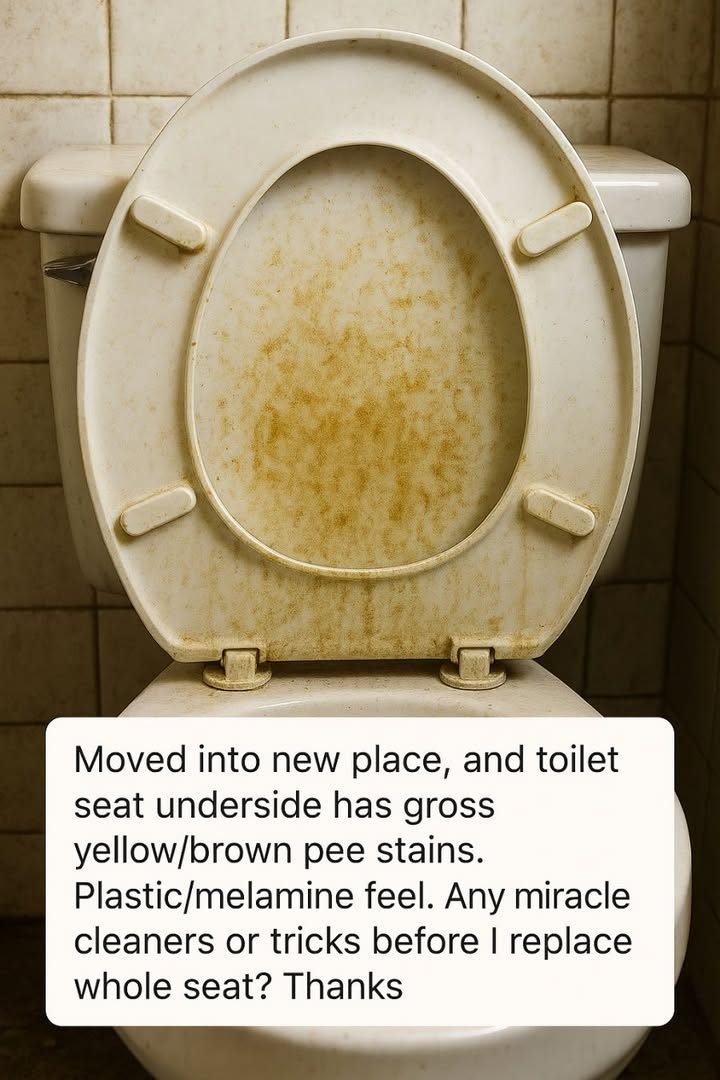
How to Remove Gross Yellow-Brown Pee Stains from the Underside of a Toilet Seat (Without Replacing It)
Struggling with yellow-brown toilet seat stains? Discover safe, effective cleaning hacks that restore your toilet without replacing the seat.
Introduction
You just moved into a new place, excited to make it your own… until you lift the toilet seat and see it: gross yellow-brown stains lurking underneath. The thought alone makes you cringe, and the first impulse might be to replace the whole seat.
But hold on—before you spend money on a new toilet seat, there are safe, effective cleaning tricks that can make your seat look fresh again. In this guide, we’ll cover proven methods for plastic and melamine seats, why these stains happen, and step-by-step strategies to remove them without harsh chemicals.
Why Toilet Seats Get Stained
Even if the toilet looks clean from the top, the underside is often neglected. Stains are caused by:
- Uric acid deposits from urine
- Hard water minerals
- Residual bacteria buildup over time
Plastic and melamine seats are non-porous, so stains often sit on the surface—but if left untreated, they can discolor permanently.
Essential Safety Tips Before You Start
- Wear gloves – protects skin from bacteria and cleaning agents
- Ventilate the bathroom – reduces chemical fumes
- Avoid abrasive tools – steel wool or harsh scrubbing pads can scratch plastic and melamine
Miracle Cleaners and Household Heroes
Here’s a breakdown of the most effective cleaning solutions that work for plastic/melamine:
1. Baking Soda + White Vinegar
Why it works: Baking soda is mildly abrasive, and vinegar dissolves uric acid and mineral deposits.
How to use:
- Sprinkle a generous layer of baking soda on the stained areas.
- Spray or pour white vinegar over the baking soda (it will fizz).
- Let it sit for 10–15 minutes.
- Scrub gently with a soft toothbrush or sponge.
- Rinse with warm water and wipe dry.
Tip: Repeat for stubborn stains. This combo is safe for U.S. households and chemical-free.
2. Hydrogen Peroxide
Why it works: Hydrogen peroxide is a mild bleaching agent that disinfects and lifts organic stains.
How to use:
- Apply 3% hydrogen peroxide directly to the stain.
- Let it sit for 10–20 minutes.
- Scrub lightly with a sponge.
- Rinse and dry.
Pro tip: For extra power, combine with a sprinkle of baking soda to form a paste.
3. Oxygen-Based Cleaner (e.g., OxiClean)
Why it works: Breaks down organic stains without damaging plastic surfaces.
How to use:
- Mix powder with water to create a paste.
- Apply to stained areas and let sit for 30–60 minutes.
- Scrub gently and rinse thoroughly.
Note: Ideal for deeper, older stains.
4. Toothpaste (Non-Gel, White)
Why it works: Mild abrasives in toothpaste can remove surface discoloration.
How to use:
- Apply a thin layer to the stain.
- Scrub with a soft brush.
- Rinse thoroughly.
Bonus: Toothpaste also leaves a fresh scent.
Step-By-Step Cleaning Routine for Maximum Effect
- Prep the area: Gloves, ventilation, and towel underneath.
- Initial rinse: Use warm water to remove dust/dirt.
- Apply cleaning solution: Baking soda + vinegar, hydrogen peroxide, or toothpaste.
- Let it sit: 10–30 minutes depending on solution strength.
- Gentle scrubbing: Soft brush or sponge, avoid scratching.
- Rinse thoroughly: Warm water to remove residue.
- Dry completely: Prevents new mineral deposits.
- Inspect & repeat: Persistent stains may need a second application.
Pro Tips Most People Miss
- Regular maintenance: Clean underside weekly to prevent buildup.
- Spray daily: A quick spritz of vinegar-water mix keeps uric acid at bay.
- Avoid bleach on plastic/melamine: Can cause yellowing or surface degradation.
- Use a soft toothbrush: Reaches all the crevices around hinges.
When to Replace the Toilet Seat
Even with all these tricks, replacement may be necessary if:
- Stains have penetrated deeply and won’t lift
- The seat is cracked or warped
- Hinges are rusted or unsanitary
A new seat can be budget-friendly ($20–$50 in U.S. hardware stores) and ensures a clean slate.
FAQs (People Also Ask)
1. Can I use bleach to remove pee stains?
Yes, but avoid prolonged contact on plastic/melamine—it can cause yellowing or cracking.
2. How long should I let vinegar sit on stains?
10–15 minutes is usually enough for fresh stains; stubborn stains may need 30 minutes.
3. Will rubbing alcohol work?
Yes, it can disinfect and remove minor stains but may not lift deeper uric acid deposits.
4. Can I prevent stains from forming?
Yes, regular cleaning and occasional vinegar spritz prevent buildup.
5. Is a soft sponge enough to scrub?
Yes—avoid abrasive pads which can scratch the surface.
6. Can I clean while the seat is attached?
Yes, but removing the seat makes it easier to reach all surfaces.
7. Does water hardness affect staining?
Yes, hard water minerals can worsen discoloration over time.
8. Can I use commercial toilet cleaners?
Yes, but make sure they’re labeled safe for plastic/melamine surfaces.
Gross yellow-brown stains on the underside of a toilet seat are common, fixable, and don’t always require replacement.
With household heroes like baking soda, vinegar, hydrogen peroxide, and toothpaste, you can lift even stubborn stains safely and effectively.
A clean toilet seat not only improves hygiene but also gives your bathroom a fresh, welcoming feel—without breaking the bank.
Pro tip: Make this a weekly habit. Once the stains are gone, a few minutes a week keeps your toilet seat spotless and your peace of mind intact.