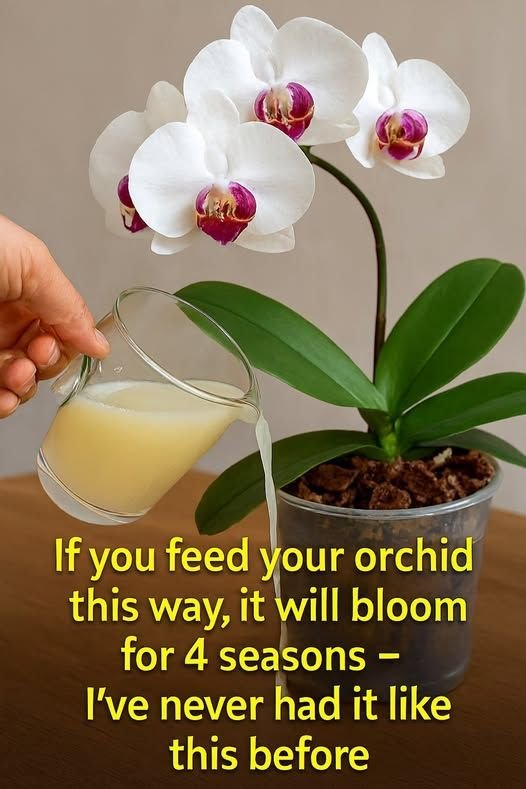
If You Feed Your Orchid This Way, It Can Bloom for 4 Seasons — The Simple Method That Changed Everything
Discover how to feed your orchid properly so it blooms longer and more often. Simple care tips, watering tricks, and expert secrets for lasting flowers.
The Moment Everything Changed With My Orchid
For years, my orchid was… disappointing.
It would bloom once beautifully — then nothing. Just long green leaves and silence.
I tried everything most people try:
- Moving it to different windows
- Watering more (then less)
- Buying expensive “orchid food”
- Even repotting it twice
Nothing worked long-term.
Then I changed one simple thing in how I fed it — and within months, it started blooming again… and again… and again.
Not just once a year.
But across multiple seasons.
That’s when I realized: most people aren’t killing their orchids — they’re just feeding them wrong.
Why Orchids Stop Blooming (Even When They Look Healthy)
If your orchid has green leaves but no flowers, it’s not dead — it’s just not being triggered to bloom.
The most common reasons:
- Too much nitrogen (leaf growth instead of flowers)
- Inconsistent watering
- Poor light conditions
- No rest period between bloom cycles
- Over-fertilizing or under-fertilizing
Orchids are not like regular houseplants. They don’t respond well to constant feeding.
They respond to balance + timing + stress signals.
The Secret: Orchids Don’t Need More Food — They Need the Right Feeding Pattern
This is where most people go wrong.
They think:
“More fertilizer = more flowers”
But orchids don’t work that way.
What actually triggers blooming:
- A shift in nutrients
- Slight stress (controlled, not harmful)
- Consistent light exposure
- A rest period after feeding cycles
In nature, orchids don’t get “regular meals.” They get periodic nutrient exposure from rain, bark, and decaying organic matter.
That’s the pattern we need to recreate at home.
The Feeding Method That Changed Everything
Here’s the exact approach that made my orchid bloom repeatedly.
Step 1: Use a Weak, Balanced Fertilizer
Instead of strong plant food, use:
- A balanced orchid fertilizer (20-20-20 or similar)
- Diluted to ¼ strength only
Why this matters:
Orchids are sensitive. Strong fertilizer burns roots and stops flowering cycles.
Step 2: Feed “Weekly, Weakly”
This is the golden rule used by orchid growers.
- Feed once per week
- Always diluted
- Never overfeed
Consistency matters more than strength.
Step 3: Flush with Plain Water Monthly
Once every 4 weeks:
- Run plain water through the pot
- Let it drain completely
- Remove salt and fertilizer buildup
This resets the root environment.
Step 4: Reduce Feeding After Blooming
After flowers drop:
- Pause feeding for 2–3 weeks
- Allow plant to rest
- Then restart weak feeding cycle
This rest period is what triggers the next bloom cycle.
The Light Factor Most People Ignore
Feeding alone is not enough.
Orchids need bright, indirect light to bloom.
Ideal placement:
- Near an east-facing window
- Filtered sunlight (no harsh direct sun)
What light does:
- Encourages flower spike formation
- Regulates growth cycles
- Prevents weak, leaf-only growth
Without light, even perfect feeding won’t work.
Watering: The Silent Factor Behind Repeat Blooms
Most orchid problems come from watering mistakes.
The correct way:
- Water only when roots turn silvery
- Soak thoroughly, then drain fully
- Never let roots sit in water
Signs of overwatering:
- Yellow leaves
- Mushy roots
- No blooming cycles
Signs of correct watering:
- Firm green roots
- Steady leaf growth
- Repeat blooming potential
The 4-Season Bloom Strategy (What Actually Happens)
When feeding and care are consistent, orchids can enter a repeating cycle:
1. Bloom Phase
Flowers appear and last weeks to months.
2. Recovery Phase
Plant rebuilds energy.
3. Spike Formation Phase
New flower stems begin forming.
4. Second Bloom Phase
Another round of flowers appears.
With proper care, this cycle can repeat multiple times a year depending on the orchid type and environment.
Real-Life Example: What Changed in My Home
Before:
- One bloom per year
- Long gaps with no flowers
- Leaves only, no spikes
After changing feeding habits:
- Two to three bloom cycles per year
- Stronger flower spikes
- Longer-lasting blooms
- Healthier root system
The plant didn’t change species.
The care pattern did.
Common Orchid Feeding Mistakes
Mistake 1: Using strong fertilizer
Leads to root damage and no flowers.
Mistake 2: Feeding randomly
Breaks natural bloom rhythm.
Mistake 3: Never flushing soil
Causes salt buildup.
Mistake 4: Ignoring rest periods
Prevents reblooming cycles.
Expert Orchid Care Tips Most People Don’t Know
- Orchids bloom better when roots are slightly cramped
- Temperature drop at night can trigger spikes
- Transparent pots help monitor root health
- Orchids absorb nutrients better through roots than leaves
- Weak feeding is more effective than organic “home remedies” like tea or sugar water
Pros and Cons of This Feeding Method
Pros
- Encourages repeat blooming
- Strengthens root system
- Prevents fertilizer burn
- Easy to maintain long-term
Cons
- Requires consistency
- Results take weeks to months
- Overfeeding mistakes can still happen if ignored
2026 Orchid Care Trends
Plant care has evolved, especially in the U.S. and Europe.
New trends include:
- Smart moisture sensors for orchids
- Pre-mixed orchid nutrient systems
- Self-watering orchid pots
- Growth tracking apps for bloom cycles
But even with technology, the basics remain the same:
Light, water, and correct feeding rhythm.
Frequently Asked Questions
1. How often should I fertilize orchids?
Once a week at very weak strength is ideal.
2. Why is my orchid not blooming?
Usually due to too much fertilizer or lack of light.
3. Can I use regular plant food?
Yes, but only heavily diluted.
4. Do orchids need fertilizer year-round?
No, reduce or pause after blooming periods.
5. What is the best light for orchids?
Bright, indirect sunlight.
6. How long do orchid blooms last?
Typically 6–12 weeks depending on conditions.
7. Should I mist my orchid?
Not necessary if humidity is adequate.
8. Can orchids really bloom multiple times a year?
Yes, with correct care and environment.
9. What kills orchids most often?
Overwatering and overfeeding.
10. Is repotting necessary for blooming?
Only when roots outgrow the pot or medium breaks down.
Action Checklist: Orchid Bloom Success Plan
- ✔ Use diluted fertilizer weekly
- ✔ Flush soil monthly with plain water
- ✔ Provide bright, indirect light
- ✔ Water only when roots dry
- ✔ Allow rest after blooming
- ✔ Avoid overfeeding at all costs
Conclusion: Small Changes, Extraordinary Blooms
Orchids don’t respond to force — they respond to rhythm.
Once you stop trying to “feed more” and start feeding smarter, everything changes.
What looks like a stubborn plant is often just a misunderstood cycle waiting to reset.
With the right balance of light, water, and gentle feeding, your orchid doesn’t just survive — it can bloom again and again across seasons.
Orchids thrive on consistency, not excess. Feed lightly, rest properly, and let nature’s rhythm do the rest.
If this helped you rethink orchid care, share it with another plant lover — or tell your experience with stubborn orchids in the comments.