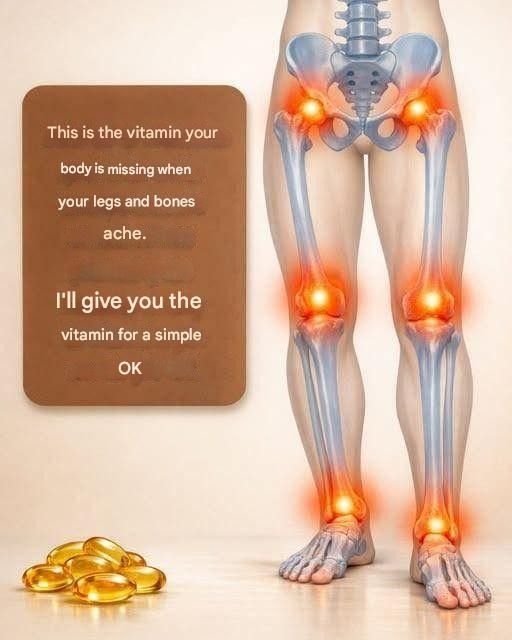
This Is the Vitamin Your Body May Be Lacking If Your Legs and Bones Hurt: The Hidden Deficiency Most People Ignore
Leg and bone pain may signal vitamin deficiencies like D or B12. Learn the real causes, symptoms, and safe ways to restore bone and muscle health.
When Leg and Bone Pain Is More Than Just “Tiredness”
Almost everyone has felt it at some point.
A dull ache in the legs after a long day.
Stiff joints in the morning.
A deep soreness in the bones that doesn’t quite go away.
Most people brush it off as:
- Aging
- Overwork
- Lack of sleep
- “Just stress”
But in many cases, your body is trying to tell you something more specific:
You may be lacking key vitamins essential for bone and muscle health.
And when those nutrients drop too low, your bones and muscles are often the first to signal distress.
Let’s break down what’s really going on — and what your body might actually be missing.
The Most Important Vitamin Linked to Bone and Leg Pain
If there is one nutrient most commonly associated with bone and leg pain, it is:
Vitamin D
Often called the “sunshine vitamin,” Vitamin D plays a critical role in how your body absorbs calcium and maintains bone strength.
What happens when Vitamin D is low?
When your body lacks Vitamin D:
- Bones become weaker over time
- Muscles feel sore or fatigued
- Joint stiffness increases
- Leg pain becomes more noticeable
- Recovery from physical activity slows down
In severe cases, long-term deficiency can lead to bone softening conditions such as osteomalacia.
Why Vitamin D Deficiency Is So Common (Especially in the U.S.)
Even in sunny regions, deficiency is surprisingly widespread.
Common reasons include:
- Spending most time indoors
- Sunscreen blocking UVB absorption
- Darker skin tones requiring more sun exposure
- Low dietary intake
- Limited fortified foods in diet
- Winter seasons in northern regions
According to health experts like the National Institutes of Health (NIH), Vitamin D deficiency is one of the most common nutritional deficiencies in modern populations.
Symptoms That Your Body May Be Low in Vitamin D
Bone and leg pain is just one sign.
Other common symptoms include:
- Fatigue and low energy
- Muscle weakness
- Frequent aches in joints
- Mood changes or low mood
- Slow recovery after exercise
- Back pain
- Reduced mobility over time
These symptoms often develop slowly, which is why many people don’t connect them to a deficiency.
But Vitamin D Isn’t the Only Possible Cause
While Vitamin D is the most common link, it’s not the only one.
Let’s look at other nutrients your body may be lacking.
1. Vitamin B12 – The “Nerve Energy” Vitamin
Vitamin B12 supports nerve health and red blood cell production.
When you’re low in B12:
- Tingling or numbness in legs
- Muscle weakness
- Burning sensation in feet
- Fatigue and dizziness
- Difficulty walking steadily
This is especially common in:
- Vegetarians and vegans
- Older adults
- People with digestive absorption issues
2. Calcium – The Structural Bone Mineral
Calcium is the building block of bones.
Deficiency symptoms:
- Bone fragility
- Muscle cramps
- Leg spasms
- Joint discomfort
Calcium works closely with Vitamin D — without Vitamin D, calcium absorption drops significantly.
3. Magnesium – The Muscle Relaxation Mineral
Magnesium helps muscles relax and prevents cramping.
Low magnesium may cause:
- Leg cramps (especially at night)
- Muscle twitching
- General soreness
- Restless legs
Many people in modern diets don’t get enough magnesium from food alone.
4. Vitamin K2 – The “Bone Direction” Nutrient
Vitamin K2 helps guide calcium into bones instead of soft tissues.
When low:
- Poor bone strength
- Imbalanced calcium usage
- Increased bone discomfort over time
It works best in combination with Vitamin D and Calcium.
How These Nutrients Work Together
Think of your bone health like a construction system:
- Calcium = bricks (structure)
- Vitamin D = delivery system (absorption)
- Vitamin K2 = placement guide (where calcium goes)
- Magnesium = muscle support and balance system
- Vitamin B12 = nerve communication system
If one is missing, the system becomes unbalanced — and pain often follows.
A Real-Life Example: When Leg Pain Was Actually a Deficiency
A 38-year-old office worker in the U.S. experienced:
- Constant leg soreness
- Lower back stiffness
- Fatigue even after rest
They assumed it was stress or posture-related.
After a blood test:
- Low Vitamin D levels
- Slight magnesium deficiency
After lifestyle adjustments:
- Daily sunlight exposure
- Magnesium-rich diet
- Vitamin D supplementation (doctor-guided)
Result:
Within weeks, energy improved and leg pain reduced significantly.
How to Naturally Improve Vitamin Levels
Before jumping to supplements, lifestyle matters first.
Step 1: Get Safe Sunlight Exposure
For Vitamin D:
- 10–30 minutes of sunlight daily
- Mid-morning or early afternoon is best
- Expose arms or legs if possible
Step 2: Eat Bone-Supporting Foods
Vitamin D sources:
- Fatty fish (salmon, tuna)
- Fortified milk
- Egg yolks
Calcium sources:
- Dairy products
- Leafy greens
- Almonds
Magnesium sources:
- Nuts and seeds
- Whole grains
- Bananas
Step 3: Stay Physically Active
Movement improves:
- Bone density
- Blood circulation
- Muscle flexibility
Even light walking helps.
Step 4: Consider Testing Before Supplementing
If pain persists, a simple blood test can check:
- Vitamin D levels
- B12 levels
- Calcium status
This prevents unnecessary supplementation.
Common Mistakes People Make
Mistake 1: Ignoring persistent pain
Assuming it’s “normal aging”
Mistake 2: Self-medicating blindly
Taking high-dose supplements without testing
Mistake 3: Relying only on diet changes
Severe deficiencies often need medical guidance
Mistake 4: Staying indoors too much
Lack of sunlight worsens deficiency over time
When You Should See a Doctor
Seek medical advice if you experience:
- Chronic bone pain
- Persistent muscle weakness
- Frequent cramps
- Tingling or numbness in legs
- Fatigue that doesn’t improve
Expert Insight
Health professionals often emphasize:
“Vitamin D deficiency is one of the most underdiagnosed causes of chronic bone and muscle pain.”
Because symptoms are gradual, many people don’t realize the connection until levels are severely low.
2026 Health Trends: Bone Health Awareness Is Rising
In the U.S. and globally, more attention is being placed on:
- Preventive vitamin testing
- Personalized nutrition plans
- At-home vitamin D testing kits
- Holistic bone health approaches
The focus is shifting from treatment → prevention.
Frequently Asked Questions
1. What vitamin deficiency causes leg pain?
Most commonly Vitamin D, but also B12, calcium, and magnesium.
2. Can low Vitamin D cause bone pain?
Yes, it can weaken bones and cause deep aching pain.
3. How quickly can Vitamin D levels improve?
It varies, but noticeable changes may take weeks to months.
4. Can diet alone fix deficiency?
Mild cases may improve, but severe deficiency often needs supplements.
5. Why do my legs hurt at night?
Could be magnesium deficiency or circulation issues.
6. Is sunlight enough for Vitamin D?
For many people, yes — but depends on location and skin type.
7. Can B12 deficiency cause walking problems?
Yes, in advanced cases it affects nerves and balance.
8. Should I take supplements without testing?
It’s better to test first before starting high doses.
9. Does age affect bone pain?
Yes, nutrient absorption and bone density decline with age.
10. When should I worry about bone pain?
If it is persistent, worsening, or unexplained.
Action Checklist: Improve Bone and Leg Health
- ✔ Get daily sunlight exposure
- ✔ Eat calcium-rich foods
- ✔ Include magnesium sources in diet
- ✔ Ensure adequate B12 intake
- ✔ Stay physically active
- ✔ Consider vitamin testing if pain persists
Conclusion: Pain Is a Signal, Not Just a Symptom
Leg and bone pain is not something to ignore or simply “push through.”
In many cases, it’s your body’s way of signaling a deeper imbalance — often linked to missing essential vitamins like Vitamin D, B12, calcium, or magnesium.
The good news is that these deficiencies are often manageable once identified.
With the right awareness, simple lifestyle changes, and proper nutrition, you can restore strength, mobility, and comfort over time.
If your legs and bones hurt, don’t just mask the pain — look for nutrient deficiencies, especially Vitamin D, and support your body with sunlight, nutrition, and balanced care.
If this helped you understand your symptoms better, share it with someone who struggles with bone or leg pain — or drop a comment with your experience.