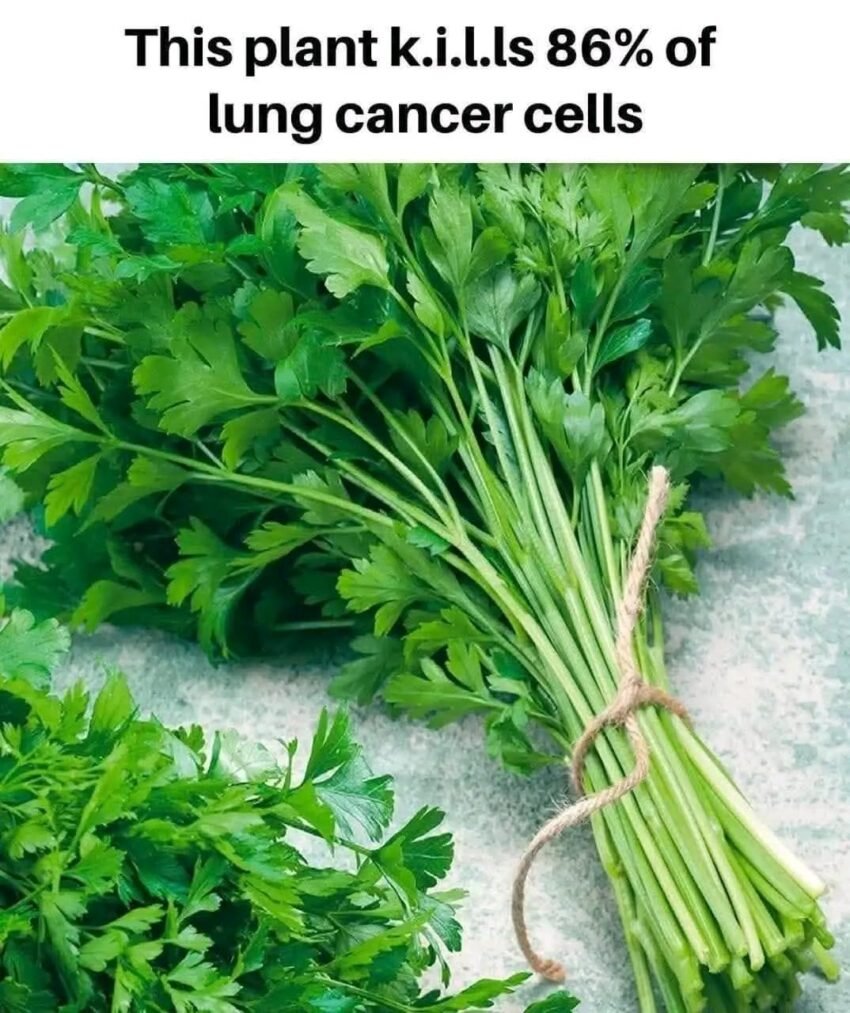
“This Plant Kills 86% of Lung Cancer Cells” — What Doctors Really Want You to Know
Viral claims say a plant kills 86% of lung cancer cells. Here’s the real science, what it means, and safe, practical advice you can trust.
A Headline That Sounds Too Good to Ignore
You’ve probably seen it:
“This plant kills 86% of lung cancer cells.”
It’s the kind of headline that spreads fast—especially for anyone worried about cancer or looking for natural solutions. It promises hope, simplicity, and control.
But here’s the uncomfortable truth:
Most of these claims are misunderstood, exaggerated, or taken out of context.
That doesn’t mean plants don’t have powerful compounds—they absolutely do. But the way these findings are presented online often leaves out critical details that matter for real-world health decisions.
This guide breaks down:
- What the “86%” claim actually means
- Which plants are usually being referenced
- What science really says about them
- And how to approach this information safely and intelligently
Where the “86% Kills Cancer Cells” Claim Comes From
These headlines usually trace back to lab-based studies—not human treatments.
In many cases, researchers test plant extracts on cancer cells in a controlled laboratory setting (in vitro). Under these conditions, some compounds can destroy a high percentage of cancer cells.
Important distinction:
- In vitro (lab test): Cells in a dish
- In vivo (real life): Complex human body
What works in a petri dish does not automatically work in the human body.
The Plant Often Behind the Claim
One of the most commonly cited plants in these viral headlines is soursop (also called graviola).
Why soursop gets attention:
- Contains compounds called acetogenins
- These compounds have shown cancer-cell-killing activity in lab studies
- Some studies report high percentages (like 80%+) under controlled conditions
What the Science Actually Says
Let’s separate fact from fiction.
✔ What’s supported by research
- Certain plant compounds can damage or kill cancer cells in laboratory settings
- Natural products are an important source of modern medicines
- Early-stage research into plant-based compounds is ongoing
❌ What is NOT proven
- That eating or drinking the plant cures cancer
- That the same effect occurs inside the human body
- That it can replace chemotherapy, radiation, or surgery
Why Lab Results Don’t Translate Directly to Humans
Here’s what headlines leave out:
1. Dosage Differences
The concentration used in labs is often far higher than what you can safely consume.
2. Absorption Issues
Your body may not absorb or deliver the compound effectively to tumors.
3. Complexity of Cancer
Cancer isn’t just a cluster of cells—it involves:
- Immune system interactions
- Blood supply (angiogenesis)
- Genetic mutations
4. Safety Concerns
Some plant compounds can be toxic in high doses.
A Real-World Scenario
Imagine someone reads the headline and starts drinking soursop tea daily, believing it will treat lung cancer.
What happens?
- They may delay proven medical treatment
- The plant may have little to no clinical effect
- In some cases, excessive consumption could cause harm
This is exactly why doctors urge caution with viral health claims.
What Doctors and Experts Emphasize
Medical professionals consistently agree on this:
Natural compounds are promising—but they are not substitutes for evidence-based cancer treatment.
Organizations like:
- National Cancer Institute
- American Cancer Society
…stress that alternative remedies should never replace standard care.
The Real Role of Plants in Cancer Treatment
Here’s the part that is encouraging.
Many modern cancer drugs actually originate from plants.
Examples include:
- Paclitaxel (from the Pacific yew tree)
- Vincristine (from periwinkle plant)
But notice the difference:
- These compounds are isolated, purified, tested, and dosed precisely
- They go through years of clinical trials
Pros and Cons of “Natural Cancer Remedies”
| Pros | Cons |
|---|---|
| May contain beneficial compounds | Often lack human clinical evidence |
| Can support overall health | Risk of misinformation |
| Accessible and affordable | May delay proper treatment |
| Part of preventive lifestyle | Potential toxicity in excess |
Common Mistakes People Make
❌ Believing headlines without context
Science is complex—headlines simplify it dangerously.
❌ Replacing medical treatment
This can have life-threatening consequences.
❌ Assuming “natural” means safe
Poison ivy is natural too.
❌ Ignoring dosage and preparation
How something is consumed matters greatly.
Expert Tips Most People Don’t Know
- Many “breakthrough” studies never make it past early research stages
- The human body often neutralizes compounds before they reach tumors
- Combining alternative remedies with treatment should always be discussed with a doctor
2026 Update: Where Research Is Headed
- Increased interest in plant-derived anti-cancer compounds
- Growth of targeted therapies inspired by natural molecules
- More focus on combination treatments (natural + medical)
But as of now:
👉 No plant alone has been proven to cure lung cancer in humans.
Practical, Safe Approach for Readers
If you’re interested in natural health support:
Do this:
- Eat a diet rich in fruits and vegetables
- Focus on overall lifestyle (sleep, exercise, stress)
- Discuss supplements with your doctor
Avoid this:
- Relying on viral claims as treatment
- Self-medicating with unknown dosages
- Delaying professional medical care
Mini Case Example
David, 60, diagnosed with early-stage lung cancer, read about plant-based remedies online.
Instead of replacing treatment, he:
- Continued doctor-recommended therapy
- Improved his diet
- Used nutrition to support recovery
Outcome:
Better tolerance to treatment and improved overall health.
Frequently Asked Questions
1. Does any plant cure lung cancer?
No plant has been scientifically proven to cure lung cancer in humans.
2. What does “kills 86% of cancer cells” mean?
It usually refers to lab results—not real-world treatment outcomes.
3. Is soursop safe to consume?
In small amounts as food, generally yes—but high doses may have risks.
4. Can natural remedies help alongside treatment?
Sometimes—but only under medical supervision.
5. Why do these headlines go viral?
They offer hope and simplicity—but oversimplify complex science.
6. Should I try herbal cancer treatments?
Only after discussing with a qualified healthcare provider.
7. Are there proven natural ways to reduce cancer risk?
Yes—healthy diet, no smoking, regular exercise.
8. Can diet alone treat cancer?
No. Diet supports health but does not replace medical treatment.
Action Checklist
- ✔ Question viral health claims
- ✔ Look for clinical (human) evidence
- ✔ Talk to a healthcare professional
- ✔ Focus on prevention and overall wellness
- ✔ Avoid replacing proven treatments
Conclusion: Hope Is Good—But Accuracy Matters More
The idea that a simple plant could destroy cancer is powerful—and understandably appealing.
But real health decisions deserve more than headlines.
Science is making progress. Natural compounds may play a role in future treatments. But today, the safest and most effective path is still evidence-based medicine combined with a healthy lifestyle.
Claims like “this plant kills 86% of lung cancer cells” are based on early lab research—not real-world cures. Stay informed, stay cautious, and always prioritize proven medical care.
If you’ve come across similar claims or have questions, share them below. Conversations like this help separate fact from fiction—and that can genuinely save lives.