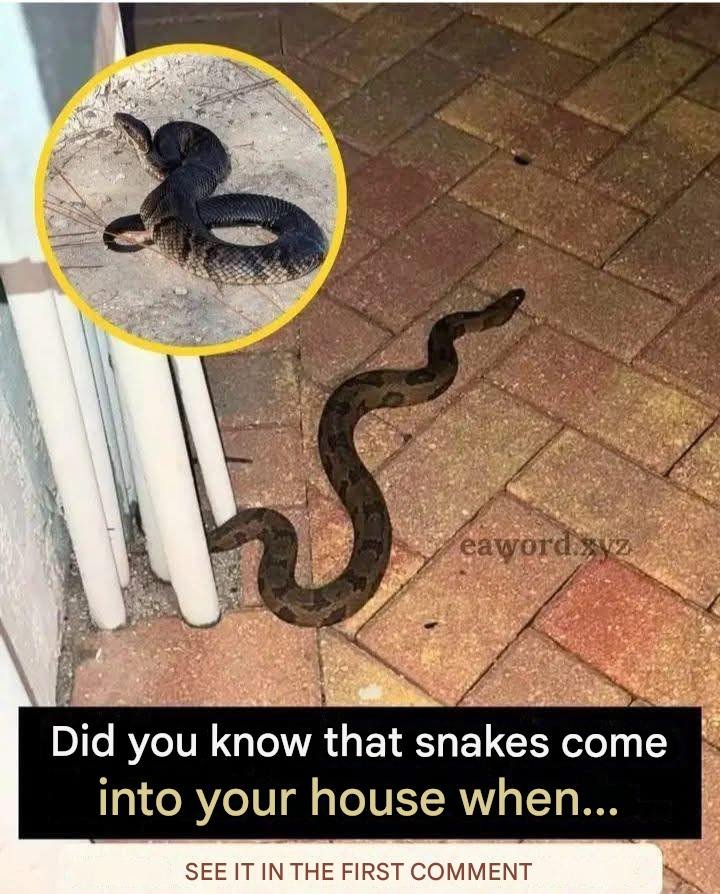
Did You Know Snakes Come to Your House When…? The Truth About What Attracts Them (and How to Keep Them Away)
Do snakes really come to your house for specific reasons? Learn what attracts snakes, how to prevent them, and practical steps to keep your home safe.
That Uneasy Feeling in Your Backyard…
You step outside one evening, maybe to take out the trash or water the plants—and suddenly you freeze.
A long, silent shape moves near the edge of your yard.
A snake.
The first thought that hits most people isn’t curiosity—it’s concern.
Why is it here?
Is my home attracting snakes?
Will it come back?
You might have even heard things like:
“Snakes come when there’s milk,” or “They’re drawn to certain smells.”
Some of these beliefs spread fast—but they’re not always true.
Let’s clear the confusion and break down what actually attracts snakes to homes—and more importantly, how to keep them away.
Do Snakes Really “Come to Your House”?
Here’s the reality:
Snakes don’t target homes intentionally.
They’re not seeking people, houses, or specific buildings.
They’re simply looking for three basic things:
- Food
- Shelter
- Suitable temperature
If your property provides these, it becomes part of their territory—whether you realize it or not.
What Actually Attracts Snakes to Your Home
Understanding this changes everything. Once you know why snakes show up, you can remove the reasons.
1. Food Sources (The #1 Reason)
Snakes follow food—not humans.
If your yard has:
- Rodents (rats, mice)
- Frogs
- Birds or eggs
- Insects (which attract other prey)
…you’re indirectly inviting snakes.
A yard with a rodent problem is one of the biggest snake attractors.
2. Overgrown Vegetation and Clutter
Snakes love hiding spots.
Common problem areas:
- Tall grass
- Piles of wood or debris
- Untrimmed bushes
- Storage clutter outdoors
These give snakes cover from predators—and a perfect place to rest.
3. Cool, Dark Shelter
Snakes regulate their body temperature using their environment.
They seek out:
- Basements
- Crawl spaces
- Gaps under decks
- Rock piles
If your home has easy access to these areas, it becomes appealing.
4. Water Sources
Standing water can attract both snakes and their prey.
Examples include:
- Leaky hoses
- Birdbaths
- Ponds
- Poor drainage areas
Even small amounts of water can make a difference.
5. Seasonal Changes
Snakes move more during certain times of the year.
- Spring and summer: active hunting
- Cooler seasons: searching for warm shelter
This is why sightings often increase during temperature shifts.
Common Myths That Need to Go
Let’s address a few widespread beliefs.
Myth 1: Snakes are attracted to milk
False. Snakes don’t seek milk and can’t digest it properly.
Myth 2: Snakes chase people
Highly unlikely. Most snakes avoid humans and will flee if possible.
Myth 3: Certain smells “invite” snakes
There’s no strong evidence that household smells attract snakes the way food sources do.
Myth 4: Seeing one snake means many more
Not necessarily—but it does mean your environment is suitable for them.
Why This Matters More Than You Think
Even non-venomous snakes can create stress and safety concerns.
In the U.S., for example, organizations like the Centers for Disease Control and Prevention (CDC) highlight the importance of awareness around wildlife encounters, especially in suburban areas.
Ignoring the issue can lead to:
- Repeated sightings
- Increased rodent problems
- Risk of accidental encounters
The goal isn’t fear—it’s prevention.
Step-by-Step: How to Keep Snakes Away from Your Home
This is where you take control.
Step 1: Eliminate Food Sources
- Seal trash bins tightly
- Control rodents (critical step)
- Clean up fallen bird seed
No food = no reason for snakes to stay.
Step 2: Maintain Your Yard
- Keep grass short
- Trim bushes regularly
- Remove wood piles and debris
A clean yard is far less attractive to snakes.
Step 3: Seal Entry Points
Check for:
- Gaps under doors
- Cracks in walls
- Open vents
Seal them to prevent entry.
Step 4: Remove Standing Water
- Fix leaks
- Improve drainage
- Empty containers that collect rainwater
Step 5: Use Lighting Strategically
Outdoor lighting can reduce snake activity by making them feel exposed.
Step 6: Consider Natural Deterrents (With Caution)
Some people use:
- Garlic sprays
- Essential oils
Effectiveness varies, and they should not replace proper maintenance.
Comparison: Snake-Friendly vs Snake-Resistant Yard
| Feature | Snake-Friendly Yard | Snake-Resistant Yard |
|---|---|---|
| Grass | Tall | Short and maintained |
| Clutter | High | Minimal |
| Rodents | Present | Controlled |
| Water | Standing | Proper drainage |
| Entry points | Open | Sealed |
Common Mistakes Homeowners Make
1. Ignoring small signs
Seeing one snake isn’t random—it’s a signal.
2. Focusing only on repellents
Without removing food and shelter, repellents won’t work.
3. Letting yards become overgrown
This is one of the biggest risk factors.
4. Trying to handle snakes directly
This can be dangerous. Always keep a safe distance.
Expert Insight: The Real Strategy That Works
Most people look for a quick fix.
But the real solution is environmental control.
Think of it this way:
You’re not “keeping snakes out”—you’re making your property unattractive to them.
That’s what works long-term.
A Simple Real-Life Scenario
A homeowner notices a snake near their garage.
Instead of panicking, they:
- Clear out a woodpile
- Fix a small rodent issue
- Trim overgrown bushes
Within weeks, sightings stop.
Not because they scared the snake away—but because they removed the reason it was there.
2026 Trend: Smarter Wildlife Prevention
More homeowners are shifting toward:
- Eco-friendly pest control
- Habitat management
- Preventive landscaping
This approach is safer, more sustainable, and more effective than reactive measures.
Frequently Asked Questions
1. Are snakes dangerous?
Most are not, but some species can be venomous. It’s best to avoid contact.
2. What should I do if I see a snake?
Keep your distance and allow it to leave. Contact local wildlife control if needed.
3. Do snakes enter homes often?
It’s rare, but possible if entry points exist.
4. Can pets attract snakes?
Indirectly, yes—especially if pet food attracts rodents.
5. Do mothballs repel snakes?
No strong scientific evidence supports this.
6. Are there plants that repel snakes?
Some claims exist, but results are inconsistent.
7. When are snakes most active?
Warmer months and during temperature changes.
8. Can snakes climb?
Some species can climb walls, trees, and fences.
9. Should I kill a snake if I see one?
It’s not recommended. Many snakes are protected and beneficial for controlling pests.
10. How do I snake-proof my home completely?
Focus on eliminating food, shelter, and entry points.
Action Checklist
What to Do
✔ Keep your yard clean and trimmed
✔ Eliminate rodents and food sources
✔ Seal gaps and cracks
✔ Remove standing water
✔ Stay aware during warm seasons
What to Avoid
✘ Don’t rely only on repellents
✘ Don’t ignore early signs
✘ Don’t leave clutter outside
✘ Don’t attempt to handle snakes
✘ Don’t believe common myths
Snakes don’t come to your house randomly.
They respond to what your environment offers.
When you understand that, the fear turns into control.
With a few smart changes, you can dramatically reduce the chances of seeing them again—without extreme measures.
Snakes aren’t looking for your home—they’re looking for food and shelter. Remove those, and you remove the problem.
Have you ever encountered a snake near your home? Share your experience—and if you want more practical, real-world home safety tips, explore our other guides.