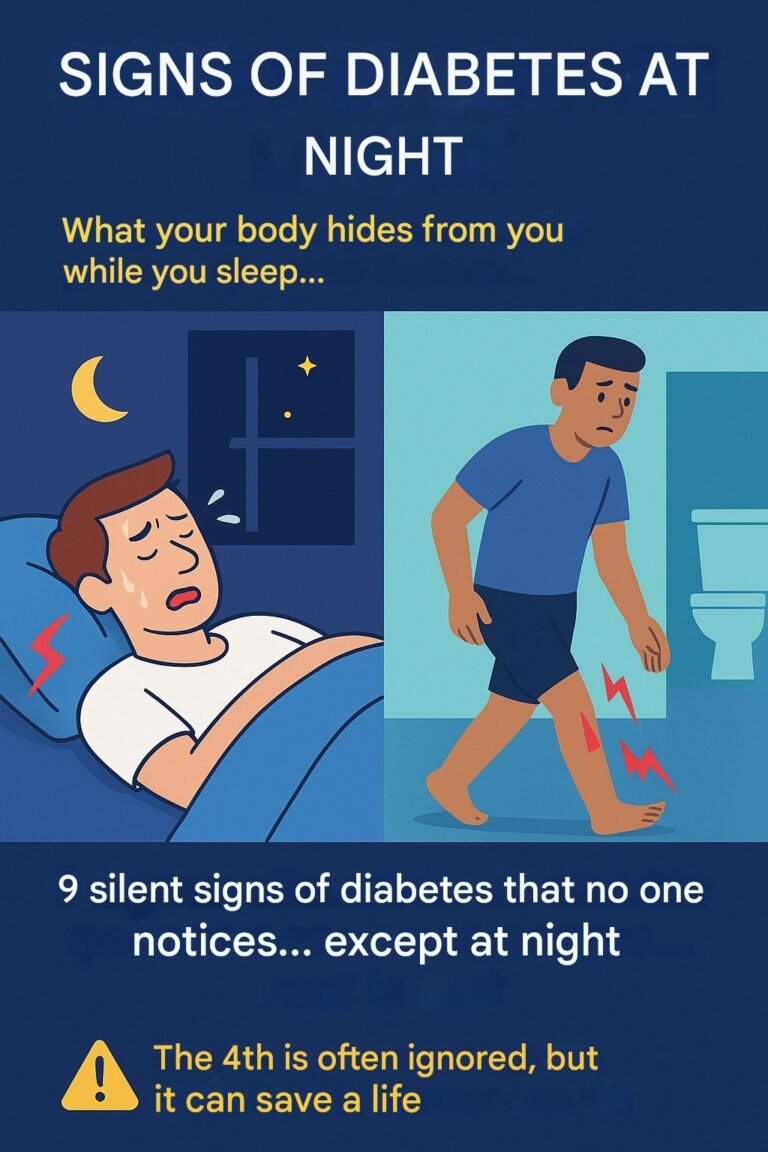
9 Nighttime Warning Signs of Diabetes Most People Ignore (Until It’s Too Late)
Discover 9 nighttime signs of diabetes you shouldn’t ignore—from frequent urination to night sweats—and learn when to take action.
When the Body Speaks at Night, It’s Easy to Miss
Most people associate health symptoms with daytime discomfort—fatigue, thirst, headaches.
But what if your body is trying to warn you while you sleep?
Nighttime is when subtle signs often surface. You’re not distracted. Your body isn’t masked by caffeine, activity, or noise. Patterns become clearer—if you know what to look for.
For people developing or living with Diabetes Mellitus, nighttime can quietly reveal important clues.
This doesn’t mean every symptom equals a diagnosis. But ignoring consistent patterns? That’s where problems begin.
Let’s walk through the key signs—and what they actually mean.
Why Diabetes Symptoms Often Show Up at Night
During sleep, your body regulates blood sugar without the influence of meals or movement.
If something is off—like insulin resistance or fluctuating glucose levels—it can trigger noticeable changes:
- Hormonal shifts
- Fluid imbalances
- Nervous system responses
That’s why nighttime symptoms can sometimes appear earlier or more clearly than daytime ones.
1. Frequent Urination (Waking Up Multiple Times)
If you’re waking up repeatedly to use the bathroom, it might not just be hydration.
High blood sugar forces your kidneys to work harder to remove excess glucose, leading to increased urine production.
What to notice:
- Waking up 2–3+ times regularly
- Large urine volume each time
Occasional disruptions are normal. Consistency is the key signal.
2. Excessive Thirst at Night
Waking up with a dry mouth or strong thirst can be linked to fluid loss from frequent urination.
This cycle—drink, urinate, repeat—often goes unnoticed until it becomes a pattern.
3. Night Sweats
Sweating heavily during sleep can have multiple causes, but in some cases, it’s linked to blood sugar fluctuations.
Drops in blood sugar during the night can trigger sweating as your body reacts.
Look for:
- Damp sheets or clothing
- Sudden sweating episodes without room temperature changes
4. Restless Sleep or Frequent Awakening
Blood sugar imbalances can disrupt your sleep cycle.
You may not fully wake up—but your sleep quality drops.
Signs include:
- Tossing and turning
- Feeling unrested despite “enough” sleep
5. Tingling or Numbness in Hands and Feet
This may indicate early nerve involvement, often associated with prolonged high blood sugar.
Known as peripheral neuropathy, it can feel more noticeable at night when you’re still.
6. Leg Cramps During Sleep
Sudden muscle cramps—especially in the calves—can occur due to:
- Poor circulation
- Nerve issues
- Electrolyte imbalance
All of which can be linked to blood sugar irregularities.
7. Increased Hunger Late at Night
Even after eating, your body may signal hunger if glucose isn’t properly entering cells.
This can lead to:
- Late-night cravings
- Eating without feeling satisfied
8. Blurred Vision Before Bed
High blood sugar can affect the lenses in your eyes, causing temporary vision changes.
If your vision seems worse at night or fluctuates, it’s worth paying attention.
9. Unexplained Fatigue—Even After Sleeping
You sleep through the night, but wake up exhausted.
This happens because your body isn’t efficiently using glucose for energy.
The result?
Low energy—even after rest.
Why These Signs Are Often Overlooked
Many of these symptoms are easy to dismiss:
- “I just drank too much water.”
- “It’s stress.”
- “Maybe I slept wrong.”
Individually, they seem harmless.
Together—and consistently—they form a pattern.
That pattern deserves attention.
When Should You Take These Signs Seriously?
If you notice:
- Multiple symptoms occurring together
- Symptoms lasting several weeks
- Increasing intensity over time
…it’s time to check in with a healthcare professional.
Organizations like the Centers for Disease Control and Prevention emphasize early detection as a key factor in managing diabetes effectively.
Step-by-Step: What to Do Next
Step 1: Track Your Symptoms
Keep a simple log:
- Wake-up times
- Bathroom visits
- Sleep quality
- Any unusual sensations
Patterns become clearer quickly.
Step 2: Review Your Lifestyle
Ask yourself:
- Are you consuming high sugar or processed foods?
- Are you staying hydrated?
- Are you getting regular physical activity?
Small adjustments can make a difference.
Step 3: Get Tested
A basic blood glucose test can provide clarity.
Common tests include:
- Fasting blood sugar
- A1C test
Step 4: Don’t Self-Diagnose
Symptoms can overlap with other conditions.
Only proper testing can confirm what’s happening.
Comparison: Normal vs Potential Warning Signs
| Situation | Likely Normal | Worth Checking |
|---|---|---|
| Night urination | 0–1 times | 2–3+ times consistently |
| Thirst | Mild | Intense, recurring |
| Sleep quality | Occasionally poor | Consistently disrupted |
| Fatigue | After a long day | Daily despite rest |
Common Mistakes to Avoid
1. Ignoring patterns
One symptom once is nothing. Repeated patterns matter.
2. Blaming lifestyle without checking
While habits matter, underlying conditions should be ruled out.
3. Delaying testing
Early detection makes management far easier.
Expert Insight: Nighttime Clues Are Early Clues
Many people wait for daytime symptoms—like extreme fatigue or weight changes.
But nighttime signs often appear earlier.
Catching them early can:
- Prevent complications
- Simplify treatment
- Improve long-term outcomes
A Real-Life Scenario
Someone starts waking up twice a night to urinate.
They also feel unusually thirsty and tired in the mornings.
At first, they ignore it.
Weeks later, symptoms persist.
A routine check reveals elevated blood sugar levels.
Because it was caught early, lifestyle adjustments and simple interventions helped bring it under control.
2026 Health Trend: Proactive Monitoring
More people are becoming proactive about health tracking:
- Sleep monitoring devices
- Blood glucose awareness
- Preventive screenings
This shift is helping detect conditions like diabetes earlier than ever.
Frequently Asked Questions
1. Do nighttime symptoms always mean diabetes?
No. Many conditions can cause similar signs. Testing is essential.
2. Is waking up once at night normal?
Yes, especially depending on fluid intake and age.
3. Can dehydration cause similar symptoms?
Yes, but persistent patterns should still be evaluated.
4. What is the most common early sign?
Frequent urination and excessive thirst are among the most common.
5. Can sleep issues alone indicate diabetes?
Not alone—but combined with other symptoms, they may signal a problem.
6. How quickly should I act?
If symptoms persist for a few weeks, consult a professional.
7. Are these signs the same for everyone?
No. Symptoms vary from person to person.
8. Can lifestyle changes reverse early diabetes?
In some cases (like prediabetes), lifestyle changes can significantly improve outcomes.
9. Should I monitor blood sugar at home?
Only if recommended by a healthcare provider.
10. Is fatigue always related to blood sugar?
No, but it’s a common symptom when combined with others.
Action Checklist
What to Do
✔ Monitor nighttime patterns
✔ Stay hydrated
✔ Maintain a balanced diet
✔ Get regular check-ups
✔ Act early if symptoms persist
What to Avoid
✘ Ignoring repeated symptoms
✘ Self-diagnosing
✘ Delaying medical advice
✘ Assuming it’s “just stress”
✘ Overlooking sleep disruptions
Your body doesn’t wait for the “right time” to send signals.
Sometimes, the quietest hours reveal the most important clues.
Paying attention to nighttime patterns isn’t about fear—it’s about awareness.
And awareness gives you control.
If your nights are changing, your body might be trying to tell you something. Listen early—and act wisely.
If you’ve noticed any of these signs or have questions, share your thoughts. And for more practical health insights, explore our other guides.