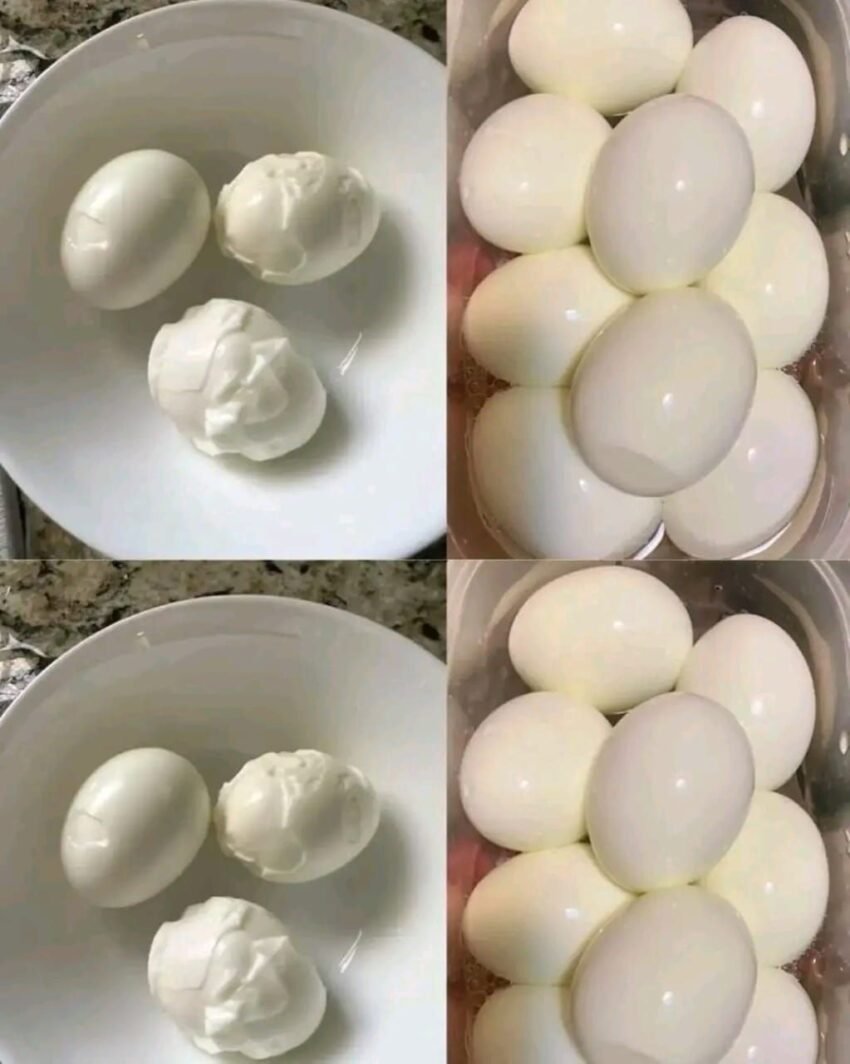
“Literally Everyone Knows This Hack”: The Simple Chef Trick That Finally Made My Hard-Boiled Eggs Peel Perfectly
A chef reveals a simple hard-boiled egg peeling hack that most people overlook—easy, fast, and surprisingly effective every time.
“Literally everyone knows this hack.”
That’s what my friend said when I struggled—again—with peeling a hard-boiled egg.
He’s a chef, so he said it with that mix of confidence and disbelief only professionals can get away with. Not rude. Just… certain.
And honestly? He was right in the most humbling way possible.
Because there I was, standing in my kitchen, peeling eggs like I was defusing something delicate, leaving half the egg white stuck to the shell—while he peeled one in seconds like it was nothing.
Then he showed me the trick.
No gadgets. No fancy tools. No internet gimmicks.
Just a small shift in how I treated something I had been doing wrong for years without realizing it.
And now? I laugh at how unnecessarily complicated I made it.
The Real Problem With Hard-Boiled Eggs
Most people think peeling eggs is about “luck.”
If the shell sticks, you assume:
- The egg is too fresh
- You overcooked it
- You did something wrong randomly
But the truth is simpler—and slightly annoying:
It’s not luck. It’s chemistry and timing.
The inner membrane of an egg tightens around the white as it cooks. If you don’t handle the cooling and separation correctly, that membrane stays glued to the egg.
That’s what causes the tearing, crumbling, frustrating mess.
Why This Hack Actually Matters (More Than You Think)
At first glance, it feels like a small kitchen annoyance.
But if you cook regularly, it becomes a pattern:
- Breakfast prep gets slower
- Meal prep becomes frustrating
- Presentation suffers
- You waste food without noticing
In places like the U.S., where meal prep culture is huge, especially for fitness and work routines, hard-boiled eggs are a staple.
So a simple peeling method isn’t just convenience—it’s efficiency.
The Chef’s “Everyone Knows This” Hack
Here’s what my chef friend did differently:
He didn’t tap the egg harder.
He didn’t peel it under running water.
He didn’t add vinegar or baking soda (those internet tricks people argue about endlessly).
He simply did this:
Step 1: Ice Bath Immediately After Boiling
As soon as the eggs finish boiling, they go straight into ice-cold water.
Not lukewarm water. Not “let it sit for a bit.”
Ice cold.
This sudden temperature shock does something important:
It causes the egg white to contract slightly away from the shell membrane.
Step 2: Crack and Roll Gently
Instead of smashing the egg, he lightly rolls it on the counter.
Just enough to create fine cracks all over the shell.
Not destruction—controlled breakage.
Step 3: Peel From the Wider End First
This is the part most people ignore.
The wider end of the egg has a small air pocket.
Starting there allows you to get under the membrane cleanly.
Once you find that entry point, the shell comes off in larger pieces instead of tiny frustrating shards.
Why This Works (The Simple Science Version)
Without getting overly technical:
- Heat tightens proteins in the egg white
- Cold shock helps separate membrane from the egg
- Air pocket gives a natural starting gap
So instead of fighting the shell, you’re using the egg’s own structure to your advantage.
That’s the difference between struggling and effortless peeling.
Comparison: Before vs After
| Method | Result | Effort Level |
|---|---|---|
| No ice bath, random peeling | Torn eggs, frustration | High |
| Ice bath + random peeling | Better but inconsistent | Medium |
| Ice bath + controlled cracking + air-pocket start | Clean peel, smooth surface | Low |
Common Mistakes People Make
1. Peeling Immediately Without Cooling Properly
Hot eggs = sticky membranes.
2. Skipping the Ice Bath
Letting eggs “cool naturally” is one of the biggest reasons peeling fails.
3. Over-Cracking the Shell
Smashing the egg creates thousands of tiny fragments that stick.
4. Starting in the Wrong Spot
Random peeling often ignores the air pocket advantage.
The Chef Insight Most People Miss
My friend said something that stuck with me:
“Cooking isn’t about complexity. It’s about removing friction.”
That’s really what this hack is.
It doesn’t “fix” eggs.
It removes unnecessary resistance from the process.
A Small Kitchen Lesson That Applies Everywhere
It’s funny how something as simple as peeling eggs can reflect a bigger pattern:
We often assume:
- If something is hard, we need more effort
- If something fails, we need more force
- If something doesn’t work, we need a new tool
But sometimes the answer is just:
- Change timing
- Change sequence
- Use structure instead of force
FAQ Section
1. Why do some eggs peel easier than others?
Older eggs tend to peel easier because the membrane naturally loosens over time.
2. Does salt or vinegar help when boiling eggs?
It has minimal effect on peeling. Temperature shock and cooling matter more.
3. How long should eggs stay in an ice bath?
At least 5–10 minutes for best separation.
4. Can I peel eggs under running water?
Yes, but it’s less efficient than proper chilling and air-pocket starting.
5. Why do fresh eggs stick more?
Because the inner membrane is tightly bonded to the egg white.
6. What’s the best boiling time?
Typically 9–12 minutes depending on desired firmness.
7. Do chefs always use this method?
Most professional kitchens use some variation of ice shocking for consistency.
8. Is there a perfect method for all eggs?
No method is perfect, but this one is the most reliable for consistent results.
Action Checklist
Do This:
✔ Use an ice bath immediately after boiling
✔ Crack gently and evenly
✔ Start peeling from the wider end
✔ Let eggs cool fully before peeling
Avoid This:
✘ Peeling hot eggs
✘ Over-cracking the shell
✘ Skipping cooling time
✘ Assuming freshness always means easier peeling
Conclusion
What surprised me most wasn’t the hack itself.
It was how something so simple could completely change something I thought I already knew.
My chef friend was right—it wasn’t a secret.
It was just one of those things people assume everyone has figured out… until they haven’t.
Now, every time I peel a perfect egg, I can’t help but laugh at how much unnecessary effort I used to put into it.
Sometimes the difference between frustration and ease isn’t skill—it’s just knowing the right sequence.
If this made you rethink something as simple as eggs, share it with someone who still struggles with them—and ask:
What else in life am I making harder than it needs to be?