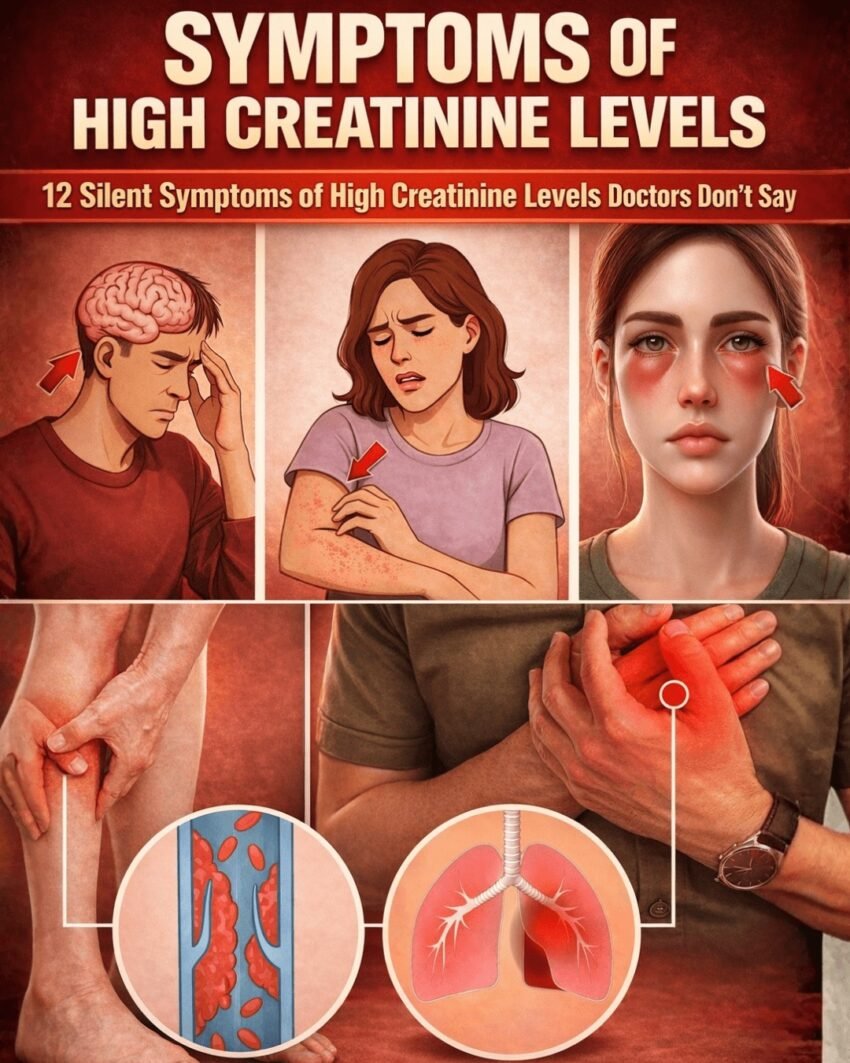
12 Subtle Signs of High Creatinine Levels That Could Point to Early Kidney Concerns You Shouldn’t Ignore
High creatinine can signal early kidney issues. Discover 12 subtle warning signs, causes, and what your body may be trying to tell you.
Your Kidneys Rarely Shout—They Whisper First
Most people don’t think about their kidneys until something feels seriously wrong. That’s the uncomfortable truth.
Creatinine levels often rise quietly in the background long before a diagnosis like chronic kidney disease becomes obvious. And the body? It doesn’t always send dramatic alarms. Instead, it communicates through subtle changes—fatigue that feels “normal,” swelling you dismiss, or shifts in urination that seem minor at first.
The problem is, these early signals are easy to ignore.
By the time many people connect the dots, kidney function may already be under strain.
This article breaks down 12 subtle signs of high creatinine levels that could point to early kidney concerns. Not to cause panic—but to help you recognize patterns early enough to take meaningful action.
Because when it comes to kidney health, awareness often changes outcomes.
Understanding Creatinine: Why It Matters More Than You Think
Creatinine is a waste product created by your muscles during normal activity. Your kidneys filter it out through urine.
When kidney function declines, creatinine builds up in the blood.
Doctors often measure it using blood tests and calculate something called eGFR (estimated glomerular filtration rate) to assess kidney performance. This is a standard approach recommended in clinical practice, including guidelines from organizations like the National Kidney Foundation.
High creatinine doesn’t automatically mean severe disease—but it is a signal worth investigating.
Why Early Signs Are Often Missed
Kidney-related symptoms are tricky because:
- They develop slowly
- They mimic everyday fatigue or stress
- They vary from person to person
- They often appear unrelated at first
In the United States alone, millions of people are estimated to have some level of chronic kidney disease, and many don’t know it until routine lab work reveals abnormal values.
That’s why recognizing subtle signs matters.
12 Subtle Signs of High Creatinine Levels
1. Persistent Fatigue That Doesn’t Match Your Routine
Feeling tired after a long day is normal. But fatigue linked to kidney stress feels different.
It often shows up as:
- Constant low energy even after rest
- Difficulty focusing
- A “heavy body” feeling
When kidneys struggle, waste builds up in the blood, which can contribute to overall fatigue.
If exhaustion becomes a baseline rather than an exception, it may be worth checking kidney markers.
2. Swelling in Feet, Ankles, or Face
One of the earliest visible signs is fluid retention.
You might notice:
- Puffy ankles by evening
- Swollen feet after minimal standing
- Slight puffiness around the eyes in the morning
This happens because impaired kidneys can struggle to balance sodium and fluid levels in the body.
3. Changes in Urination Patterns
Your urine often tells more than you realize.
Possible changes include:
- Urinating more frequently, especially at night
- Reduced urine output
- Foamy or bubbly urine
- Darker or unusually light urine
Foamy urine, in particular, can sometimes indicate protein leakage, which may occur alongside kidney dysfunction.
4. Mild Nausea or Reduced Appetite
A gradual loss of appetite or occasional nausea can feel unrelated—but it’s a known early symptom.
When waste accumulates in the bloodstream, it can affect digestion and appetite regulation.
You might notice:
- Feeling full quickly
- Avoiding certain foods without reason
- Mild queasiness in the morning
5. Muscle Cramps and Weakness
Electrolyte imbalance plays a major role here.
When kidney function declines:
- Calcium and potassium balance may shift
- Muscle function becomes less stable
This can result in:
- Sudden cramps, especially at night
- Muscle twitching
- General weakness
6. Itchy Skin Without a Clear Cause
Chronic itching without rash or allergy can be frustrating.
In kidney-related issues, it may be linked to toxin buildup or mineral imbalance in the blood.
Common patterns include:
- Persistent itchiness on arms or legs
- Worsening at night
- No visible skin condition explaining it
7. Shortness of Breath During Light Activity
This symptom often surprises people.
It can happen when:
- Excess fluid builds up in the lungs
- Anemia develops due to reduced kidney hormone production
You may notice:
- Getting winded easily
- Difficulty climbing stairs
- Feeling like breathing requires extra effort
8. Mild Cognitive Fog or Difficulty Concentrating
Kidney stress can indirectly affect brain clarity.
People often describe:
- “Brain fog”
- Slower thinking
- Trouble focusing on simple tasks
This is not specific to kidney disease alone, but when combined with other symptoms, it becomes more relevant.
9. Metallic Taste in the Mouth or Breath Changes
A less obvious but notable sign.
Waste buildup in the bloodstream can alter taste perception.
You may notice:
- Food tasting “off”
- Metallic or ammonia-like breath
- Reduced enjoyment of meals
10. High Blood Pressure That’s Hard to Control
Kidneys play a major role in blood pressure regulation.
When they struggle:
- Blood pressure may rise gradually
- Medications may seem less effective over time
The relationship between kidney function and hypertension is well documented in medical research and clinical guidelines.
11. Lower Back or Flank Discomfort
This isn’t always sharp pain.
Instead, it may feel like:
- Dull pressure on one or both sides of the lower back
- A sense of heaviness
- Mild discomfort that comes and goes
It’s often mistaken for muscle strain.
12. Sleep Disturbances and Restlessness
Disrupted kidney function can affect sleep quality.
You might experience:
- Difficulty staying asleep
- Frequent nighttime waking
- Restless sleep despite fatigue
Sleep issues often appear alongside other metabolic changes.
How These Signs Compare: Normal vs Possible Kidney Concern
| Symptom | Normal Occurrence | Possible Kidney Concern Pattern |
|---|---|---|
| Fatigue | After exertion | Persistent, unexplained |
| Swelling | After salty meal | Regular, recurring |
| Urination changes | Temporary | Ongoing pattern shift |
| Itching | Allergy-related | No visible cause |
| Appetite changes | Short-term | Long-lasting decline |
Important Context: High Creatinine Is Not a Diagnosis
High creatinine levels alone do not confirm kidney disease.
They can also be influenced by:
- Dehydration
- High muscle mass
- Certain medications
- Temporary illness
- Intense exercise
This is why doctors typically combine creatinine tests with eGFR measurements and sometimes urine protein analysis before drawing conclusions.
If you are concerned, a healthcare professional may recommend follow-up testing rather than immediate assumptions.
What Typically Causes High Creatinine Levels
Some common contributing factors include:
- Chronic kidney disease
- Uncontrolled diabetes
- High blood pressure
- Dehydration
- Kidney infections
- Certain medications that affect kidney filtration
The key is identifying whether the elevation is temporary or persistent.
Step-by-Step Guide: What to Do If You Notice These Signs
Step 1: Don’t self-diagnose immediately
Track symptoms over time instead of reacting to one or two occurrences.
Step 2: Get basic lab testing
Ask for:
- Serum creatinine
- eGFR
- Urine analysis
Step 3: Monitor blood pressure
Consistently elevated readings are an important clue.
Step 4: Review medications and supplements
Some substances can temporarily affect kidney markers.
Step 5: Improve hydration and lifestyle habits
Not as a cure—but as supportive care while investigating.
Common Mistakes People Make
- Ignoring mild swelling until it becomes severe
- Assuming fatigue is just stress or age
- Self-treating without lab confirmation
- Overreacting to a single abnormal test
- Delaying follow-up testing for months
Kidney-related changes are best understood through patterns, not isolated moments.
Expert Insight: Why Early Detection Matters
Medical organizations like the National Kidney Foundation emphasize early detection because kidney function can decline silently for years.
The earlier changes are identified:
- The more reversible contributing factors may be
- The more effective lifestyle adjustments can be
- The slower progression can often be managed
In clinical practice, early-stage kidney concerns are often managed with:
- Blood pressure control
- Blood sugar regulation
- Dietary adjustments
- Regular monitoring
2026 Trends in Kidney Health Awareness
Recent healthcare shifts are focusing on:
- Expanded routine creatinine screening in primary care
- AI-assisted lab interpretation tools
- Greater awareness of eGFR trends instead of single readings
- Preventive kidney health programs in high-risk populations
The trend is moving toward early detection rather than late intervention.
Future Outlook: Where Kidney Health Monitoring Is Headed
Over the next few years, expect:
- More at-home diagnostic tools
- Continuous health monitoring wearables
- Personalized kidney risk prediction models
- Earlier intervention protocols based on trend analysis
The goal is simple: catch changes before symptoms become obvious.
Mini Scenario: When “Normal Fatigue” Wasn’t So Normal
A 42-year-old office worker in the U.S. noticed mild fatigue and occasional ankle swelling. Nothing alarming individually.
He attributed it to long work hours.
During a routine check-up, slightly elevated creatinine and reduced eGFR were detected. Follow-up testing confirmed early kidney strain linked to uncontrolled blood pressure.
With early lifestyle adjustments and medical guidance, progression was stabilized.
The key factor wasn’t severity—it was timing.
Frequently Asked Questions
1. What is considered a dangerous creatinine level?
It depends on age, gender, and muscle mass, but significantly elevated levels compared to normal ranges require medical evaluation.
2. Can high creatinine go back to normal?
Yes, if the cause is temporary such as dehydration or medication effects.
3. What foods increase creatinine levels?
High-protein diets can influence creatinine production, but diet alone is rarely the sole cause.
4. Is high creatinine always kidney disease?
No. It is a marker that needs further evaluation.
5. Can dehydration raise creatinine?
Yes, temporarily reducing kidney filtration efficiency.
6. What tests confirm kidney problems?
eGFR, urine protein tests, and imaging may be used.
7. Does high creatinine cause symptoms?
Not directly, but underlying kidney issues may produce symptoms.
8. Can exercise affect creatinine?
Intense exercise can temporarily increase levels due to muscle breakdown.
9. How often should kidney function be checked?
It depends on risk factors, but often annually for routine screening.
10. What is the earliest sign of kidney issues?
Subtle changes in urination and mild fatigue are often early indicators.
Action Checklist
What to Do
- Monitor fatigue patterns over time
- Track swelling in feet or face
- Observe changes in urination
- Get routine blood and urine tests
- Maintain hydration and balanced diet
- Manage blood pressure consistently
What to Avoid
- Ignoring recurring mild symptoms
- Self-diagnosing based on one test
- Delaying follow-up lab work
- Assuming fatigue is always lifestyle-related
- Overinterpreting isolated symptoms
Conclusion: Small Signals Often Speak the Loudest
Kidney health rarely changes overnight. It shifts gradually—through small, subtle signals that are easy to overlook in busy daily life.
High creatinine levels are not something to fear, but they are something to understand. Because when you recognize early patterns, you give yourself more options, more control, and more time to respond thoughtfully.
Listening to your body isn’t about anxiety—it’s about awareness.
And sometimes, awareness is the difference between catching a problem early and discovering it too late.
Your kidneys communicate quietly. Learning to recognize their early signals—especially changes tied to creatinine—can help you protect long-term health before symptoms become serious.