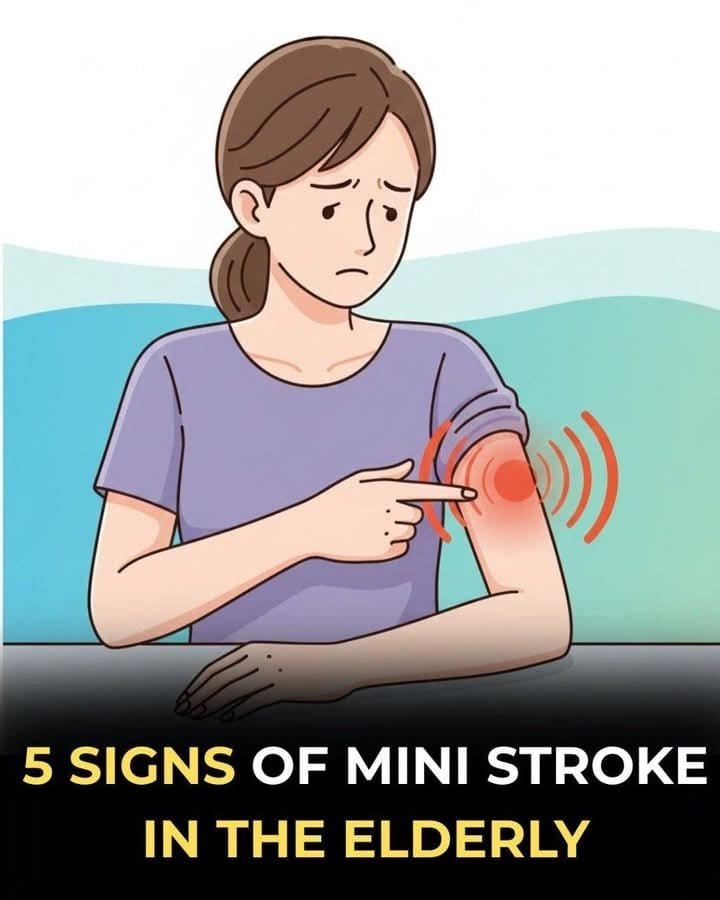
5 Subtle Signs of a Mini Stroke in the Elderly You Should Never Ignore (They Often Appear Without Warning)
Learn the early warning signs of a mini stroke in seniors, what they look like, and when to act fast to prevent a major stroke.
It Happens Fast — And Often Gets Missed
An elderly parent pauses mid-sentence.
Their words come out slightly off. Not slurred exactly… just wrong.
A few minutes later, they seem fine again.
No pain. No collapse. No drama.
So it’s easy to brush it off.
But moments like these are often how a mini stroke begins — quiet, brief, and dangerously easy to ignore.
In medical terms, it’s called a Transient Ischemic Attack (TIA) — and it’s one of the strongest warning signs that a major stroke could be coming.
This isn’t about panic. It’s about recognition.
Because the difference between catching it early and missing it can change everything.
What Exactly Is a “Mini Stroke”?
A Transient Ischemic Attack (TIA) happens when blood flow to part of the brain is temporarily blocked.
Unlike a full stroke:
- Symptoms resolve within minutes to hours
- No permanent brain damage is immediately visible
But here’s the part most people underestimate:
A TIA is often a preview of a future stroke, not a harmless event.
According to organizations like the American Stroke Association, nearly 1 in 3 people who experience a TIA will eventually have a full stroke — many within days or weeks.
That’s why recognizing the early signs matters so much.
Why Elderly Adults Are at Higher Risk
As we age, several factors increase stroke risk:
- Narrowing blood vessels
- High blood pressure
- Irregular heart rhythms
- Diabetes and cholesterol buildup
These conditions make it easier for blood flow to become temporarily blocked.
And here’s what makes it tricky:
In older adults, symptoms may be:
- Mild
- Atypical
- Easily mistaken for fatigue or “just aging”
The 5 Most Common Signs of a Mini Stroke in the Elderly
These signs often appear suddenly — and just as suddenly disappear.
That’s exactly what makes them dangerous.
1. Sudden Confusion or Trouble Speaking
This is one of the most overlooked signs.
You might notice:
- Words coming out incorrectly
- Difficulty forming sentences
- Trouble understanding simple instructions
It can feel subtle — like the person is just “not quite themselves.”
But this is often the brain struggling with reduced blood flow.
Real-life moment:
They call a spoon “that thing.” Or pause mid-thought and can’t finish.
2. Weakness or Numbness on One Side of the Body
This is a classic neurological warning sign.
Look for:
- Drooping on one side of the face
- Weak grip in one hand
- One arm drifting downward when raised
Even mild weakness matters.
It doesn’t need to be dramatic paralysis to signal a problem.
3. Sudden Vision Changes
Vision issues during a TIA can be surprising and brief.
Common experiences:
- Blurry vision
- Double vision
- Loss of vision in one eye
Some describe it as a “shade being pulled down” over part of their vision.
Because it often resolves quickly, many people ignore it.
4. Loss of Balance or Coordination
This one often gets mistaken for normal aging or dizziness.
Watch for:
- Sudden unsteadiness
- Trouble walking straight
- Feeling like the room is spinning
If it appears suddenly — even for a few minutes — it should be taken seriously.
5. Sudden, Unexplained Headache
While more common in full strokes, a TIA can sometimes cause:
- A sharp or unusual headache
- No obvious trigger
Especially if the person doesn’t typically get headaches, this can be a warning sign.
Why These Symptoms Are So Often Ignored
Because they don’t last.
That’s the trap.
A person might feel completely normal within:
- 5 minutes
- 30 minutes
- A couple of hours
And once the symptoms disappear, the urgency disappears too.
But medically, that’s exactly when action matters most.
When to Act: The Golden Window
If you notice any of these signs — even if they go away — it’s time to act.
Doctors use a simple rule: Treat a TIA like a full stroke.
Call emergency services immediately if:
- Symptoms are happening right now
- Symptoms lasted even a few minutes
- You’re unsure what you’re seeing
Early evaluation can:
- Prevent a major stroke
- Identify underlying causes
- Start protective treatment quickly
Step-by-Step: What To Do in the Moment
Step 1: Stay calm but act quickly
Don’t wait to “see if it passes.”
Step 2: Note the time
Doctors need to know when symptoms started.
Step 3: Observe specific symptoms
Which side of the body? Speech? Vision?
Step 4: Seek emergency care
Even if symptoms disappear before arrival.
Step 5: Do not give food or medication unless instructed
Swallowing ability may be affected.
Quick Comparison: TIA vs Full Stroke
| Feature | Mini Stroke (TIA) | Full Stroke |
|---|---|---|
| Duration | Minutes to hours | Longer-lasting |
| Damage | Temporary | Often permanent |
| Symptoms | Similar | Similar |
| Urgency | High | Emergency |
| Recovery | Full (initially) | Varies |
Common Mistakes Families Make
“They’re fine now, so it must be nothing”
This is the most dangerous assumption.
“It’s just age-related confusion”
Sudden changes are not normal aging.
“We’ll mention it at the next doctor visit”
Waiting can increase risk of a major stroke.
Expert Insight: What Doctors Check Immediately
When an elderly patient reports TIA symptoms, clinicians typically evaluate:
- Brain imaging (CT or MRI)
- Blood flow in arteries
- Heart rhythm issues (like atrial fibrillation)
- Blood pressure and cholesterol
The goal isn’t just diagnosis — it’s prevention.
2026 Update: Stroke Prevention Is Improving — But Awareness Still Lags
Medical treatments for stroke prevention have advanced significantly, including:
- Better blood thinners
- Improved imaging
- Faster emergency response systems
But one thing hasn’t improved enough:
Early recognition at home.
Most delays still happen before the patient reaches medical care.
Mini Case Scenario
An 82-year-old man suddenly struggles to speak during breakfast.
It lasts 10 minutes. Then resolves.
Family assumes it’s fatigue.
Two days later, he suffers a major stroke.
Doctors later confirm it was preceded by a TIA — a missed warning sign.
FAQ: What People Ask Most
1. Can a mini stroke go away on its own?
Symptoms may disappear, but the risk remains.
2. Is a TIA painful?
Usually not.
3. How long do symptoms last?
Typically minutes to a few hours.
4. Can it happen during sleep?
Yes, and symptoms may be noticed upon waking.
5. Is hospitalization always required?
Often yes, for proper evaluation.
6. Can dehydration cause similar symptoms?
It can mimic them, but should never be assumed.
7. What age group is most at risk?
Risk increases significantly after 65.
8. Can TIAs be prevented?
Yes, with proper medical management.
9. Are TIAs common?
More common than many realize, especially in older adults.
10. What’s the biggest warning sign?
Sudden neurological change — even if brief.
Action Checklist
What to do:
- Act immediately if symptoms appear
- Track timing and symptoms
- Seek emergency care
- Follow up with specialists
What to avoid:
- Don’t ignore short-lived symptoms
- Don’t delay medical evaluation
- Don’t self-diagnose
Final Thoughts: The Warning You Don’t Want to Miss
A mini stroke doesn’t always look dramatic.
It whispers instead of shouts.
But those quiet signals are often the body’s way of saying:
“Something serious is coming — pay attention.”
Recognizing those early signs could be the difference between prevention and crisis.
A mini stroke in the elderly is not a harmless event — it’s a critical warning. Even brief symptoms deserve immediate medical attention.
If this helped you understand what to look for, share it with someone who cares for an aging parent — it might make all the difference.