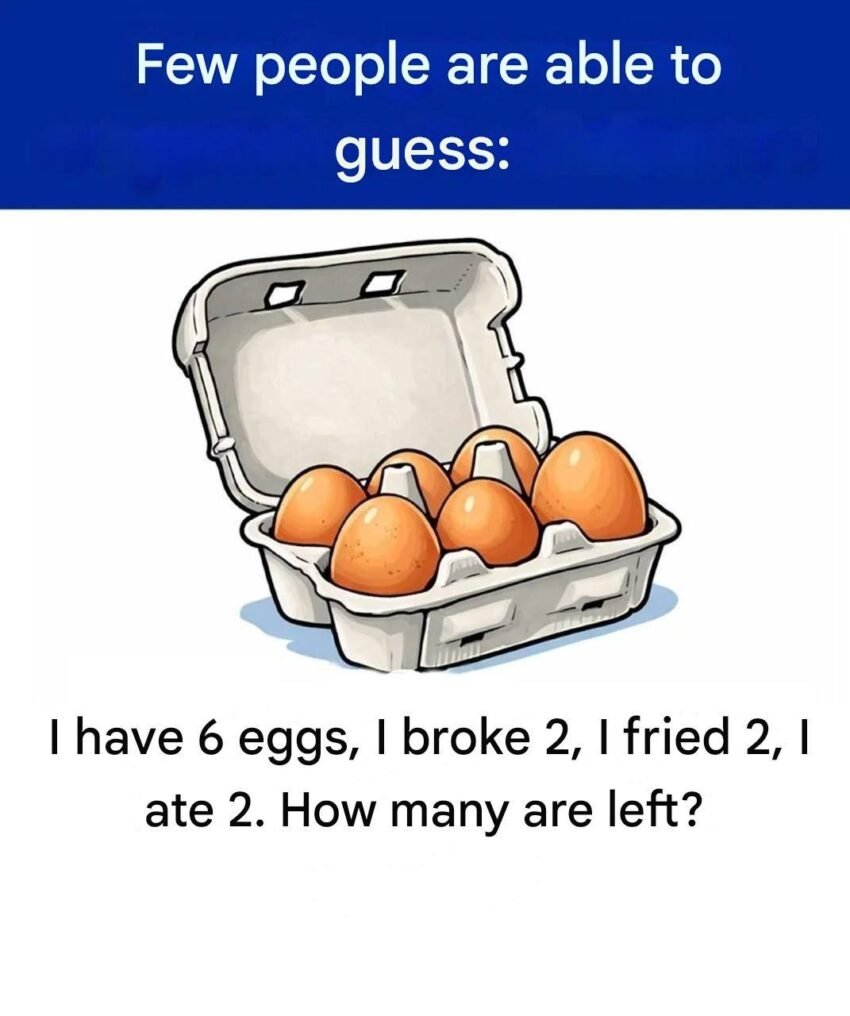
This Egg-Related Enigma Has Left More Than One Person Perplexed: What’s Really Going On?
Discover the strange egg-related mystery that confuses many people—learn the science behind odd eggs, double yolks, and unusual shell surprises.
You crack open an egg expecting the usual: a clean separation of yolk and white.
But instead… something strange happens.
Maybe there are two yolks.
Maybe the shell looks unusual.
Or maybe the egg itself just doesn’t behave the way you expected.
And suddenly, a simple kitchen moment turns into a small mystery.
You pause. You stare. You wonder:
“What is going on with this egg?”
You’re not alone.
Egg-related surprises are more common than most people realize—and science actually has clear explanations for most of them.
Let’s decode the mystery.
The Most Common Egg “Enigma”: Double Yolk Eggs
One of the biggest reasons people get confused is the appearance of double yolk eggs.
Yes—they’re real.
What they are:
A single egg containing two yolks instead of one.
Why it happens:
Double yolks usually occur when:
- A hen releases two yolks at once
- Both are enclosed in the same shell
- Often seen in younger hens with irregular ovulation cycles
Are Double Yolks Rare?
Not as rare as people think.
They are more common in:
- Young hens
- Certain commercial egg farms
- Early egg-laying cycles
So if you’ve ever cracked one open and felt like you hit a jackpot—you kind of did.
Other Egg Oddities That Confuse People
The “egg enigma” doesn’t stop at double yolks.
There are several other strange variations that leave people puzzled.
1. Eggs With No Yolk
Sometimes you crack an egg and find only egg white.
Why it happens:
- Young hens just starting to lay eggs
- A yolk is not released during ovulation
- Often called “wind eggs” or “fairy eggs”
They’re harmless and completely natural.
2. Blood Spots in Eggs
A tiny red or brown spot inside the egg can be alarming.
But it’s usually:
- A small ruptured blood vessel during egg formation
- Not fertilization
- Not harmful to eat (if cooked properly)
Modern egg processing often removes these before packaging, but they still appear occasionally.
3. Soft-Shelled or Thin-Shelled Eggs
Sometimes eggs feel unusually fragile.
Causes include:
- Calcium deficiency in hens
- Stress or environmental factors
- Older laying hens
These eggs are safe but more delicate.
4. Eggs With Two Shell Layers
Yes, this exists too.
It happens when:
- A hen’s egg moves backward in the reproductive tract
- It gets coated with an extra layer of shell material
This creates a thicker, unusual shell structure.
5. Weirdly Shaped Eggs
Not all eggs are perfectly oval.
Some may be:
- Slightly elongated
- Pointed at one end
- Bumpy or irregular
This is usually due to:
- Stress in the hen
- Age
- Calcium fluctuations
Why These “Enigmas” Happen
Egg formation is a biological process that takes about 24–26 hours.
During this time:
- Hormones regulate yolk release
- Calcium builds the shell
- Proteins form the egg white
If anything slightly changes in that process—stress, age, diet—you get variations.
So what feels like a mystery is actually just biology doing its job with small imperfections.
Are These Eggs Safe to Eat?
In most cases: yes.
Safe examples:
- Double yolks
- Small blood spots
- Minor shell irregularities
When to avoid:
- Strong foul smell
- Cracked and leaking eggs
- Unusual discoloration inside
Otherwise, most “odd” eggs are perfectly safe after cooking.
Why People Find Them So Confusing
Eggs are something we think we fully understand.
They’re simple. Familiar. Everyday.
So when something unexpected appears inside one, it breaks that assumption.
That’s why these moments feel like “enigmas” even though they have scientific explanations.
It’s less about mystery—and more about expectation vs reality.
A Real-Life Kitchen Moment
A parent cracks eggs for breakfast.
One egg has two yolks.
The kids stop eating.
Questions start flying:
- “Is that normal?”
- “Is it lucky?”
- “Can we eat it?”
After a quick explanation, the tension turns into curiosity—and breakfast becomes a mini science lesson.
That’s usually how these egg “mysteries” unfold in real homes.
Common Myths About Strange Eggs
Myth 1: Double yolks mean fertilization
→ False. It’s just ovulation timing.
Myth 2: Blood spots mean the egg is bad
→ False. It’s usually harmless.
Myth 3: Weird eggs are unsafe
→ Most are safe if properly cooked.
Myth 4: Eggs change based on breed only
→ Breed matters, but diet and environment matter more.
How Farmers Prevent Egg Irregularities
Commercial farms manage consistency by:
- Controlling hen diet
- Maintaining stable lighting cycles
- Reducing stress environments
- Monitoring calcium intake
But even with control, natural variation still happens.
That’s biology—not a flaw.
FAQ
1. What causes double yolk eggs?
Two yolks released at the same time during ovulation.
2. Are double yolk eggs safe to eat?
Yes, completely safe.
3. Why do some eggs have no yolk?
It happens when no yolk is released during egg formation.
4. Are blood spots dangerous?
No, they are usually harmless.
5. Can you eat weird-shaped eggs?
Yes, as long as the egg is fresh and properly cooked.
6. Why are some eggs softer than others?
Often due to calcium imbalance in hens.
7. Do organic eggs have fewer abnormalities?
Not necessarily—natural variation still occurs.
8. What should I do if an egg looks strange?
Check smell and freshness; when in doubt, discard it.
9. Are double yolks lucky?
Culturally, many people believe so, but it’s just biology.
10. Can eggs tell us anything about hen health?
Yes—irregular eggs can reflect diet or stress conditions.
Conclusion
What seems like an “egg-related enigma” is usually just nature showing its variability in a very ordinary object.
Eggs aren’t perfectly uniform machines—they’re biological products influenced by living animals, environment, and timing.
And that’s what makes them interesting.
Most egg mysteries have simple explanations rooted in biology—not danger or coincidence.
So the next time you crack an unusual egg, you’re not facing a mystery… you’re just seeing nature in action.