🧠 8 Mind-Bending Optical Illusions That Reveal How Your Brain Really Sees the World (And Test Your Self-Awareness)
Explore 8 fascinating optical illusions that challenge perception, reveal brain biases, and test how self-aware your mind truly is.
You look at an image.
At first, it seems obvious.
Then someone else tells you they see something completely different—and suddenly, you’re not so sure anymore.
Is it moving? Is it static? Is it a face… or just shapes?
That uneasy moment is exactly why optical illusions are so powerful. They don’t just trick your eyes—they expose how your brain builds reality.
And more interestingly, they reveal something deeper: how aware you are of your own perception.
Let’s walk through 8 mind-bending illusions that don’t just confuse you—they quietly challenge how you think.
🧠 Why Optical Illusions Matter More Than You Think
Optical illusions aren’t just internet entertainment. They’re rooted in neuroscience and psychology.
Your brain is constantly:
- Filling in missing information
- Predicting what it should see
- Interpreting patterns based on experience
That means what you “see” is not reality—it’s a constructed version of reality.
Researchers in cognitive science, including studies referenced by institutions like the Massachusetts Institute of Technology, use illusions to understand perception, attention, and decision-making.
In simple terms:
👉 Illusions show you how your brain guesses—not how your eyes work.
🌀 1. The “Spinning Dancer” Illusion
You see a silhouette of a dancer spinning.
But here’s the twist:
- Some people see her rotating clockwise
- Others see her rotating counterclockwise
- And some see her switch direction randomly
What it reveals:
There is no depth cue in the image, so your brain chooses a direction.
Self-awareness test:
If you can “flip” her direction at will, your brain is highly flexible in visual interpretation.
🧩 2. The Checker Shadow Illusion
Two squares on a chessboard appear to be different shades.
But they are actually identical.
Your brain adjusts for shadows automatically.
What it reveals:
Your perception is influenced by context—not raw data.
Insight:
You don’t see color directly. You see “interpreted lighting.”
🧠 3. The Impossible Triangle (Penrose Triangle)
A structure that looks real—but cannot exist in 3D space.
What it reveals:
Your brain prefers familiarity over logic.
Even when something is impossible, your mind tries to “resolve” it into a believable object.
This illusion is widely studied in visual cognition and geometry.
👁️ 4. The “Hollow Face” Illusion
A concave mask appears to be a normal face watching you.
Even when it turns, your brain refuses to see it as hollow.
What it reveals:
Your brain prioritizes face recognition over geometry.
This bias is so strong that even knowing the truth doesn’t always break the illusion.
🔄 5. The Motion Aftereffect (Waterfall Illusion)
Stare at a moving waterfall for 30 seconds, then look at a static scene.
It appears to move in the opposite direction.
What it reveals:
Neurons responsible for motion become temporarily “fatigued.”
Your brain then overcompensates.
🎭 6. The Rubin Vase Illusion
You see either:
- Two faces looking at each other
- Or a vase in the center
But never both at the same time.
What it reveals:
Your brain toggles between interpretations—it cannot hold both simultaneously.
Self-awareness angle:
Your perception depends on focus, not reality.
🔺 7. The Café Wall Illusion
Straight parallel lines appear slanted or tilted.
What it reveals:
Small contrast patterns confuse spatial processing in the brain.
Even simple geometry becomes distorted under visual noise.
🧭 8. The A-B Line Illusion
Two lines appear different in length—but they are identical.
What it reveals:
Context (like arrows or angles) completely changes perception of size.
This illusion is often used in psychology to demonstrate perceptual bias.
🧠 What These Illusions Say About Self-Awareness
Here’s the deeper layer most people miss:
These illusions don’t just test eyesight.
They test how aware you are of your own interpretation system.
Self-awareness in perception means:
- Recognizing your brain can be wrong
- Questioning immediate visual assumptions
- Accepting multiple interpretations of the same input
In cognitive psychology, this connects to what researchers call metacognition—thinking about your own thinking.
⚖️ Pros & Cons of Optical Illusions
✅ Pros
- Improve cognitive flexibility
- Enhance attention to detail
- Used in neuroscience research
- Fun way to understand perception
❌ Cons
- Can mislead interpretation of reality
- Easily shared without explanation online
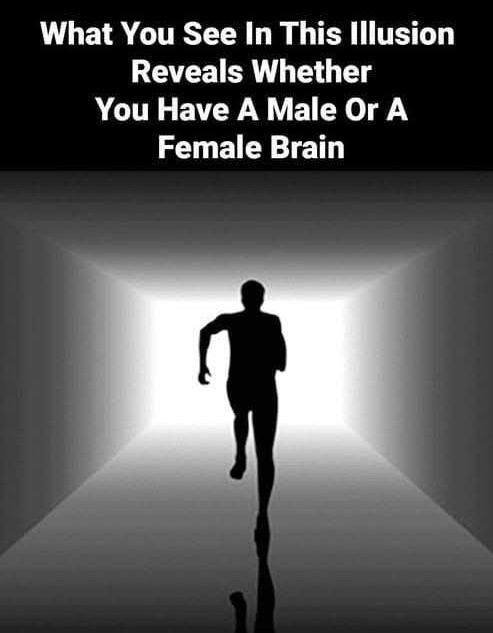
- May create false “personality test” claims
🚨 Common Myths About Optical Illusions
❌ “They reveal your personality”
Not scientifically reliable. Most viral interpretations are oversimplified.
❌ “There is always a right answer”
Not always. Some illusions have multiple valid interpretations.
❌ “Only certain people see them correctly”
False. Most differences come from perception, not ability.
🧠 Expert Insight: Why Your Brain Chooses “Wrong” Answers
Your brain is not built for accuracy—it’s built for speed.
That means it prioritizes:
- Survival relevance
- Pattern recognition
- Fast decision-making
Illusions exploit this system by presenting information your brain has never evolved to process correctly.
🌍 2026 Trend: Why Illusions Are Everywhere Online
Optical illusions have become viral because they combine:
- Short attention span content
- Interactive engagement
- Shareability
- “I see something different!” debates
Platforms reward content that triggers disagreement and curiosity loops.
🧾 Quick Self-Awareness Checklist
Ask yourself while viewing illusions:
✔ Did I assume what I saw immediately?
✔ Can I see more than one interpretation?
✔ Do I get stuck on the first perception?
✔ Can I mentally “switch” perspectives?
✔ Do I question what my brain tells me?
🏁 Conclusion
Optical illusions aren’t just tricks—they’re mirrors.
Not of the world, but of your mind.
They show you something uncomfortable but valuable:
What you see is not always what is real.
And awareness begins the moment you realize your perception is editable.
Optical illusions don’t just fool your eyes—they reveal how your brain builds reality and how flexible your thinking truly is.
If this made you question what you see, share it with someone and compare your interpretations—you’ll probably be surprised how different reality can look from one mind to another.