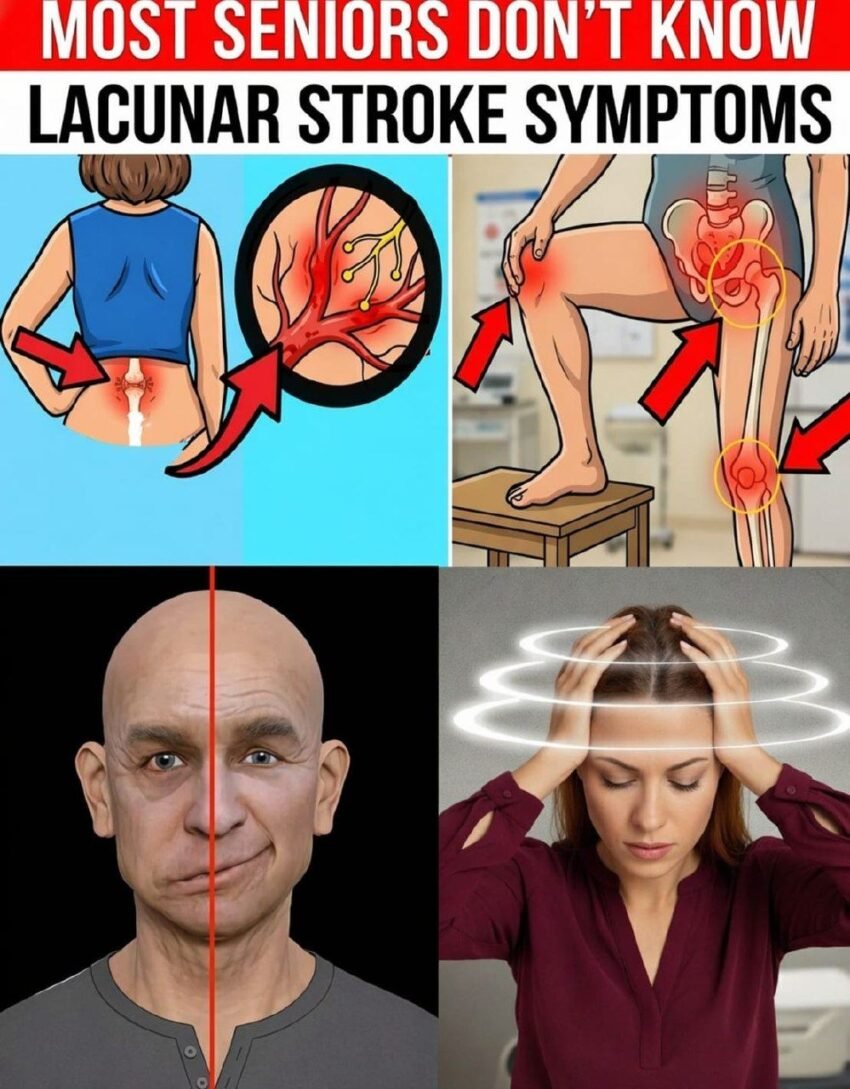
Over 60? 7 Lacunar Stroke Warning Signs Most People Miss (Especially #4)
Learn 7 overlooked warning signs of lacunar stroke in adults over 60. Early detection can prevent serious damage—know what to watch for.
It doesn’t always look like a stroke…
When people think of a stroke, they picture something dramatic—slurred speech, a drooping face, a sudden collapse.
But that’s not always how it begins.
For many adults over 60, especially those at risk, a lacunar stroke can show up quietly. Subtle changes. Easy to ignore. Sometimes mistaken for “just getting older.”
And that’s exactly what makes it dangerous.
Because by the time it’s obvious, the damage is already done.
This guide breaks down 7 warning signs most people overlook, why they matter, and what to do if you notice them—whether in yourself or someone you care about.
What is a lacunar stroke (and why it’s different)?
A lacunar stroke is a type of ischemic stroke that occurs when small blood vessels deep within the brain become blocked.
Unlike major strokes, these don’t always cause dramatic symptoms right away.
Instead, they affect specific brain areas responsible for:
- Movement
- Coordination
- Sensation
- Subtle cognitive functions
Why adults over 60 are at higher risk
As we age, certain factors increase the likelihood:
- High blood pressure
- Diabetes
- Cholesterol buildup
- Reduced vascular flexibility
According to research referenced by institutions like the American Heart Association and Harvard Medical School, these small vessel strokes are particularly common in older adults—and often underdiagnosed.
Why early warning signs are often missed
Here’s the problem:
The symptoms don’t always feel urgent.
They can come and go. They can be mild. They can mimic fatigue or stress.
People brush them off.
Family members don’t notice.
Doctors may not immediately suspect it without clear indicators.
That’s why awareness matters.
The 7 warning signs you should never ignore
Let’s go through them carefully—because recognizing even one could make a life-changing difference.
1. Sudden weakness on one side (even if mild)
This doesn’t have to be dramatic paralysis.
It might feel like:
- One arm is slightly heavier
- A leg feels less responsive
- Grip strength is weaker than usual
Even mild asymmetry matters.
2. Clumsiness or coordination problems
You might notice:
- Dropping objects more often
- Trouble buttoning a shirt
- Difficulty writing or typing
This can be mistaken for aging—but sudden onset is a red flag.
3. Numbness or tingling in face, arm, or leg
A “pins and needles” sensation that:
- Appears suddenly
- Affects one side of the body
- Doesn’t go away quickly
This is one of the most common signs of small vessel blockage.
4. Subtle speech changes (the most overlooked)
This is the one many people miss.
Not full slurring—just slight changes like:
- Struggling to find the right word
- Speaking more slowly than usual
- Words coming out slightly unclear
Because it’s subtle, people often dismiss it.
But it can signal early brain involvement.
5. Sudden balance issues or unsteadiness
Feeling off-balance without a clear reason?
Watch for:
- Swaying while walking
- Needing support unexpectedly
- Feeling “off” when standing
This isn’t always an inner ear issue—it can be neurological.
6. Facial asymmetry (even slight)
Not always a dramatic droop.
Sometimes it’s:
- A slight uneven smile
- One eyelid lower than the other
- Subtle facial weakness
Look closely—small changes matter.
7. Brief episodes that resolve (mini warning signs)
This is where it gets tricky.
Symptoms may:
- Last a few minutes
- Disappear on their own
- Seem harmless afterward
These could be transient ischemic attacks (TIAs)—often called “mini-strokes”—and they’re a major warning sign of a future stroke.
Why ignoring these signs is risky
A lacunar stroke may seem minor at first, but repeated small strokes can lead to:
- Permanent mobility issues
- Cognitive decline
- Increased risk of major stroke
- Loss of independence
Early action can prevent progression.
What to do immediately if you notice symptoms
Time matters—even with subtle signs.
Follow this simple rule:
If it’s sudden and unusual, don’t wait.
Take action:
- Call emergency services
- Note the time symptoms started
- Do not “wait and see”
- Avoid driving yourself if possible
Even if symptoms fade, medical evaluation is critical.
Real-world scenario: how it often unfolds
A 67-year-old notices mild hand weakness and slight speech hesitation.
They assume it’s fatigue.
A few days later, balance feels off.
Still ignored.
Weeks later, a more serious stroke occurs—leading to hospitalization and long-term recovery challenges.
Now imagine the same situation—but action is taken early.
A quick hospital visit leads to:
- Early diagnosis
- Medication adjustments
- Risk factor management
Outcome? Damage minimized.
That’s the difference awareness makes.
Quick comparison: lacunar vs major stroke symptoms
| Feature | Lacunar Stroke | Major Stroke |
|---|---|---|
| Onset | Subtle | Sudden & severe |
| Symptoms | Mild, localized | Obvious, widespread |
| Detection | Often delayed | Immediate |
| Risk of being ignored | High | Low |
Common mistakes people make
1. Blaming age
Not every change is “just getting older.”
2. Waiting for symptoms to worsen
Early signs are your window of opportunity.
3. Ignoring short episodes
Temporary symptoms can still indicate serious risk.
4. Self-diagnosing
Only medical professionals can confirm what’s happening.
Prevention strategies that actually help
You can’t control everything—but you can reduce risk.
Focus on:
- Managing blood pressure
- Controlling blood sugar
- Staying physically active
- Eating a balanced diet
- Avoiding smoking
- Regular medical checkups
These steps are consistently recommended by leading health organizations.
2026 insight: why awareness is increasing
Healthcare is shifting toward earlier detection of “silent” conditions.
Wearables, telehealth, and better screening tools are helping—but they still rely on one thing:
People recognizing symptoms early.
FAQs: What people often ask
1. What is the main cause of lacunar stroke?
Small vessel blockage, often linked to high blood pressure.
2. Can symptoms come and go?
Yes—and that’s what makes them easy to ignore.
3. Is it less dangerous than a major stroke?
Not necessarily. Repeated small strokes can cause serious damage.
4. How fast should I act?
Immediately. Don’t wait.
5. Can younger people have lacunar strokes?
Yes, but risk increases significantly after 60.
6. Are these symptoms always obvious?
No—they’re often subtle and easy to miss.
7. Can lifestyle changes prevent it?
They can significantly reduce risk.
8. Should I go to the ER even if symptoms stop?
Yes. Always.
9. What tests diagnose it?
MRI scans are commonly used.
10. Can recovery be complete?
It depends on severity and how early treatment begins.
Action checklist: Stay prepared
✔ Do this
- Learn the warning signs
- Act immediately on sudden changes
- Monitor health conditions
- Schedule regular checkups
- Educate family members
✘ Avoid this
- Ignoring mild symptoms
- Delaying medical care
- Assuming symptoms will pass safely
- Self-diagnosing
Final thoughts
Lacunar strokes don’t always announce themselves loudly.
Sometimes they whisper.
And those whispers—if ignored—can turn into something far more serious.
Pay attention to small changes. Trust what feels off. Act quickly.
It’s not about fear—it’s about awareness.
Subtle symptoms can signal a serious stroke risk. Recognizing them early can protect your health—and your independence.
If this helped you, share it with someone over 60. It might give them the awareness they didn’t know they needed.