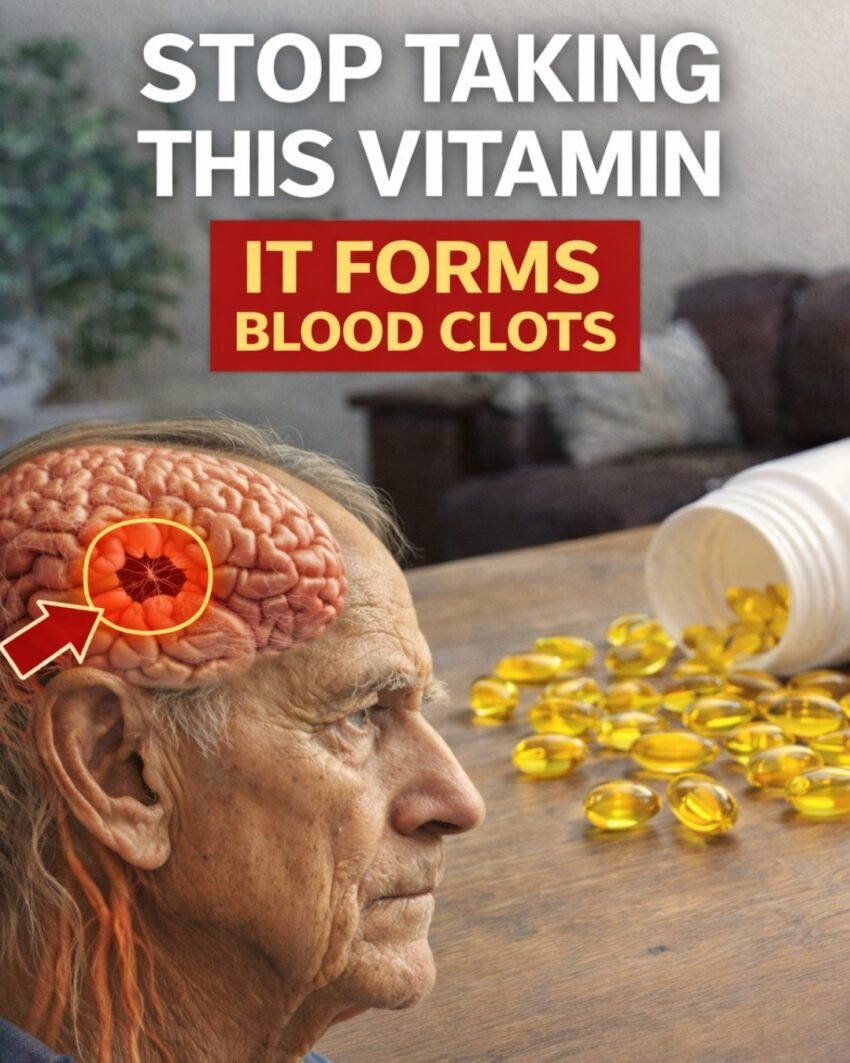
🧠 As a Brain Doctor, I’m Concerned: Could This Common Vitamin Supplement Affect Stroke Risk in Seniors?
A neurologist’s perspective on common vitamin supplements and stroke risk in seniors—what research says, what to avoid, and safer alternatives.
Most seniors take at least one vitamin every day.
Sometimes it’s vitamin D for “bone strength.” Sometimes it’s vitamin E for “heart health.” And sometimes it’s part of a multivitamin they’ve taken for decades without question.
But here’s what concerns many neurologists today:
Not all supplements are as harmless as they seem—especially in older adults with changing metabolism, medications, and vascular risk factors.
And in some cases, a simple over-the-counter vitamin may quietly influence stroke risk—not directly causing it, but altering the body’s delicate balance in ways that matter more with age.
In this article, we’ll break down what current research actually says, which supplements deserve caution, and how seniors can make safer, evidence-based decisions without fear or confusion.
🧠 Why This Topic Matters More After 60
Stroke remains one of the leading causes of disability and death in older adults in the United States. The American Stroke Association consistently highlights age as one of the strongest risk factors.
But age doesn’t act alone.
By the time people reach their 60s and 70s, several changes occur:
- Blood vessels become more fragile
- Medication use increases (blood thinners, BP meds, statins)
- Kidney function declines gradually
- Nutrient metabolism becomes less predictable
- Small imbalances can have bigger consequences
This is why supplements that seem “safe” in younger adults may behave differently in seniors.
🧪 The Truth About Vitamin Supplements and Stroke Risk
Let’s separate myth from evidence.
Large clinical trials and meta-analyses have looked at whether vitamins reduce or increase stroke risk. The results are more nuanced than most supplement marketing suggests.
Key findings from research:
- Vitamin D: Large randomized trials show no consistent reduction in stroke risk from supplementation alone
- B vitamins: Mixed results—may help in specific deficiency cases, but not broadly protective
- Vitamin E (high dose): Linked in some studies to increased risk of bleeding complications, which can raise concern for hemorrhagic stroke in certain individuals
Important clarification:
These findings do not mean vitamins “cause strokes” in healthy doses. Instead, the risk appears when:
- Doses are high or unnecessary
- Combined with medications (especially blood thinners)
- Used without monitoring deficiency status
⚠️ The Supplement Most Neurologists Watch Closely
Vitamin E (High-Dose Supplementation)
Vitamin E is often marketed for brain and heart protection.
But in clinical practice, caution is warranted.
Why?
- It has mild blood-thinning effects
- It can interact with anticoagulants (like warfarin or aspirin)
- Excess intake may increase bleeding risk in susceptible patients
This matters because hemorrhagic stroke (bleeding in the brain) is strongly linked to clotting imbalance.
Again—food sources (nuts, seeds, oils) are safe. The concern is concentrated, high-dose capsules.
🧠 Vitamin D: Overhyped for Stroke Prevention?
Vitamin D is one of the most commonly taken supplements among seniors in the U.S.
It supports:
- Bone health
- Muscle strength
- Immune function
But when it comes to stroke prevention?
Large controlled studies show no clear protective effect against stroke risk from routine supplementation alone .
What this means in simple terms:
- If you are deficient → supplementation is beneficial
- If you are not deficient → extra vitamin D does not reduce stroke risk
More is not automatically better.
🧬 Vitamin B Complex and the Homocysteine Debate
For years, vitamin B6, B12, and folate were believed to reduce stroke risk by lowering homocysteine levels.
Here’s what we now understand:
- They do lower homocysteine
- But lowering homocysteine does not consistently reduce stroke events in large populations
The clinical takeaway:
Vitamin B supplementation is helpful in deficiency states, but not a universal stroke prevention strategy.
💊 The Hidden Risk: Supplement + Medication Interactions
This is where real-world stroke risk becomes more relevant.
Many seniors take:
- Blood pressure medications
- Blood thinners (aspirin, clopidogrel, warfarin)
- Cholesterol-lowering drugs
Now add supplements like:
- Vitamin E (high dose)
- Fish oil (high dose omega-3)
- Ginkgo biloba
- High-dose vitamin A or D
The combination can sometimes:
- Increase bleeding risk
- Alter clotting balance
- Affect blood pressure stability
- Stress kidney clearance systems
This is not theoretical—it is a frequent concern in neurology clinics.
🧾 Real-World Scenario: What Doctors Actually See
A 72-year-old patient walks into a clinic after a mild stroke.
They are doing “everything right”:
- Taking a multivitamin
- Taking vitamin E for “heart protection”
- Using fish oil daily
- On aspirin therapy
Individually, none seem dangerous.
But together, they may shift bleeding risk and vascular stability enough to matter in a vulnerable brain.
This is the reality neurologists deal with—not extreme overdoses, but stacked supplements with medical therapy.
⚖️ Pros and Cons of Vitamin Supplement Use in Seniors
✅ Potential Benefits
- Corrects true deficiencies
- Supports bone health (vitamin D, calcium when needed)
- May improve overall nutrition in low-diet diversity
- Helpful in medically supervised cases
❌ Potential Risks
- Increased bleeding risk (high-dose vitamin E)
- Kidney strain (excess vitamin D or calcium combinations)
- Drug interactions
- False sense of protection against stroke
- Over-supplementation without testing
🧠 Common Mistakes Seniors Make
❌ Taking vitamins “just in case”
Fix: Test first. Supplement only when needed.
❌ Stacking multiple products
(multivitamin + individual vitamins + fortified drinks)
Fix: Review total intake across all sources.
❌ Assuming “natural = safe”
Fix: Dose matters more than origin.
❌ Ignoring medication interactions
Fix: Always disclose supplements to your physician.
🧪 What Neurologists Actually Recommend
Instead of blanket supplementation:
1. Check real deficiencies
- Vitamin D
- B12
- Iron (when indicated)
2. Prioritize food first
- Leafy greens
- Fish
- Nuts and seeds
- Whole grains
3. Use supplements only when targeted
Not as routine “insurance.”
4. Review everything annually
Especially after age 60.
🔮 2026 Trend: The Shift Away From “Mega Supplementing”
Modern clinical nutrition is moving toward:
- Blood-test-guided supplementation
- Lower, targeted dosing
- Fewer combination pills
- Greater focus on drug–nutrient interactions
The era of “take a multivitamin and cover everything” is fading in evidence-based medicine.
❓ Frequently Asked Questions
1. Can vitamins cause stroke directly?
Not usually. Risk comes from excess dose or interactions, not normal dietary intake.
2. Is vitamin D safe for seniors?
Yes, when dosed appropriately and based on deficiency testing.
3. Does vitamin E increase stroke risk?
High doses may increase bleeding risk in some individuals, especially on blood thinners.
4. Should seniors stop all supplements?
No—only unnecessary or unmonitored ones should be reconsidered.
5. Are multivitamins safe?
Generally safe, but often unnecessary if diet is balanced.
6. What is the safest approach?
Testing, targeted supplementation, and medical oversight.
7. Can B vitamins prevent stroke?
Only in cases of deficiency. Not proven for general prevention.
8. Are natural supplements better?
Not necessarily. Natural does not guarantee safety or correct dosage.
🧾 Action Checklist
✔ What to Do
- Review all supplements with a doctor
- Check vitamin D and B12 levels if older adult
- Keep doses within recommended ranges
- Prioritize food-based nutrition
- Reassess supplements yearly
❌ What to Avoid
- High-dose vitamin E without medical supervision
- Combining multiple overlapping supplements
- Self-prescribing for “brain protection”
- Ignoring medication interactions
🏁 Conclusion
The relationship between vitamins and stroke risk is not black and white.
For seniors, the real issue is rarely deficiency—it’s over-supplementation without oversight.
Most vitamins are safe when used correctly. The risk appears when they are taken in high doses, stacked together, or combined with medications that affect blood flow.
In neurology, the goal is simple:
Not more supplements—but smarter ones.
Vitamins are tools, not shields. For seniors, safety comes from balance, not excess—and the safest supplement is the one taken with intention, not habit.