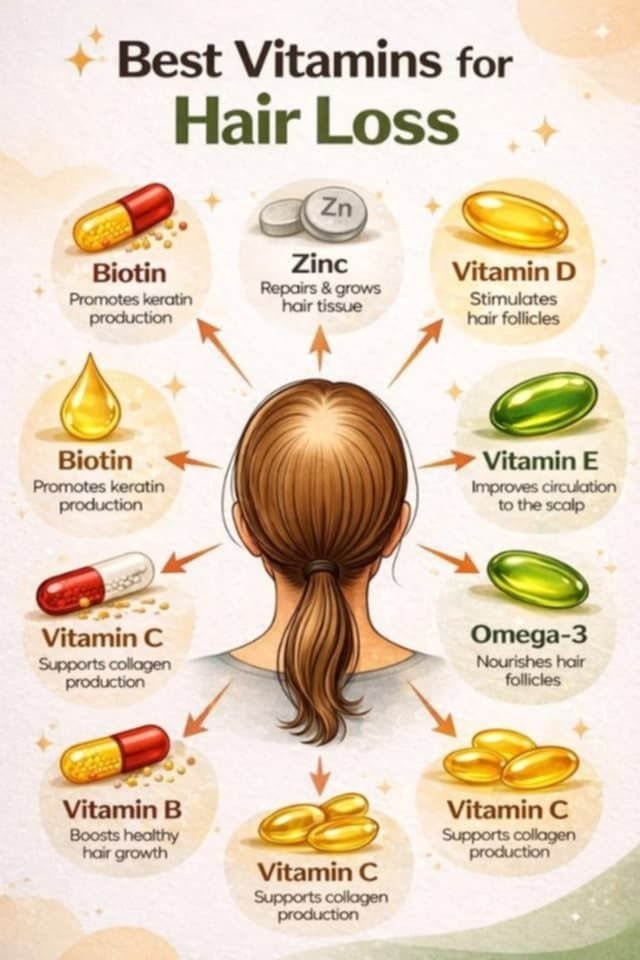
10 Powerful Vitamins for Hair Growth & Thinning Hair (Backed by Science & Real Results)
Struggling with thinning hair? Discover the most effective vitamins for hair growth, how they work, and how to use them safely for real results.
You notice it in the mirror first. A little more scalp showing. A thinner ponytail. Maybe your hairline isn’t what it used to be.
It doesn’t happen overnight—but once you see it, you can’t unsee it.
Hair thinning is one of those quiet frustrations that builds over time. And while genetics, stress, and hormones often take the blame, there’s another major player most people overlook: nutrient deficiencies.
Here’s the good news—many cases of thinning hair can improve with the right vitamins. Not magic pills. Not overnight miracles. But real, measurable improvement when your body gets what it actually needs.
In this guide, you’ll discover which vitamins matter most, how they affect hair growth, what actually works (and what doesn’t), and how to build a routine that supports stronger, fuller hair.
What Actually Causes Hair Thinning?
Before jumping into vitamins, it helps to understand the root problem.
Hair growth happens in cycles. Each follicle goes through phases—growth, rest, shedding. When something disrupts that cycle, hair starts thinning.
Common triggers include:
- Nutrient deficiencies (very common in the U.S.)
- Chronic stress
- Hormonal imbalances
- Poor diet patterns
- Aging
- Medical conditions like anemia or thyroid issues
Here’s the key insight: your body prioritizes survival over hair.
If you’re low on essential nutrients, your hair is one of the first things your body “cuts back” on.
Why Vitamins Matter More Than You Think
Hair is made primarily of a protein called keratin. But producing healthy keratin—and maintaining strong follicles—requires a wide range of micronutrients.
Without them:
- Growth slows down
- Hair becomes brittle
- Shedding increases
- Follicles weaken
According to research from institutions like Harvard Medical School, deficiencies in certain vitamins are directly linked to hair loss conditions.
This isn’t about taking random supplements. It’s about correcting what your body is missing.
The 10 Most Effective Vitamins for Hair Growth
Let’s break down the vitamins that actually make a difference.
1. Biotin (Vitamin B7)
Biotin is often the first supplement people try—and for good reason.
It supports keratin production and strengthens hair structure.
Best for:
- Brittle hair
- Breakage
- Weak strands
Reality check:
If you’re not deficient, mega-dosing biotin won’t suddenly give you thick hair. But if you are deficient, the improvement can be noticeable within weeks.
2. Vitamin D
Low vitamin D levels are surprisingly common in the U.S., especially among people who spend most of their time indoors.
Vitamin D helps stimulate hair follicles and may play a role in creating new ones.
Signs you may need it:
- Excessive shedding
- Fatigue
- Low sun exposure
3. Iron
Technically a mineral, but essential enough to include.
Iron deficiency is one of the leading causes of hair thinning—especially in women.
It helps red blood cells carry oxygen to hair follicles.
Without it:
Follicles weaken and hair falls out faster than it grows.
4. Vitamin C
Vitamin C does two critical things:
- Helps your body absorb iron
- Protects hair follicles from oxidative stress
It also supports collagen production, which strengthens hair structure.
5. Vitamin A
Vitamin A supports cell growth—including hair cells.
But here’s the catch: too much can actually cause hair loss.
Balance is everything.
6. Vitamin E
Vitamin E improves scalp circulation and reduces oxidative stress.
Better blood flow = healthier follicles.
7. Zinc
Zinc plays a key role in tissue repair and hair growth.
Deficiency can lead to:
- Hair shedding
- Slow regrowth
- Scalp issues
8. Folate (Vitamin B9)
Folate helps create new cells, including hair cells.
It’s especially important if your hair growth has slowed down.
9. Vitamin B12
Low B12 levels can lead to fatigue—and hair thinning.
It supports red blood cell production, similar to iron.
10. Omega-3 Fatty Acids
Not a vitamin, but critical for scalp health.
They reduce inflammation and help nourish hair follicles.
Quick Comparison Table
| Nutrient | Main Benefit | Best For | Risk if Overused |
|---|---|---|---|
| Biotin | Strengthens hair structure | Breakage, brittle hair | Minimal |
| Vitamin D | Stimulates follicles | Shedding | Toxicity if excessive |
| Iron | Oxygen delivery | Hair loss in women | Digestive issues |
| Vitamin C | Boosts absorption & collagen | Weak hair | Mild GI upset |
| Vitamin A | Cell growth | Dry scalp | Hair loss if excess |
| Vitamin E | Circulation | Scalp health | Rare |
| Zinc | Tissue repair | Hair shedding | Nausea if excess |
| Folate | Cell production | Slow growth | Rare |
| B12 | Energy + growth | Thinning + fatigue | Rare |
| Omega-3 | Anti-inflammatory | Dry scalp | Mild |
Step-by-Step: How to Use Vitamins for Hair Growth
Most people make one big mistake: they take everything at once.
That’s not strategy—that’s guesswork.
Here’s a smarter approach:
Step 1: Identify the Root Issue
Start with basic blood work if possible.
Check:
- Iron levels
- Vitamin D
- B12
This prevents unnecessary supplementation.
Step 2: Fix Diet First
Supplements help—but food is your foundation.
Focus on:
- Eggs (biotin, protein)
- Leafy greens (folate, iron)
- Citrus fruits (vitamin C)
- Fatty fish (omega-3s)
Step 3: Add Targeted Supplements
Only add what you actually need.
Start slow. Track results.
Step 4: Be Consistent for 8–12 Weeks
Hair growth takes time.
You won’t see changes in days—but consistency pays off.
Step 5: Monitor and Adjust
If nothing improves after 3 months, reassess.
It could be hormonal, not nutritional.
Real-Life Scenario
Jessica, a 34-year-old from Texas, noticed increased hair shedding after switching to a restrictive diet.
She assumed stress was the cause.
After testing, she found:
- Low iron
- Low vitamin D
Within 3 months of correcting those deficiencies, her shedding slowed significantly—and regrowth started along her hairline.
Not a miracle. Just biology working properly again.
Common Mistakes (And How to Fix Them)
Mistake 1: Taking random supplements
→ Fix: Target actual deficiencies
Mistake 2: Expecting overnight results
→ Fix: Commit to at least 8–12 weeks
Mistake 3: Ignoring diet
→ Fix: Food first, supplements second
Mistake 4: Overdosing vitamins
→ Fix: Stick to recommended levels
Mistake 5: Skipping medical causes
→ Fix: Rule out thyroid or hormonal issues
Pros and Cons of Using Vitamins for Hair Growth
Pros
- Addresses root causes
- Improves overall health
- Supports long-term hair quality
Cons
- Results take time
- Not effective for genetic hair loss
- Requires consistency
Expert-Level Insights You Won’t Hear Often
- Hair supplements only work if there’s a deficiency
- Stress can block nutrient absorption
- Gut health directly impacts vitamin absorption
- Combining iron with vitamin C boosts effectiveness significantly
- Sleep quality affects hair growth cycles
2026 Trends in Hair Health
- Personalized nutrition based on DNA testing
- Scalp-focused treatments paired with supplements
- Functional foods replacing traditional supplements
- Increased focus on gut health for hair growth
What the Future Looks Like
Hair care is shifting from cosmetic to biological.
Instead of hiding thinning hair, more people are addressing the internal causes.
Expect more precision-based solutions—less guesswork, more data-driven care.
Frequently Asked Questions
1. How long do vitamins take to improve hair growth?
Typically 8–12 weeks before noticeable changes.
2. Can I take all hair vitamins together?
Not recommended. Focus on what your body actually needs.
3. Do hair gummies really work?
Only if they contain nutrients you’re deficient in.
4. Is biotin enough for hair growth?
No. Hair health depends on multiple nutrients.
5. Can vitamins stop hair loss completely?
Depends on the cause. Nutritional deficiencies—yes. Genetic loss—less likely.
6. Are there side effects?
Yes, if overused. Always follow dosage guidelines.
7. Should men and women take different vitamins?
The core nutrients are similar, but iron needs differ.
8. Can stress cancel out vitamin benefits?
Yes. Chronic stress affects absorption and hair cycles.
9. Is food better than supplements?
In most cases, yes. Supplements fill the gaps.
10. When should I see a doctor?
If hair loss is sudden, severe, or persistent.
Action Checklist
Do this:
- Get blood work done
- Focus on whole foods
- Take targeted supplements
- Stay consistent for 3 months
- Manage stress and sleep
Avoid this:
- Taking random vitamins
- Expecting quick results
- Ignoring underlying conditions
- Over-supplementing
Conclusion
Hair thinning can feel frustrating, even discouraging—but it’s not always permanent.
In many cases, it’s your body asking for support.
When you correct the right deficiencies, you’re not forcing hair growth—you’re restoring it.
That’s a completely different game.
Start simple. Stay consistent. Pay attention to what your body is telling you.
Because real hair health doesn’t come from trends—it comes from understanding what your body actually needs.
The right vitamins won’t magically transform your hair overnight—but they can quietly rebuild it, strand by strand, when used correctly.
If this helped, share it with someone who’s struggling with hair thinning—or explore more guides to take control of your health from the inside out.