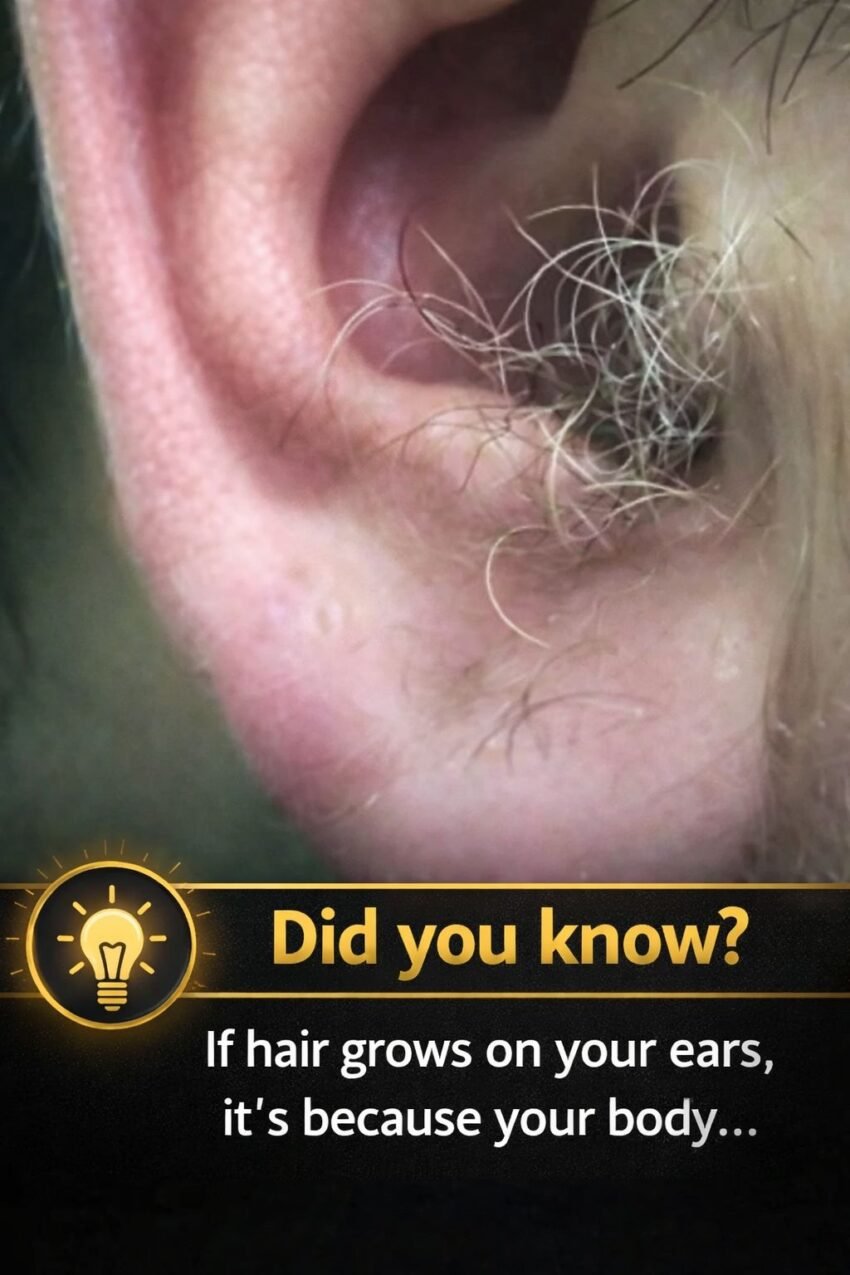
Ear Hair & Your Health: What Doctors Really Reveal About This Overlooked Body Signal
Does ear hair mean anything for your health? Discover what doctors say about ear hair growth, aging, hormones, and when it may signal something more.
You catch it in the mirror one day—thin strands, maybe thicker than before, growing from your ears.
At first, it feels cosmetic. Something to trim and forget.
But then a question lingers:
Is this normal… or is my body trying to tell me something?
Ear hair is one of those subtle changes most people ignore—or quietly worry about. And while it’s usually harmless, it’s not completely meaningless either.
In this guide, we’ll unpack what doctors actually say about ear hair growth, what it can reveal about your body, and when (if ever) it deserves closer attention.
What Is Ear Hair, Really?
There are two types of hair associated with your ears:
- Vellus hair – fine, light, barely visible
- Terminal hair – thicker, darker, more noticeable
The hair you start noticing with age? That’s terminal hair.
It typically appears around:
- The outer ear (helix)
- The ear canal entrance
Why This Matters (More Than You Think)
Most body changes don’t happen randomly.
They reflect shifts in:
- Hormones
- Genetics
- Aging processes
Ear hair growth sits at the intersection of all three.
So while it’s usually not a warning sign, it can reflect what’s happening beneath the surface.
What Causes Increased Ear Hair Growth?
Let’s break down the real drivers.
1. Aging (The Primary Factor)
As you age, your hair follicles become more sensitive to hormones.
This leads to:
- Thicker hair in some areas (ears, nose)
- Thinning hair in others (scalp)
It’s a natural biological shift—not a defect.
2. Hormonal Changes
Ear hair growth is influenced by androgens—male hormones like testosterone.
Higher sensitivity to these hormones can lead to:
- Increased facial hair
- Ear and nose hair growth
This is why it’s more common in men.
3. Genetics
Some people simply have a genetic predisposition.
If your father or grandfather had noticeable ear hair, there’s a good chance you will too.
4. Ethnicity and Hair Patterns
Hair growth patterns vary across populations.
Some individuals naturally develop more terminal hair in certain areas.
What Doctors Actually Say
Here’s the grounded, medical perspective:
- Ear hair is usually harmless
- It’s primarily linked to aging and hormones
- It is not a disease on its own
However, context matters.
Doctors look at patterns—not isolated traits.
The Controversial Link: Ear Hair and Heart Health
You may have heard claims that ear hair is linked to heart disease.
This idea comes from studies examining something called earlobe crease and, in some cases, excessive ear hair.
Some research suggested a possible association with cardiovascular risk.
But here’s the reality:
- Evidence is inconclusive
- Ear hair alone is not a reliable indicator
- Doctors do not use it for diagnosis
Organizations like the American Heart Association do not recognize ear hair as a clinical marker.
What Ear Hair Might Indirectly Reflect
While not a direct signal, ear hair can reflect broader changes:
1. Hormonal Sensitivity
Your body’s response to androgens increases with age.
2. Aging Process
It’s one of many visible signs—like wrinkles or gray hair.
3. Hair Distribution Shifts
Hair doesn’t disappear—it redistributes.
Less on the scalp, more in unexpected places.
When Should You Actually Be Concerned?
In most cases, you shouldn’t be.
But consider checking with a doctor if ear hair growth is:
- Sudden and extreme
- Accompanied by other unusual symptoms
- Paired with hormonal imbalances
Examples of additional symptoms:
- Rapid weight changes
- Fatigue
- Skin changes
These could point to broader hormonal or metabolic issues.
Real-Life Scenario
David, 52, noticed increased ear hair and assumed it meant declining health.
Concerned, he scheduled a check-up.
Results?
- Normal cardiovascular health
- Balanced hormone levels
The conclusion: natural aging.
What changed wasn’t his health—but his awareness.
Common Mistakes (And Fixes)
Mistake: Assuming ear hair signals disease
→ Fix: Understand it’s usually normal
Mistake: Ignoring overall health while focusing on appearance
→ Fix: Prioritize real health markers (blood pressure, cholesterol)
Mistake: Over-researching and worrying
→ Fix: Focus on evidence, not myths
Grooming: What’s Safe and What’s Not
Let’s address the practical side.
Safe Methods:
- Electric trimmers designed for ears
- Small grooming scissors (carefully used)
Avoid:
- Waxing deep inside the ear
- Plucking aggressively (can cause irritation)
Pros and Cons of Managing Ear Hair
Pros
- Cleaner appearance
- Boosted confidence
- Simple maintenance
Cons
- Requires regular upkeep
- Risk of irritation if done improperly
Expert Insights Most People Miss
- Hair growth is about follicle sensitivity, not just hormone levels
- Visible changes don’t always reflect internal problems
- Preventive health matters more than cosmetic signals
- Stress and lifestyle affect overall hair patterns
2026 Health Trends
- Increased awareness of subtle body signals
- More personalized hormone analysis
- Focus on aging gracefully, not hiding it
- Growth of simple grooming solutions
The Bigger Picture
Ear hair is a reminder of something important:
Your body changes—and not all changes are problems.
Some are simply part of the process.
Understanding the difference is what keeps you grounded—and healthy.
Frequently Asked Questions
1. Is ear hair normal as you age?
Yes, very common—especially in men.
2. Does ear hair mean high testosterone?
Not necessarily—more about sensitivity than levels.
3. Is it linked to heart disease?
There’s no strong evidence supporting that.
4. Should I remove ear hair?
It’s a personal choice, not a medical necessity.
5. Can women get ear hair?
Yes, but typically less noticeable.
6. Does it keep growing forever?
Growth may increase with age but varies.
7. Is trimming safe?
Yes, when done carefully.
8. Can diet affect ear hair?
Not directly.
9. Should I worry about sudden growth?
Only if paired with other symptoms.
10. Is it a sign of poor health?
No, not on its own.
Action Checklist
Do this:
- Understand it’s usually normal
- Monitor overall health, not just appearance
- Groom safely if desired
- Stay informed, not alarmed
Avoid this:
- Jumping to conclusions
- Relying on myths
- Ignoring real health indicators
Conclusion
Ear hair might feel like an odd or even embarrassing change—but it’s rarely a warning sign.
More often, it’s just your body doing what it naturally does over time.
The real takeaway?
Don’t confuse visibility with importance.
Focus on what actually impacts your health—and let the rest be just another part of being human.
Ear hair is usually a normal result of aging and hormones—not a health warning. Pay attention to real medical signals, not cosmetic changes.
If this cleared up a concern, share it with someone who’s been wondering the same thing—or explore more insights about how your body communicates subtle changes.