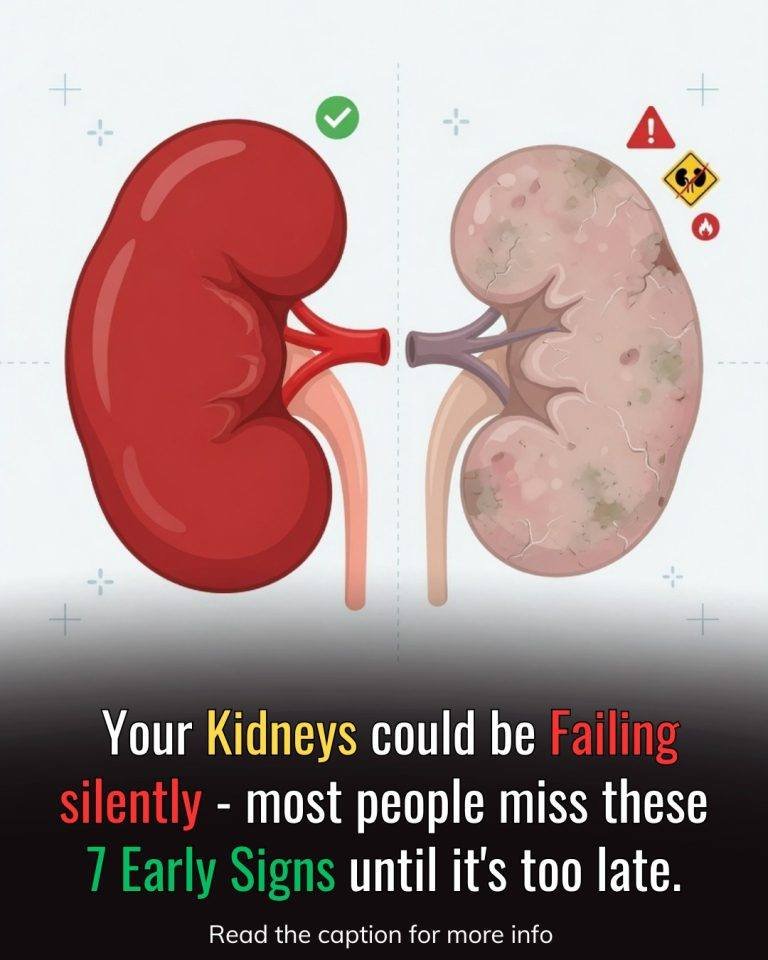
Kidney Disease Is Called the “Silent Killer” — Here’s the Real Reason It Often Goes Undetected Until It’s Too Late
Kidney disease is called the silent killer because symptoms appear late. Learn the hidden warning signs and how to protect your kidney health.
Most people don’t think about their kidneys until something feels seriously wrong.
That’s exactly what makes kidney disease so dangerous.
By the time noticeable symptoms appear, significant damage may have already occurred—sometimes irreversible.
Doctors often refer to it as the “silent killer” not to create fear, but because of a simple, unsettling reality:
your kidneys can lose function for years without obvious warning signs.
So what is actually happening inside the body during those silent years—and why does it stay hidden for so long?
Let’s break it down in a clear, practical way.
What Your Kidneys Actually Do (And Why They Matter More Than You Think)
Your kidneys are two small, bean-shaped organs—but their job is massive.
They:
- Filter waste and toxins from blood
- Balance fluids and electrolytes
- Help control blood pressure
- Support red blood cell production
- Regulate vitamin D activation
Think of them as your body’s internal filtration system working 24/7.
When they start to fail, waste slowly builds up—but the body initially adapts, which is why early damage often goes unnoticed.
Why Kidney Disease Is Called the “Silent Killer”
The term “silent killer” isn’t an exaggeration—it reflects how the disease progresses.
Here’s why it stays hidden:
1. Symptoms Don’t Appear Until Late Stages
Kidneys have a strong reserve capacity. Even when damaged, they continue working.
That means:
- 30–40% function loss can occur with no obvious symptoms
- Early warning signs are subtle or ignored
- By the time symptoms are noticeable, damage is often advanced
2. Symptoms Are Easy to Misinterpret
Early signs often feel unrelated or “normal,” such as:
- Fatigue
- Mild swelling in feet or ankles
- Changes in urination
- Loss of appetite
People often blame:
- Stress
- Aging
- Dehydration
- Busy lifestyle
3. The Body Compensates Quietly
The human body is adaptive.
When kidney function declines:
- Other systems temporarily adjust
- Remaining kidney tissue works harder
- Symptoms are delayed
This compensation masks the problem until it becomes serious.
4. Progression Is Slow but Steady
Many kidney conditions develop over years, especially:
- Chronic Kidney Disease
- Diabetes-related kidney damage
- High blood pressure-related damage
Because the decline is gradual, it doesn’t feel urgent—until it is.
Major Causes Behind Kidney Disease
Understanding the root causes is key to prevention.
1. Diabetes
High blood sugar damages kidney blood vessels over time.
This is one of the leading causes of kidney failure worldwide.
2. High Blood Pressure
Uncontrolled blood pressure puts strain on kidney filtration systems.
3. Poor Hydration Habits
Long-term dehydration can stress kidney function.
4. Excessive Salt Intake
High sodium levels increase blood pressure and kidney workload.
5. Certain Medications
Long-term misuse of painkillers can contribute to kidney damage.
Early Warning Signs Most People Ignore
Even though it’s “silent,” there are subtle signals.
1. Persistent Fatigue
When kidneys fail to remove toxins properly, fatigue builds up.
2. Swelling in Legs, Ankles, or Face
Fluid retention is a common early sign.
3. Changes in Urination
Including:
- Foamy urine
- Frequent nighttime urination
- Reduced output
4. Loss of Appetite or Nausea
Waste buildup affects digestion and appetite.
5. Itchy Skin
Mineral imbalances can trigger skin irritation.
Why It’s Often Diagnosed Late in the U.S. and Globally
In many cases, kidney disease is discovered during routine blood tests—not because symptoms prompted concern.
Reasons include:
- Lack of early screening
- Misinterpreting symptoms
- Limited awareness
- No pain in early stages
Unlike diseases that cause immediate discomfort, kidney damage is quiet.
How Doctors Detect Kidney Disease Early
Medical professionals rely on:
- Blood tests (creatinine levels)
- Estimated Glomerular Filtration Rate (eGFR)
- Urine analysis for protein
- Blood pressure monitoring
These tests can detect problems long before symptoms appear.
Stages of Kidney Disease (Simplified)
| Stage | What Happens | Symptoms |
|---|---|---|
| Stage 1 | Mild damage | Usually none |
| Stage 2 | Mild loss of function | Rare symptoms |
| Stage 3 | Moderate decline | Fatigue, swelling |
| Stage 4 | Severe loss | Noticeable health issues |
| Stage 5 | Kidney failure | Dialysis or transplant needed |
How to Protect Your Kidneys (Practical Steps)
Prevention is far more effective than treatment.
1. Control Blood Pressure
Keep it within a healthy range through diet and lifestyle.
2. Manage Blood Sugar
Especially important for people with or at risk of diabetes.
3. Stay Hydrated
Drink enough water—but avoid overhydration.
4. Reduce Salt Intake
Processed foods are a major hidden source.
5. Avoid Overusing Painkillers
Use medications responsibly and only when necessary.
6. Get Regular Health Screenings
Especially if you have risk factors.
Real-Life Scenario
James, a 52-year-old office worker, felt fine for years.
Occasionally tired, slightly swollen ankles—but nothing alarming.
During a routine checkup, doctors discovered he had reduced kidney function due to undiagnosed high blood pressure.
He had no major symptoms until Stage 3.
This is exactly how kidney disease often hides—quietly progressing in the background.
Common Myths About Kidney Disease
Myth 1: You’ll feel pain early
Truth: Kidney disease is usually painless in early stages.
Myth 2: Only older people get it
Truth: It can affect adults of any age.
Myth 3: Drinking more water always prevents it
Truth: Hydration helps, but doesn’t prevent disease alone.
Myth 4: It always shows obvious symptoms
Truth: Early stages are often silent.
Expert Insight: Why Awareness Is Critical
Medical organizations like the National Kidney Foundation emphasize one key message:
Early detection saves kidney function.
Because once damage progresses too far, treatment options become limited to:
- Dialysis
- Kidney transplant
That’s why routine screening is so important—even without symptoms.
Future Outlook (2026 and Beyond)
Healthcare is shifting toward:
- Earlier detection through AI-driven diagnostics
- At-home kidney function monitoring tools
- Personalized risk prediction models
The goal is simple: catch kidney disease before symptoms ever appear.
Frequently Asked Questions
1. Why is kidney disease called a silent killer?
Because it often causes no symptoms until significant damage has already occurred.
2. Can kidney disease be reversed?
Early stages can sometimes be managed or slowed, but advanced damage is usually irreversible.
3. What are the first warning signs?
Fatigue, swelling, changes in urination, and appetite loss.
4. Who is most at risk?
People with diabetes, high blood pressure, or family history of kidney disease.
5. How is kidney disease diagnosed?
Through blood tests, urine tests, and kidney function measurements like eGFR.
6. Is kidney disease painful?
Not usually in early stages, which is why it often goes unnoticed.
7. Can healthy people get kidney disease?
Yes, though risk is lower. Lifestyle and genetics both play a role.
8. How can I protect my kidneys daily?
Stay hydrated, manage blood pressure, reduce salt, and avoid unnecessary medications.
Action Checklist
Do This:
✔ Monitor blood pressure regularly
✔ Get annual kidney function tests if at risk
✔ Stay hydrated
✔ Eat a balanced, low-salt diet
✔ Watch for early symptoms
Avoid This:
✘ Ignoring fatigue or swelling
✘ Overusing painkillers
✘ High-sodium processed foods
✘ Skipping routine checkups
Conclusion
Kidney disease is called the silent killer for a simple reason—it rarely announces itself early.
By the time symptoms appear, the body has often already adapted to significant internal damage.
But silence doesn’t mean helplessness.
With awareness, routine screening, and small lifestyle choices, kidney health can be protected far earlier than most people realize.
Kidney disease stays silent for years, but early awareness and simple lifestyle habits can make all the difference in preventing serious damage.
If this helped you understand your health better, share it with someone who may overlook early warning signs—and take time to explore simple ways to protect long-term kidney function.