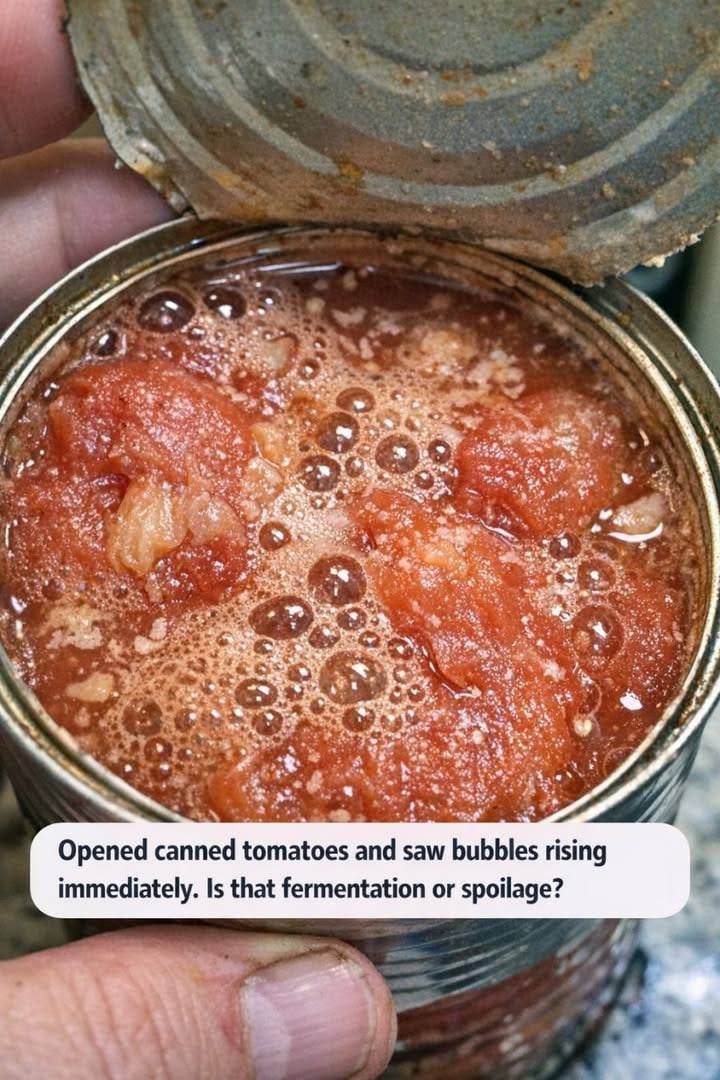
What you observed — bubbles rising immediately after opening canned tomatoes — can indicate a problem, but it’s important to assess carefully. Here’s a detailed breakdown:
1. Why Bubbles Appear in Canned Tomatoes
Normal Cause (Not Harmful)
-
Sometimes trapped gases from the canning process or agitation can produce a few bubbles.
-
If the can is recently opened and the tomatoes smell fresh, have normal color, and taste fine, a few small bubbles may not be a problem.
Potential Warning Signs (Spoilage or Fermentation)
-
Fermentation: If the tomatoes were exposed to air or improperly canned, natural bacteria or yeast may produce carbon dioxide, causing bubbles. Signs include:
-
Sour, yeasty, or alcoholic smell
-
Foamy or slimy texture
-
Off taste
-
-
Bacterial spoilage: Dangerous bacteria like Clostridium botulinum can grow in improperly canned foods. While botulism doesn’t always produce bubbles, swollen cans, leaking, or foul odor are red flags.
2. How to Tell the Difference
Check the following:
| Feature | Normal | Spoilage/Fermentation |
|---|---|---|
| Smell | Fresh, tomato-like | Sour, off, yeasty, metallic |
| Color | Bright red | Darkened, brownish, or moldy |
| Texture | Firm or soft as expected | Slimy, foamy, or unusually thick |
| Can Condition | Undamaged, not bulging | Bulging, dented, leaking, or rusted |
Rule of Thumb: If there’s any doubt, do not taste or consume. Foodborne pathogens can be extremely dangerous.
3. Safety First
-
Discard any canned tomatoes that smell off or show signs of spoilage.
-
Never taste-test if you suspect botulism — symptoms can be severe and life-threatening.
-
Store opened canned tomatoes in the fridge and use within 3–5 days.
✅ Key Takeaway
Bubbles alone don’t always mean spoilage, but combined with unusual smell, texture, or can damage, it’s safest to throw it out. Trust your senses — color, smell, and texture are the best indicators.