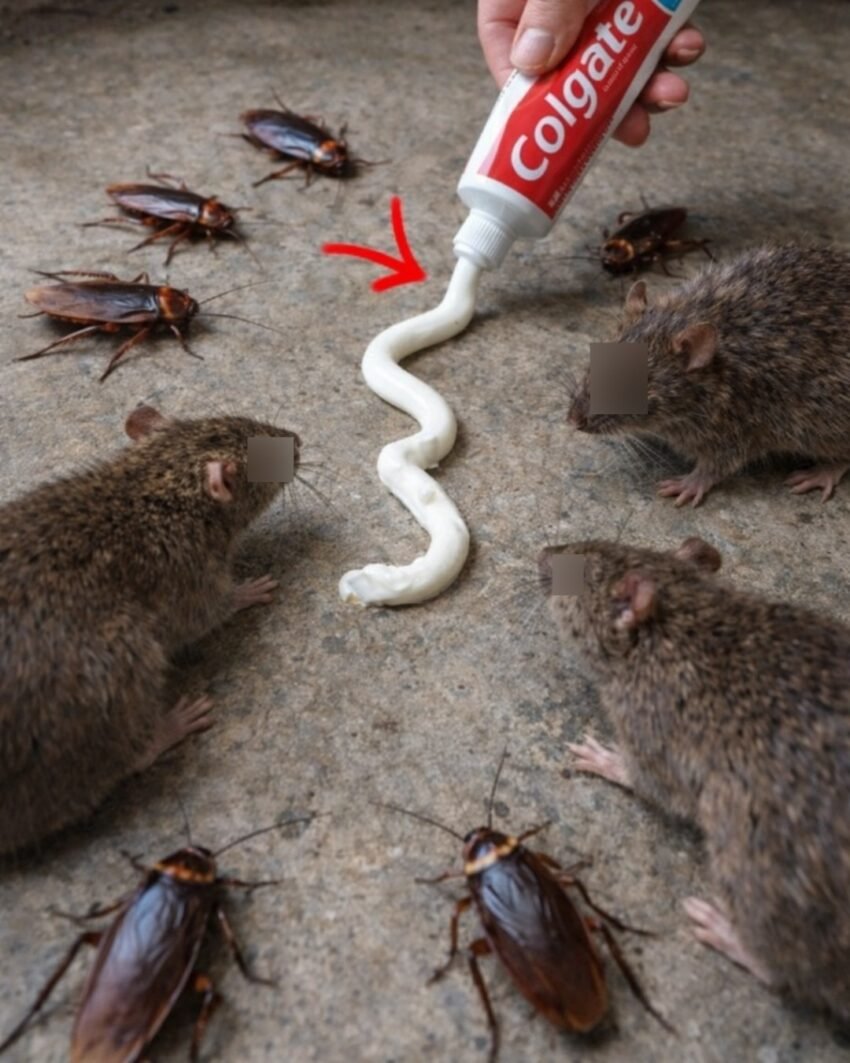
The Toothpaste Trick for Pests: Why This Viral “Mouse, Ant & Cockroach Hack” Needs a Reality Check (And What Actually Works)
A viral claim says toothpaste repels mice, ants, and cockroaches. Here’s what really works for pest control and safe home protection methods.
Every so often, the internet discovers a “miracle hack” that promises to solve a household problem instantly.
Recently, one claim has been circulating widely:
“Stop wasting money on pest poisons—just use toothpaste. No mice, cockroaches, or ants survive in my home.”
It sounds simple. Cheap. Even satisfying.
But when something sounds too universal—solving mice, ants, and cockroaches with one household item—it’s worth slowing down and looking at how pests actually behave in real environments.
Because in reality, pest control is less about quick tricks and more about understanding why pests enter homes in the first place.
Let’s break this down clearly, without hype or misinformation.
Does Toothpaste Actually Kill or Repel Pests?
To be direct:
There is no reliable scientific evidence that toothpaste effectively repels or eliminates mice, cockroaches, or ants.
Toothpaste contains ingredients like:
- Abrasives
- Fluoride compounds
- Flavoring agents (mint, menthol)
- Mild detergents
While minty scents may temporarily irritate some insects in controlled conditions, real-world pest infestations are far more complex.
Pests are not deterred by scent alone when:
- Food is available
- Water sources exist
- Shelter is accessible
In other words, toothpaste is not a functional pest control solution.
Why This Myth Became So Popular
This kind of claim spreads quickly for psychological reasons:
1. Low Cost Appeal
People love solutions that use items already at home.
2. Frustration With Pest Problems
When pests return despite cleaning, people look for alternatives to expensive sprays.
3. Viral Simplicity
A single “magic fix” is more shareable than a multi-step solution.
4. Confirmation Bias
If someone sees fewer pests after cleaning or changing habits, they may credit toothpaste—even if multiple factors were involved.
The Real Reason Pests Enter Homes
To understand pest control, you need to think like a pest.
Common attractants include:
- Food crumbs
- Open containers
- Moisture
- Warm hiding spaces
- Unsealed entry points
Household pests such as cockroaches, ants, and rodents are driven by survival—not scent preferences.
This is why species like House Mouse and cockroaches thrive in human environments—they are highly adaptable scavengers.
Why Toothpaste Fails as a Pest Solution
1. It Doesn’t Target the Source
Pests don’t just “avoid smells.” They follow:
- Food trails
- Nesting opportunities
- Water access
Toothpaste does not remove these conditions.
2. It Breaks Down Quickly
Any scent or residue from toothpaste:
- Fades rapidly
- Becomes ineffective in humid environments
- Does not persist long enough to influence pest behavior
3. It Doesn’t Affect Colonies
Even if a few insects avoid it temporarily, colonies remain unaffected.
What Actually Works for Pest Control
Effective pest management is based on Integrated Pest Management (IPM) principles used by professionals.
1. Eliminate Food Sources
- Clean crumbs immediately
- Store food in sealed containers
- Avoid leaving dirty dishes overnight
2. Block Entry Points
- Seal cracks in walls
- Fix gaps under doors
- Close plumbing openings
3. Reduce Moisture
Many pests thrive in humidity.
- Fix leaks
- Dry sinks at night
- Improve ventilation
4. Use Targeted Baits (Not Random Remedies)
Professional-grade solutions attract pests and eliminate them at the source rather than repelling them temporarily.
5. Maintain Regular Cleaning Patterns
Consistency matters more than intensity.
Natural Methods That Have Some Support
While toothpaste is not effective, some natural approaches may assist when used correctly:
- Diatomaceous earth (for crawling insects)
- Boric acid-based baits (carefully used)
- Peppermint oil (minor deterrent effect in some cases)
- Vinegar cleaning (removes scent trails)
These are still secondary tools—not complete solutions.
Comparison: Toothpaste Hack vs Real Pest Control
| Feature | Toothpaste Method | Proper Pest Control |
|---|---|---|
| Effectiveness | Minimal | High |
| Targets root cause | No | Yes |
| Works long-term | No | Yes |
| Scientifically supported | No | Yes |
| Cost efficiency | Misleading | Practical long-term |
Real-Life Example
A homeowner tried using toothpaste along kitchen corners after seeing viral advice online.
Initially, they noticed fewer ants—but later discovered:
- Food crumbs had also been cleaned
- Garbage disposal habits had changed
- Weather had cooled temporarily
When those conditions returned, so did the ants.
The toothpaste was not the controlling factor.
The Hidden Risk of Viral Pest Hacks
While harmless in concept, misinformation like this can lead to:
- Delayed real treatment
- Larger infestations
- Increased long-term costs
- Frustration and repeated failures
Pest problems are easiest to fix early—not after they spread.
What Experts Actually Recommend
Pest control professionals focus on three pillars:
- Sanitation
- Exclusion
- Targeted treatment
This structured approach is used because it addresses the root ecological behavior of pests, not just surface-level symptoms.
Common Mistakes Homeowners Make
1. Relying on One “Magic Fix”
No single household item solves infestations.
2. Ignoring Early Signs
A few ants today can become a colony tomorrow.
3. Not Identifying Entry Points
Without sealing access, pests return repeatedly.
4. Overusing DIY Hacks Instead of Systematic Cleaning
Random solutions create false confidence.
When to Call Professional Help
You may need expert intervention if:
- Rodents are present
- Cockroach activity is persistent
- Ant colonies keep returning
- Damage or droppings are visible
Professionals use targeted strategies that go beyond surface treatments.
Frequently Asked Questions
1. Can toothpaste really repel ants or cockroaches?
No reliable evidence supports this claim.
2. Why do some people think it works?
Because pest numbers may drop due to unrelated factors like cleaning or weather changes.
3. Is toothpaste harmful to pests?
Not in any meaningful or controlled way.
4. What is the best natural pest control method?
Prevention through cleanliness and sealing entry points is most effective.
5. Do peppermint scents keep pests away?
They may temporarily deter some insects but do not eliminate infestations.
6. Are DIY pest hacks safe?
Some are safe but often ineffective compared to proven methods.
7. Why do pests keep coming back?
Because food, water, and shelter sources are still available.
8. What is the fastest real solution?
Targeted baiting combined with sanitation and sealing entry points.
Action Checklist
Do This:
✔ Clean food spills immediately
✔ Store food securely
✔ Seal cracks and entry points
✔ Reduce moisture in kitchens
✔ Use proven pest control methods
Avoid This:
✘ Relying on toothpaste or unverified hacks
✘ Ignoring early pest signs
✘ Leaving food exposed
✘ Treating symptoms instead of causes
Conclusion
The idea of solving pest problems with toothpaste is appealing because it feels simple and cost-free.
But real pest control is not about quick fixes—it’s about understanding behavior, environment, and prevention.
Toothpaste may freshen breath, but it won’t outsmart pests.
Long-term control comes from consistency, cleanliness, and addressing the real reasons pests enter your home in the first place.
Toothpaste is not an effective pest control solution—real protection comes from hygiene, sealing entry points, and targeted prevention methods.
If this helped clarify things, share it with someone dealing with pest issues—and explore more practical, science-based home solutions that actually work.