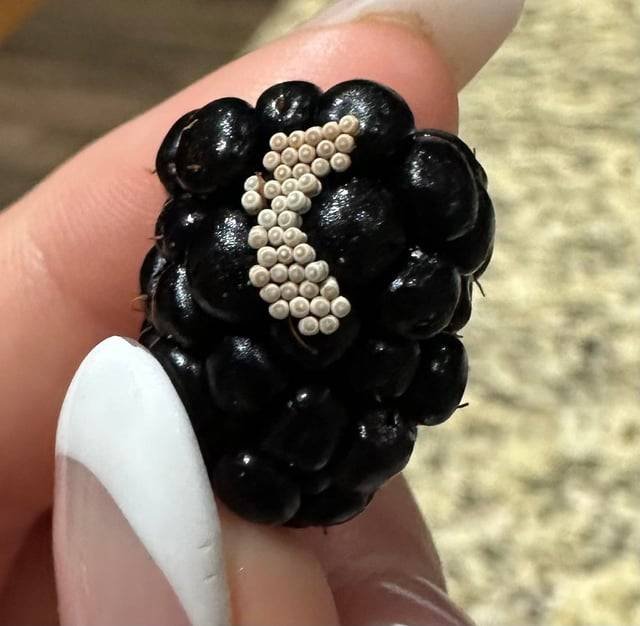
I Soaked My Blackberries in Salt Water and Saw White Wiggling Things—Should I Throw Them Away? (What It Really Means & What to Do Next)
Seeing worms in blackberries after salt water soaking? Learn what they are, whether berries are safe, and when you should throw them away.
The Moment That Makes You Lose Your Appetite
You do everything right.
You buy fresh blackberries.
You bring them home.
You soak them in salt water like you’ve seen online.
Then it happens.
Tiny white, wriggling specks start coming out of the fruit.
Your first instinct is simple:
“That’s it. I’m throwing everything away.”
Before you do, it helps to understand what you’re actually seeing—and whether the berries are truly unsafe.
The answer is more nuanced than a simple yes or no.
What Are the White Wiggling Things?
In most cases, those small white moving organisms are:
- Larvae of fruit flies
- Specifically from a common pest called the spotted wing drosophila
They lay eggs inside soft fruits like:
- Blackberries
- Raspberries
- Blueberries
When you soak the fruit in salt water, the larvae become visible and move out.
This is a known agricultural issue, not an unusual contamination event.
Why You Only See Them After Soaking
You’re not seeing “new” contamination.
You’re revealing what was already inside the fruit.
Salt water:
- Encourages larvae to exit
- Makes them easier to see
- Does not “create” bugs
This is why people are often shocked—they assume the fruit was clean on the surface.
Are the Berries Unsafe to Eat?
This is where perspective matters.
From a strict food safety standpoint:
- The larvae are not toxic
- They are not known to transmit disease
- They are considered more of a quality issue than a health hazard
However, most people still find the idea unpleasant.
Food safety organizations like U.S. Food and Drug Administration generally classify this type of contamination as non-dangerous but undesirable.
So… Should You Throw Them Away?
It depends on your comfort level.
✔ You can still eat them if:
- They were soaked and rinsed thoroughly
- No mold is present
- You are not uncomfortable with the idea
Cooking or blending (like in smoothies or jam) also reduces concern.
❌ You should discard them if:
- You feel uncomfortable eating them
- There is visible mold
- The fruit smells off or is overly soft
- You prefer zero-risk consumption
Food safety is also about personal tolerance.
Comparison: Clean vs Infested Berries After Soaking
| Condition | What You See | Safety Level |
|---|---|---|
| Clean berries | No movement | Safe |
| Light larvae presence | Small white worms | Safe but unpleasant |
| Moldy berries | Fuzzy growth | Unsafe |
| Overripe/rotting | Strong odor | Unsafe |
Why This Happens More Often Than You Think
Soft berries are especially vulnerable because:
- They grow close to the ground
- Their skin is delicate
- They are not peeled before eating
Even organic or pesticide-free berries can have this issue.
How to Properly Clean Blackberries
✔ Salt Water Soak Method
- Fill bowl with cool water
- Add 1–2 teaspoons of salt
- Soak berries for 10–15 minutes
- Rinse thoroughly with clean water
- Drain and dry gently
✔ Vinegar Rinse (Alternative)
- 1 part vinegar to 3 parts water
- Soak for 5–10 minutes
- Rinse well afterward
Common Mistakes People Make
❌ Assuming All Berries Are “Dirty”
Most are safe; this is just a natural occurrence in some batches.
❌ Soaking Too Long
Over-soaking can damage texture and flavor.
❌ Not Rinsing After Salt Water
This leaves a salty taste and residue.
❌ Panicking and Throwing Everything Away Immediately
Not always necessary unless you’re uncomfortable or see mold.
Realistic Perspective: Food Isn’t Always Sterile
Fresh produce is not laboratory-clean.
Even washed fruits can contain:
- Natural surface microbes
- Insects in small amounts
- Environmental residues
This is normal in agriculture, especially for soft fruits.
When You Should Be More Concerned
Discard immediately if you notice:
- Mold (white, green, or fuzzy patches)
- Strong sour or fermented smell
- Slimy texture
- Extensive insect presence with decay
Mini Scenario: What Most People Experience
A shopper buys fresh blackberries from a farmers’ market.
They soak them at home.
Tiny white larvae appear.
Initially, they panic and consider throwing everything away.
After learning:
- It’s a common fruit fly issue
- The berries are not toxic
- Proper washing removes most concerns
They decide to rinse thoroughly and use them in jam instead.
Frequently Asked Questions
1. Are the white worms dangerous?
No, they are not known to be harmful to humans.
2. Why do they come out in salt water?
Salt water forces larvae out of the fruit.
3. Can I eat berries with bugs in them?
Yes, but most people prefer to wash them out first.
4. Does freezing kill the larvae?
Yes, freezing eliminates them.
5. Does vinegar work better than salt?
Both can help; salt is often more visibly effective.
6. Are organic berries more likely to have this?
Yes, because they often use fewer pesticides.
7. Can cooking remove the problem?
Yes, heat eliminates larvae.
8. Should I always soak berries?
It’s optional but recommended for peace of mind.
Action Checklist: What to Do Next
✔ Do This
- Inspect berries before eating
- Soak in salt or vinegar water
- Rinse thoroughly
- Use in cooked or blended recipes if preferred
- Discard if mold is present
❌ Avoid This
- Panic-throwing all fruit away immediately
- Eating without washing after visible infestation
- Over-soaking until fruit breaks down
- Ignoring signs of spoilage
Conclusion: Unpleasant, But Not Always Dangerous
Seeing white wiggling larvae in blackberries is shocking—but not unusual.
In most cases, it reflects a natural agricultural issue rather than a serious health risk.
What matters most is:
- Proper cleaning
- Personal comfort
- Knowing when fruit is actually spoiled
White wiggling larvae in blackberries are usually harmless fruit fly larvae—not a health danger—but you can discard the fruit if you’re uncomfortable or if spoilage is present.
If this helped clear things up, share it with someone who shops for fresh berries—or use it as a reminder that not everything “unexpected” in food is dangerous.