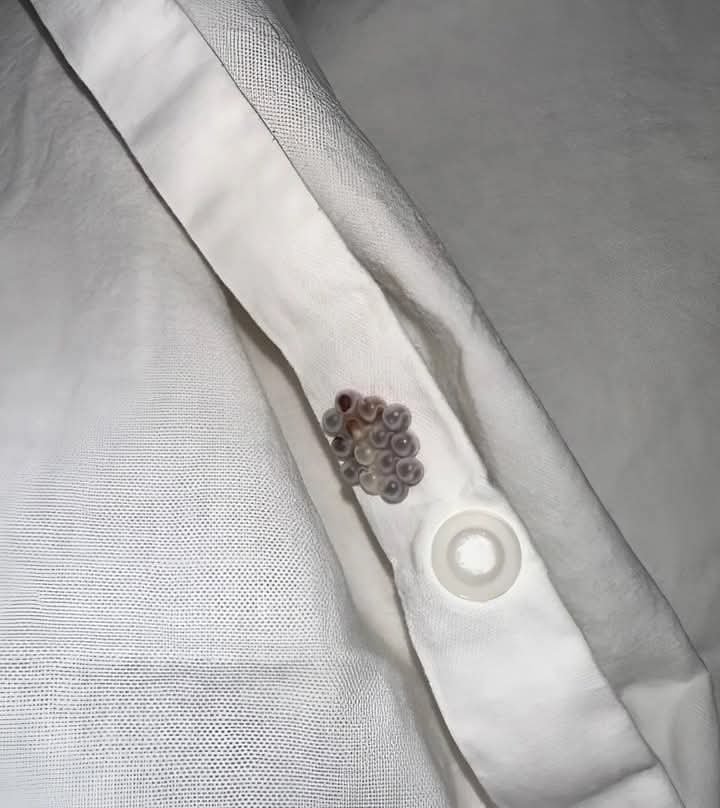
I Found Tiny “Marbles” in My Bed — and Thought the Worst. Here’s What They Actually Were (and What You Should Do Next)
Found small beads or “marbles” in your bed? Learn what they could be, what to check immediately, and how to tell if it’s something serious or harmless.
There’s a very specific kind of panic that hits when you notice something out of place in your bed.
Tiny. Round. Hard.
They look like little marbles.
Your brain doesn’t go to a calm explanation first—it jumps straight to worst-case scenarios. Bugs. Eggs. Something alive. Something multiplying.
If you’ve ever had that moment, you’re not overreacting. You’re human.
But here’s the reality: those mysterious “marbles” are usually far less sinister than they seem.
In this guide, we’ll break down exactly what they might be, how to identify them quickly, when you should be concerned, and what to do next—step by step.
First Things First: What Did You Actually Find?
Before jumping to conclusions, let’s define what most people mean by “little marbles”:
- Small, round or slightly oval
- Hard to the touch
- Often smooth
- Usually found in clusters or scattered
- Sometimes translucent, white, brown, or dark
That description fits several very different things—some harmless, some worth addressing.
The Most Common (and Harmless) Explanation
1. Silica Gel Beads (From Packaging or Products)
These are by far the most common culprit.
Silica gel beads are those tiny moisture-absorbing balls found in:
- Shoe boxes
- Clothing packaging
- Pill bottles
- Electronics packaging
Sometimes, the packet breaks open—or gets tracked into your bed from clothes or nearby items.
Why they look alarming:
- Perfectly round
- Slightly translucent
- Feel like tiny plastic or glass beads
Why they’re usually harmless:
- Non-toxic (though not edible)
- Not alive
- Don’t reproduce
Quick check:
Do they look uniform in size and shape? That’s a strong sign they’re manufactured, not biological.
Other Possible Explanations (Some Need Attention)
2. Mattress or Pillow Filling
Certain types of pillows and mattresses contain:
- Microbeads
- Foam pellets
- Gel spheres
If there’s a tear or seam issue, these can leak out and end up in your bed.
Clue:
You’ll often find more of them near seams or tears.
3. Insect Droppings (Not Eggs — Important Distinction)
This is where anxiety spikes—but let’s be precise.
Most common household pests (like bed bugs) do not lay visible “marble-like” eggs.
For example:
- Bed bug eggs are tiny, white, and rice-shaped
- They’re sticky and usually hidden in crevices—not loose in your bed
Droppings, however, can sometimes appear as:
- Small dark pellets
- Irregular in shape
- Not smooth or translucent
If what you found is perfectly round and smooth, it’s unlikely to be insect-related.
4. Food Particles or Debris
It sounds simple, but it happens more than people realize.
Things like:
- Candy sprinkles
- Tapioca pearls (from drinks)
- Crumbs that hardened
can end up in bedding—especially if you’ve eaten nearby.
5. Pet-Related Debris
If you have pets, consider:
- Litter particles
- Dry food pellets
- Foreign debris tracked in fur
These can easily transfer onto bedding.
What It’s Probably NOT (But People Fear)
Let’s clear up the biggest fears directly.
❌ Not Spider Eggs
Spider eggs are contained in sacs—not loose individual beads.
❌ Not Bed Bug Eggs (in most cases)
As mentioned:
- Too small to resemble marbles
- Sticky and hidden, not scattered
❌ Not Something “Growing” in Your Bed
There’s no common household organism that produces marble-like objects in open bedding.
Quick Identification Guide
Ask yourself these questions:
- Are they all the same size and shape?
- Are they smooth and hard?
- Are they translucent or plastic-like?
- Did they appear suddenly rather than gradually?
If you answered “yes” to most of these, you’re likely dealing with non-living material.
Step-by-Step: What You Should Do Right Now
Step 1: Collect a Few Samples
Use a tissue or glove.
Look closely:
- Shape
- Color
- Texture
Step 2: Check Nearby Sources
Inspect:
- Pillow seams
- Mattress edges
- Clothing or packaging nearby
You’re looking for a matching material.
Step 3: Wash Your Bedding
Even if it’s harmless, clean everything:
- Sheets
- Pillowcases
- Blankets
This resets your environment and removes any remaining debris.
Step 4: Vacuum the Area
Focus on:
- Mattress surface
- Bed frame
- Floor around the bed
Step 5: Monitor for Recurrence
This is key.
If they don’t come back → likely a one-time incident.
If they reappear → investigate the source more closely.
When You Should Actually Be Concerned
While most cases are harmless, take a closer look if:
- The objects are irregular, soft, or sticky
- You notice bite marks on your skin
- You find stains (black, red, or rust-colored) on bedding
- The objects keep appearing daily
In those cases, consider contacting a pest professional.
Common Mistakes (and How to Avoid Them)
Mistake #1: Jumping to the Worst Conclusion
Fix: Start with physical evidence, not assumptions.
Mistake #2: Ignoring the Source
Fix: Always trace where the material came from.
Mistake #3: Not Monitoring After Cleanup
Fix: Give it 2–3 days and check again.
Expert Insight Most People Miss
Here’s something subtle but important:
Your brain is wired to detect threats—especially in places where you sleep.
That’s why something small and unfamiliar can feel terrifying instantly.
But in reality, most “mystery bed findings” turn out to be environmental, not biological.
The key is observation, not panic.
Mini Scenario: What Usually Happens
Someone notices tiny beads in their bed late at night.
They Google it. Panic sets in.
Worst-case scenarios flood in: infestations, parasites, something spreading.
The next morning, they find the source:
A torn silica packet in a recently opened package.
Relief—but also frustration at the stress it caused.
FAQs
1. Are these likely to be bug eggs?
No—bug eggs are typically much smaller and not marble-like.
2. Can silica beads be dangerous?
They’re non-toxic but shouldn’t be ingested.
3. Why were they in my bed?
Most likely transferred from packaging, clothing, or a nearby item.
4. Should I throw away my mattress?
Almost never necessary unless there’s clear damage or infestation.
5. How do I know if it’s bed bugs?
Look for bites, stains, and tiny rice-shaped eggs in seams—not beads.
6. Can pets cause this?
Yes, they can bring small particles into your bed.
7. What if I keep finding them?
Track the source—likely a leaking product or material nearby.
8. Should I call pest control immediately?
Only if you see consistent signs of pests—not just beads.
Action Checklist
Do This
- Inspect the objects closely
- Check bedding and nearby items
- Wash everything
- Monitor for recurrence
Avoid This
- Assuming infestation immediately
- Ignoring physical evidence
- Panicking without verification
Conclusion
Finding something strange in your bed is enough to make anyone uneasy.
But in most cases, those tiny “marbles” aren’t a threat—they’re just misplaced materials that found their way into the wrong place.
What matters is how you respond:
Stay observant. Stay practical. Don’t let your imagination run ahead of the facts.
If you’ve experienced this, you’re not alone—and chances are, it’s far less serious than it first seemed.
Not everything mysterious is dangerous—but everything unfamiliar deserves a closer look.