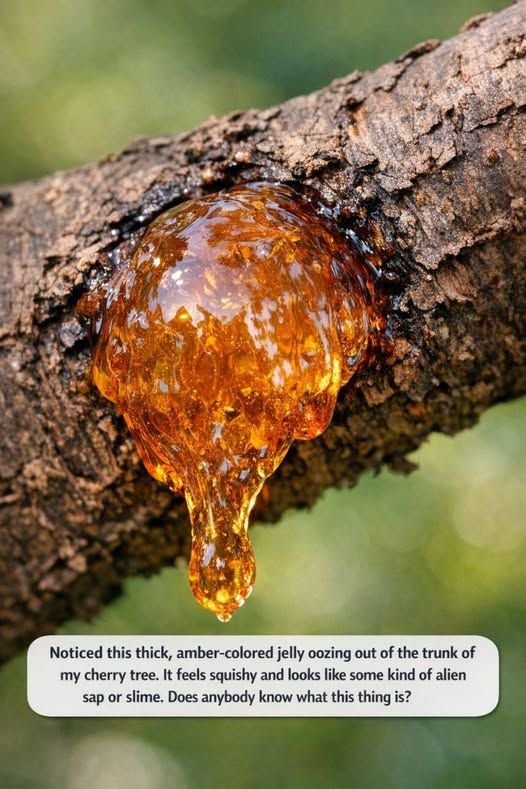
Amber “Alien Sap” on Your Cherry Tree? Here’s What It Really Is (and How to Fix It Before It Spreads)
Thick amber jelly oozing from cherry trees is usually gummosis. Learn causes, risks, treatment steps, and how to save your tree fast.
That Strange Amber Slime Isn’t Sci-Fi — It’s a Warning Sign
You walk outside and notice it immediately.
A thick, glossy, amber-colored jelly oozing from the trunk of your cherry tree. It looks unnatural—almost like something alive is leaking out of the bark. Squishy, sticky, sometimes clear, sometimes dark orange.
Most people’s first reaction is the same:
“What is that?”
It feels like something out of a horror movie, but the truth is both simpler—and more important.
This isn’t alien sap.
It’s your tree trying to survive.
And what it’s telling you matters.
What You’re Seeing: Tree “Gum” (Gummosis)
That amber substance is known as gummosis.
It’s a natural defense response in stone fruit trees like cherries, peaches, plums, and apricots.
When the tree is stressed or injured, it produces a sticky resin-like substance (gum) that oozes out through cracks or wounds in the bark.
Think of it as the tree’s version of:
- Bleeding
- Sealing a wound
- Fighting infection
But here’s the key detail most people miss:
👉 Gummosis is not a disease itself.
It’s a symptom of an underlying problem.
Why Cherry Trees Are Especially Prone to This
Cherry trees are part of the stone fruit family, which are particularly sensitive to stress.
They respond to almost any internal or external issue by producing gum.
Common triggers include:
- Fungal infections
- Bacterial canker
- Physical injury to bark
- Insect damage
- Poor drainage
- Cold stress or frost cracks
So when you see that amber ooze, you’re not looking at the problem—you’re looking at the reaction to the problem.
The Most Common Cause: Bacterial Canker
One of the leading culprits behind heavy gummosis in cherry trees is bacterial canker, caused by Pseudomonas syringae.
This pathogen enters through:
- Pruning wounds
- Frost-damaged bark
- Natural cracks in the trunk
What it does:
- Infects inner bark tissue
- Causes lesions or sunken areas
- Triggers heavy gum production
- Weakens branches over time
If left untreated, it can slowly kill parts of the tree—or the entire tree.
Other Possible Causes You Should Know
Not all gum oozing is bacterial canker. Here’s what else could be behind it:
1. Mechanical Injury
Even small wounds can trigger gum production.
Examples:
- Lawn mower damage
- Animal scratching
- Improper pruning cuts
2. Fungal Infections (Cytospora Canker)
Fungal pathogens like Cytospora canker can also cause gummosis.
Symptoms often include:
- Sunken bark areas
- Yellow-orange gum
- Dieback of branches
3. Insect Activity
Borers or bark beetles may tunnel into the trunk, causing the tree to “bleed” gum as a defense response.
Look for:
- Tiny holes in bark
- Sawdust-like frass
- Localized gum spots
4. Environmental Stress
Stress alone can trigger gummosis, especially in cherry trees.
Common stressors:
- Frost damage
- Heat waves
- Poor soil drainage
- Overwatering or drought cycles
Should You Be Worried?
Not always—but you should pay attention.
Here’s a simple rule:
- Small, occasional gum spots: usually minor stress or injury
- Large, repeated, or spreading gum areas: likely infection or serious damage
If multiple areas of the trunk are affected, the issue is progressing.
Step-by-Step: What to Do Immediately
If you just noticed this on your cherry tree, don’t panic—but act methodically.
Step 1: Inspect the Tree Closely
Look for:
- Cracks in bark
- Dead branches
- Sunken lesions
- Insect holes
- Discolored leaves
This helps identify whether it’s localized or systemic.
Step 2: Clean the Area (Carefully)
If gum is fresh and soft:
- Gently remove loose debris around the area
- Avoid scraping deep into bark
- Do NOT cut aggressively unless necessary
The goal is observation, not surgery.
Step 3: Prune Infected Branches (If Needed)
If you notice dead or diseased limbs:
- Use clean, sterilized pruning tools
- Cut at least 6–12 inches below visible damage
- Dispose of infected wood away from healthy plants
Step 4: Improve Tree Conditions
Healthy trees fight infection better.
Focus on:
- Soil drainage (avoid water pooling)
- Proper watering schedule
- Mulching (but not touching trunk)
- Sunlight exposure
Step 5: Monitor Progress Weekly
Look for:
- New gum spots
- Spread of lesions
- Branch dieback
Early monitoring can prevent major damage.
What NOT to Do (Very Important)
Many tree owners accidentally make things worse.
Avoid:
❌ Ignoring repeated gum flow
❌ Over-pruning healthy branches
❌ Applying random sealants or paints
❌ Overwatering “to help recovery”
❌ Fertilizing stressed trees heavily
Tree stress is often worsened by well-intentioned overcorrection.
Real-World Scenario: What This Looks Like in Practice
A homeowner in the Midwest notices amber gum on one side of a mature cherry tree.
At first, it’s a few small spots.
Within weeks:
- Gum spreads down the trunk
- One branch begins to die back
- Leaves thin out on one side
Diagnosis: early bacterial canker infection combined with winter injury.
Response:
- Infected branches removed
- Drainage improved
- Tree stress reduced
Result after one season:
- Spread stopped
- Tree stabilized
- New growth returned in spring
The key wasn’t a “cure.”
It was containing the stress cycle early.
Comparison: Normal Healing vs Problem Progression
| Condition | Appearance | Meaning |
|---|---|---|
| Light gum spots | Small, isolated droplets | Minor injury or stress |
| Moderate oozing | Multiple small areas | Active infection or stress |
| Heavy trunk flow | Large amber masses | Serious disease progression |
| Cracked bark + gum | Sunken lesions | Likely canker disease |
Expert Insight: Why Trees “Bleed” Gum
Gummosis is actually a survival mechanism.
When a tree detects:
- Tissue damage
- Infection
- Environmental stress
It produces gum to:
- Seal wounds
- Trap pathogens
- Slow spread of infection
But there’s a downside:
👉 Excess gum means the tree is constantly under stress and spending energy on defense instead of growth.
Prevention: How to Keep It From Happening Again
Once the tree stabilizes, prevention becomes critical.
1. Prune at the Right Time
Late winter is best for most cherry trees.
Avoid pruning during:
- Wet seasons
- Active growth stress periods
2. Protect Bark From Injury
- Avoid mechanical damage from lawn equipment
- Prevent animal rubbing or scratching
- Use trunk guards if necessary
3. Improve Airflow
Crowded branches trap moisture, increasing infection risk.
4. Maintain Soil Health
Healthy roots = resilient trees.
- Ensure good drainage
- Avoid waterlogging
- Use organic mulch correctly
5. Reduce Stress Cycles
Sudden changes in watering, temperature, or pruning can trigger gummosis.
When to Call an Arborist
Professional help is needed if:
- Gum is spreading rapidly
- Large sections of bark are sunken or dead
- Multiple branches are dying
- The trunk is heavily affected
Certified arborists can diagnose internal decay that isn’t visible externally.
Frequently Asked Questions
1. Is the amber sap harmful to humans?
No, it’s not toxic. It’s sticky but safe to touch.
2. Will my cherry tree die from gummosis?
Not necessarily. Many trees recover if the underlying cause is treated early.
3. Can I just wash it off?
No. Removing it doesn’t fix the problem inside the tree.
4. Does pruning help?
Yes—but only if you remove infected or dead tissue properly.
5. Is this normal in cherry trees?
Mild gum production can be normal. Excessive oozing is not.
6. Can weather cause this?
Yes. Frost cracks and heat stress are common triggers.
7. Should I fertilize the tree to help it recover?
Not aggressively. Over-fertilizing stressed trees can worsen the issue.
8. Is it contagious to other trees?
Some bacterial or fungal causes can spread between nearby susceptible trees.
Action Checklist
Do This:
- Inspect trunk and branches carefully
- Prune dead or infected limbs
- Improve drainage and airflow
- Monitor changes weekly
- Reduce environmental stress
Avoid This:
- Ignoring repeated gum flow
- Overwatering
- Random chemical treatments
- Heavy pruning without diagnosis
- Panic cutting healthy branches
Conclusion: Your Tree Isn’t “Bleeding”—It’s Communicating
That thick amber jelly on your cherry tree isn’t random, and it isn’t harmless decoration either.
It’s a signal.
A message that something—stress, injury, or infection—is happening beneath the bark.
The good news is this: trees are resilient. With the right care, many recover fully and continue producing healthy growth for years.
The key is early attention, not panic.
Gummosis is not the enemy—it’s the warning light. Treat the cause, not just the symptom, and your tree has a strong chance of recovery.
If you found this helpful, keep an eye on your tree this week—and act early if anything changes.