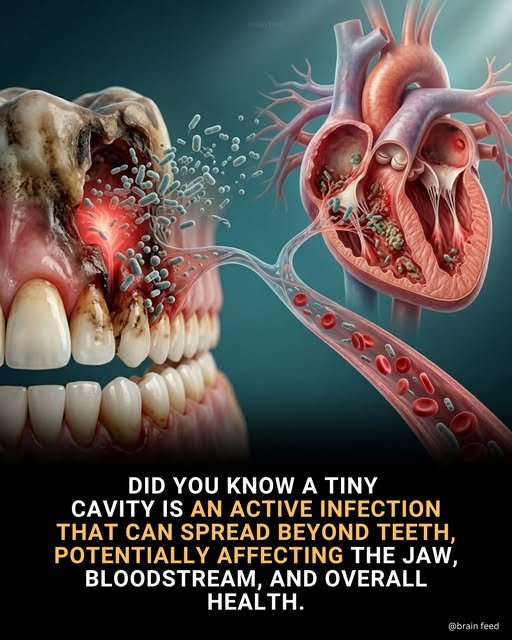
🦷 A Tiny Cavity, A Serious Threat: Why Ignoring Tooth Decay Can Quietly Impact Your Whole Body
A small cavity may seem harmless, but untreated tooth decay can affect your heart, brain, and immune system. Learn the hidden risks and prevention steps.
It usually starts small.
A faint sensitivity when you drink something cold. A tiny dark spot you ignore in the mirror. Maybe a mild ache that comes and goes.
A cavity feels… manageable. Easy to postpone. Not urgent.
But here’s what most people don’t realize:
A “small” cavity is often the beginning of a chain reaction that doesn’t stay in your mouth.
Your teeth are not isolated structures. They are connected to blood vessels, nerves, immune responses—and ultimately, your entire body system.
And when tooth decay is ignored, it can quietly evolve into something far more serious than just dental pain.
Let’s break down what actually happens, why it matters, and how something so small can create such wide-reaching effects.
How a Tiny Cavity Actually Forms
To understand the risk, you first need to understand the process.
Tooth decay doesn’t happen overnight.
It typically follows this progression:
- Plaque builds up on teeth
- Bacteria feed on sugars from food
- Acid is produced
- Enamel slowly weakens
- A small hole (cavity) forms
At this early stage, there may be no pain at all.
That’s exactly why it gets ignored.
But decay doesn’t stop there.
Why Ignoring a Cavity Becomes Dangerous
Once decay passes the outer enamel layer, it reaches:
- Dentin (softer inner tooth layer)
- Nerves and blood supply
At this point, the problem shifts from “tooth issue” to infection risk.
And infections in the mouth are uniquely dangerous because the oral cavity is one of the most bacteria-rich environments in the human body.
The Hidden Connection: Your Mouth Is Connected to Your Whole Body
Dentists and medical researchers have long studied the mouth-body connection.
Inflammation and bacteria in the mouth don’t always stay there.
They can enter the bloodstream and influence other systems in the body.
According to organizations like the American Dental Association (ADA), untreated oral infections may contribute to broader systemic health risks over time.
What Can Happen If Tooth Decay Is Left Untreated?
Let’s break it down clearly—not to scare you, but to make the reality visible.
🧠 1. Increased Risk of Systemic Infection
When decay reaches the pulp (inner tooth), bacteria can spread and cause:
- Dental abscesses
- Facial swelling
- Jawbone infection
In severe cases, infection can spread beyond the mouth if untreated.
❤️ 2. Possible Link to Heart Health Issues
Research has found associations between gum disease and cardiovascular conditions.
The theory is:
- Oral bacteria enter the bloodstream
- They contribute to inflammation in blood vessels
While research continues, the connection between oral inflammation and heart health is widely acknowledged in medical literature.
🧬 3. Chronic Inflammation in the Body
A persistent dental infection keeps the immune system active.
This can lead to:
- Ongoing low-grade inflammation
- Fatigue
- Reduced immune efficiency
Your body is constantly “on alert.”
🧠 4. Potential Cognitive and Brain Health Concerns
Some studies suggest oral bacteria may be linked to neurological inflammation over time.
While not fully proven as a direct cause, researchers continue to explore links between oral health and cognitive decline.
🍬 5. Blood Sugar and Diabetes Complications
There is a two-way relationship:
- Poor oral health can worsen blood sugar control
- Diabetes can accelerate tooth decay
This creates a cycle that becomes harder to break if ignored.
Why Small Cavities Feel “Safe” (But Aren’t)
Here’s the psychological trap:
1. No pain = perceived safety
2. Slow progression = easy to ignore
3. Busy life = delayed treatment
But decay is silent until it’s advanced.
By the time pain appears, treatment is often more complex and expensive.
Step-by-Step: What Happens If You Ignore It
Let’s map the progression clearly:
Stage 1: Early cavity
- No pain
- Easily treatable with filling
Stage 2: Deeper decay
- Sensitivity starts
- Enamel and dentin affected
Stage 3: Nerve involvement
- Sharp pain
- Possible infection
Stage 4: Abscess formation
- Swelling
- Severe pain
- Risk of spreading infection
Real-Life Scenario
A common case dentists see:
Someone notices a small cavity but postpones treatment for “later.”
Six months pass.
Now:
- Pain interrupts sleep
- Eating becomes difficult
- Infection requires root canal or extraction
What could have been a simple filling becomes a major dental procedure.
How to Prevent Tooth Decay From Becoming a Bigger Problem
The good news: prevention is straightforward.
🪥 1. Brush Twice Daily (Properly)
- Use fluoride toothpaste
- Brush for at least 2 minutes
- Focus on gum line areas
🧵 2. Floss Daily
Flossing removes plaque where brushes can’t reach.
🍭 3. Limit Frequent Sugar Exposure
It’s not just sugar amount—it’s frequency.
Frequent snacking = constant acid attacks on enamel.
🦷 4. Regular Dental Checkups
Dentists can catch cavities before they become painful.
💧 5. Stay Hydrated
Saliva helps neutralize acids and protect enamel.
Common Mistakes People Make
❌ Waiting for pain before visiting a dentist
✔️ Cavities are easier (and cheaper) to treat early
❌ Thinking “small cavity = no urgency”
✔️ Early decay still spreads under the surface
❌ Skipping flossing
✔️ Most decay starts between teeth
❌ Ignoring gum bleeding
✔️ Often a sign of underlying inflammation
Expert Insight: Why Oral Health Is Now Considered Whole-Body Health
Modern dentistry increasingly focuses on the idea that:
👉 Oral health is not separate from systemic health
Inflammation in the mouth can contribute to overall inflammatory load in the body.
That’s why routine dental care is now viewed as part of preventive healthcare—not just cosmetic maintenance.
Future Outlook: 2026 Trends in Dental Health
Dentistry is moving toward:
- Early digital cavity detection
- Preventive fluoride treatments
- Microbiome-focused oral care
- AI-assisted dental imaging
The focus is shifting from “fixing damage” to preventing it entirely.
FAQ Section
1. Can a small cavity heal on its own?
No. Enamel cannot regenerate once a cavity forms.
2. How fast does a cavity spread?
It varies, but it can progress significantly within months if untreated.
3. Is tooth decay dangerous beyond the mouth?
Yes. Severe infections can affect other parts of the body if ignored.
4. Does every cavity need a filling?
Most do. Early treatment prevents bigger procedures later.
5. Can brushing reverse a cavity?
Brushing can help prevent new decay but cannot reverse existing cavities.
6. Why do cavities not hurt at first?
Because enamel has no nerves. Pain begins when deeper layers are affected.
7. What foods increase cavity risk?
Sugary snacks, sticky sweets, and frequent snacking increase risk.
8. Are dental checkups really necessary if I have no pain?
Yes. Many cavities are painless in early stages.
🧾 Action Checklist
Do This:
- Brush twice daily with fluoride toothpaste
- Floss every day
- Schedule regular dental checkups
- Reduce frequent sugar intake
- Address small cavities early
Avoid This:
- Ignoring minor sensitivity
- Delaying dental visits
- Relying on pain as an indicator
- Skipping flossing routine
🏁 Conclusion
A cavity may start as a tiny spot on a tooth, but its impact can extend far beyond the mouth if ignored.
The real danger isn’t the size of the decay—it’s the delay in treating it.
When caught early, it’s simple, quick, and manageable. When ignored, it becomes part of a much larger health story.
Your mouth is not separate from your body—it’s one of its first warning systems.
A small cavity is easy to fix—but ignoring it can quietly affect your overall health far more than most people realize.