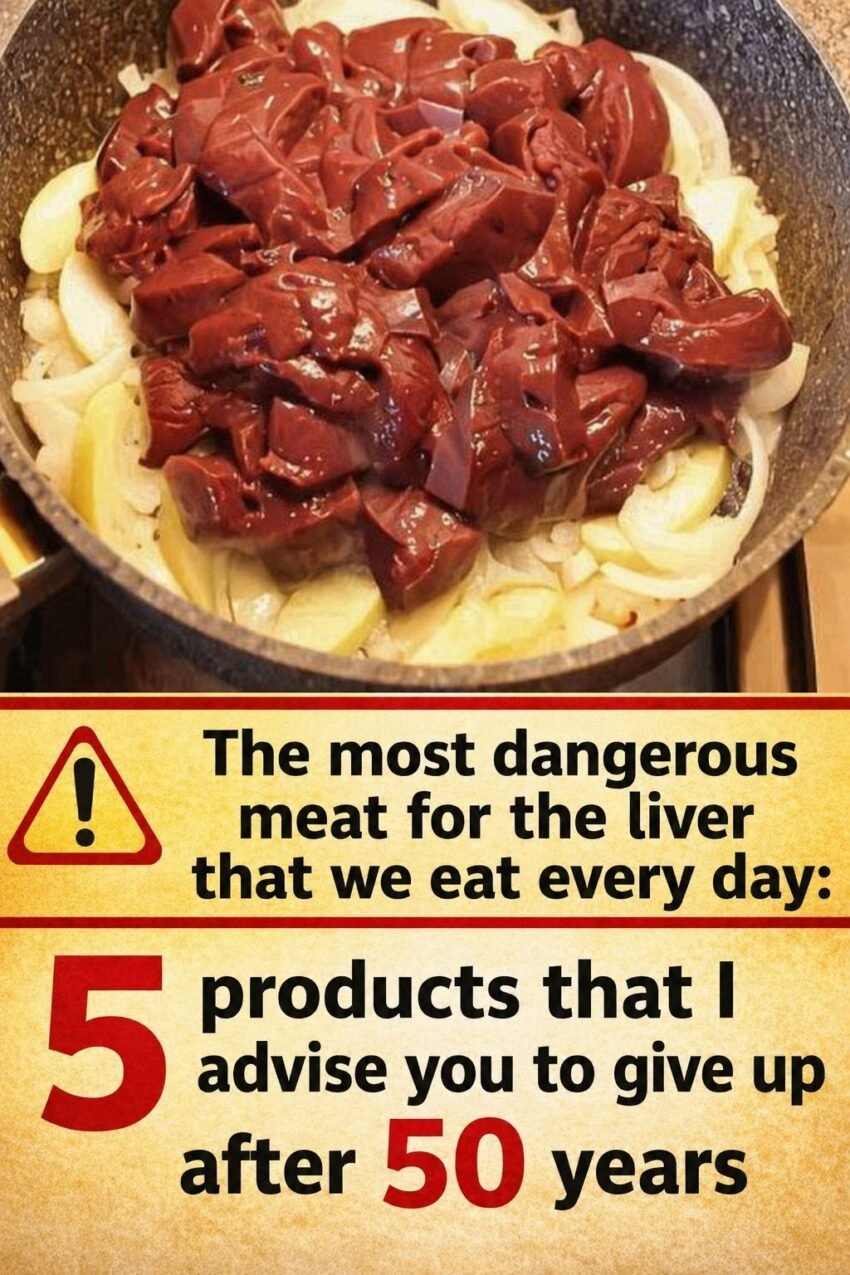
🔥 The 5 Most Dangerous Meats for Your Liver After 50 (And What to Eat Instead)
Over 50? Discover 5 common meats that may harm your liver—and smarter alternatives to protect your health and energy.
You probably don’t think twice about what’s on your plate.
A sandwich for lunch. Grilled meat for dinner. Maybe some processed snacks in between.
It feels normal—routine, even.
But here’s the uncomfortable truth: some of the meats we eat every day can quietly strain your liver, especially after 50.
And the tricky part? These foods are often marketed as convenient, affordable, or even “high-protein.”
If you’ve been feeling more fatigued, sluggish, or just not as sharp as you used to, your liver might be under more pressure than you realize.
In this guide, we’ll break down the 5 most problematic meats for liver health, why they matter more as you age, and what you can realistically do about it—without completely overhauling your life.
🧠 Why Liver Health Becomes Critical After 50
Your liver is one of the hardest-working organs in your body.
It handles:
- Detoxification
- Fat metabolism
- Nutrient processing
- Hormone regulation
But here’s what changes with age:
- Liver efficiency gradually declines
- Fat accumulation becomes more likely
- Recovery from damage slows down
This increases the risk of conditions like Nonalcoholic Fatty Liver Disease, which now affects millions of adults in the U.S., often without obvious symptoms.
That’s why your daily food choices matter more than ever.
⚠️ The 5 Most Dangerous Meats for Your Liver
Let’s get specific. These aren’t rare foods—they’re common staples in many households.
1. Processed Meats (Sausages, Hot Dogs, Deli Meats)
These are at the top of the list for a reason.
They’re loaded with:
- Sodium
- Preservatives (like nitrates)
- Saturated fats
Why it matters:
Excess sodium and additives increase liver workload and inflammation. Over time, this contributes to fat buildup and reduced liver efficiency.
Real-life example:
That quick deli sandwich you grab daily? It may be one of the biggest hidden stressors on your liver.
2. Fried Meats (Fried Chicken, Breaded Cuts)
Crispy, satisfying—and problematic.
Fried meats contain:
- Trans fats
- Oxidized oils
- Excess calories
Why it matters:
These fats are harder for the liver to process and can accelerate fat accumulation, especially in older adults.
Hidden issue:
Reused cooking oils (common in restaurants) make things even worse.
3. Fatty Red Meats (High-Fat Beef, Pork Belly)
Not all red meat is bad—but high-fat cuts are a different story.
They contain:
- High levels of saturated fat
- Cholesterol
Why it matters:
Too much saturated fat can overwhelm the liver’s ability to metabolize fats efficiently, leading to buildup and inflammation.
After 50, your body simply doesn’t process these fats as easily as it once did.
4. Charred or Grilled Meats (Overcooked BBQ)
That smoky flavor comes at a cost.
When meat is overcooked or charred, it produces harmful compounds like:
- Heterocyclic amines (HCAs)
- Polycyclic aromatic hydrocarbons (PAHs)
Why it matters:
These compounds increase oxidative stress, forcing your liver to work harder to detoxify them.
Occasional grilling is fine—but frequent consumption adds up.
5. Highly Processed Frozen Meat Products
Think:
- Frozen nuggets
- Pre-packaged meat meals
- Microwave-ready meat dishes
These often contain:
- Artificial additives
- Hidden sugars
- Low-quality fats
Why it matters:
They combine multiple stress factors into one meal—making them particularly taxing on the liver.
📊 Quick Comparison Table
| Meat Type | Risk Level | Main Concern | Better Alternative |
|---|---|---|---|
| Processed meats | High | Sodium & preservatives | Fresh turkey or chicken |
| Fried meats | High | Trans fats | Baked or air-fried options |
| Fatty red meats | Moderate | Saturated fat | Lean beef or fish |
| Charred grilled meats | Moderate | Toxic compounds | Lightly grilled or baked |
| Frozen processed meats | High | Additives & poor fats | Home-cooked meals |
🛠️ What to Eat Instead (Without Feeling Deprived)
Let’s be realistic—you’re not going to eliminate meat entirely overnight.
And you don’t have to.
Here are smarter swaps:
Lean Proteins
- Skinless chicken
- Turkey
- Eggs (in moderation)
Fish (Especially Fatty Fish)
- Salmon
- Sardines
- Mackerel
These support liver function due to omega-3 fatty acids.
Plant-Based Proteins
- Lentils
- Chickpeas
- Tofu
These reduce the overall burden on your liver.
🧩 Practical Step-by-Step Transition Plan
Changing everything at once rarely works.
Instead:
Step 1: Audit Your Weekly Meals
Identify how often you consume processed or fried meats.
Step 2: Replace One Meal Per Day
Swap one harmful meat choice with a healthier option.
Step 3: Change Cooking Methods
Grill less aggressively, bake more, or use an air fryer.
Step 4: Read Labels Carefully
Look for sodium, additives, and hidden ingredients.
Step 5: Build Sustainable Habits
Consistency matters more than perfection.
⚖️ Pros and Cons of Reducing Harmful Meats
Pros
- Improved liver function
- Better energy levels
- Reduced inflammation
- Lower risk of chronic disease
Cons
- Adjustment period for taste
- Slightly more meal prep required
- Higher cost for quality foods (in some cases)
🚫 Common Mistakes (And How to Avoid Them)
Mistake 1: Replacing Meat with Processed “Healthy” Foods
Fix: Stick to whole, minimally processed options.
Mistake 2: Cutting Protein Too Drastically
Fix: Maintain balanced intake with healthier sources.
Mistake 3: Ignoring Portion Size
Fix: Even healthy meats can become harmful in excess.
💡 Expert Insights Most People Miss
- Your liver doesn’t complain early—it adapts quietly until it can’t
- Combining high-fat meats with sugar (like sauces) increases damage
- Hydration plays a major role in liver efficiency
- Timing matters—late-night heavy meals strain the liver more
🔮 2026 Trends in Liver Health Awareness
- Increased focus on early detection of Nonalcoholic Fatty Liver Disease
- Growth of plant-forward diets in the U.S.
- Smart nutrition tracking apps
- More awareness of ultra-processed foods
📖 Mini Case Scenario
Mark, 56, from Ohio, didn’t think his diet was a problem.
Daily habits:
- Breakfast sausage
- Deli sandwich lunch
- Fried dinner twice a week
After a routine check-up showed early signs of liver stress, he made small changes:
- Switched to grilled chicken
- Reduced processed meats
- Added fish twice a week
Within months:
- Energy improved
- Weight stabilized
- Liver markers improved
No extreme diet. Just smarter choices.
❓ Frequently Asked Questions
1. Is all red meat bad for the liver?
No, lean cuts in moderation are generally safe.
2. How often can I eat processed meat?
Ideally, limit it to occasional consumption—not daily.
3. Can the liver heal itself?
Yes, the liver has strong regenerative abilities if damage is reduced early.
4. Are organic meats safer?
They may have fewer additives, but fat content still matters.
5. What’s the best meat for liver health?
Fish and lean poultry are generally the best options.
6. Does cooking method really matter?
Absolutely—fried and charred foods are much harder on the liver.
7. Should I completely stop eating meat after 50?
Not necessary—focus on quality and moderation.
8. Do supplements help liver health?
Some may help, but diet and lifestyle are far more important.
9. Is chicken always safe?
It depends on preparation—fried chicken can still be harmful.
10. How long does it take to see improvement?
Changes can begin within weeks, but consistency is key.
✅ Action Checklist
What to Do:
- Choose lean, fresh meats
- Cook with healthier methods
- Add fish to your weekly meals
- Read ingredient labels
- Stay hydrated
What to Avoid:
- Daily processed meats
- Frequent fried foods
- Overcooked or charred meats
- High-fat cuts in large portions
🏁 Conclusion
The foods you eat every day shape how your body functions—especially your liver.
After 50, small dietary habits start to carry bigger consequences.
The good news?
You don’t need extreme changes. Just smarter ones.
Cut back on the most harmful meats, upgrade your choices, and give your liver the support it needs to keep you feeling strong and energized.The most dangerous meats aren’t rare—they’re the ones you eat every day without thinking. Change that, and you change your health trajectory.
If this opened your eyes, share it with someone who needs it—and take the first step today.