20 Surprisingly Safe Foods You Can Eat After Their Expiration Date (And When to Toss Them)
Think expiration dates mean instant danger? Discover 20 foods you can safely eat after they expire—and how to tell what’s still good.
You open the fridge, grab the milk, glance at the date… and hesitate.
Is it actually bad—or are you about to throw away perfectly good food?
If you’ve ever stood there second-guessing an expiration date, you’re not alone. Americans waste billions of dollars in food every year—often because of confusion over labels that don’t actually mean what we think they do.
Here’s the truth: many foods are still safe long after the printed date.
In this guide, you’ll learn exactly which foods you can keep eating, how to tell if something has truly gone bad, and how to avoid unnecessary waste without risking your health.
Let’s clear up the confusion once and for all.
What Expiration Dates Really Mean (And Why They’re Misleading)
Most people assume expiration dates are strict safety deadlines. In reality, they’re usually about quality—not safety.
Here’s a quick breakdown:
- “Sell By” → For store inventory, not consumers
- “Best By” → Peak quality, not spoilage
- “Use By” → Last recommended date for best taste/texture
Only infant formula is federally regulated with true expiration safety in the U.S.
That means your yogurt, eggs, cereal, and even meat? Often still safe beyond the date—if stored properly.
Why This Matters More Than You Think
Food waste in the U.S. is staggering. According to the USDA, up to 40% of food gets thrown away.
That’s not just money down the drain. It impacts:
- Your grocery budget
- Environmental waste
- Household efficiency
- Food security
Learning how to interpret expiration dates isn’t just practical—it’s powerful.
20 Foods You Can Eat After Their Expiration Date
Let’s get into the foods you’ve probably been tossing too early.
1. Milk
How long after? 5–7 days (sometimes longer)
Milk often smells sour before it becomes unsafe. If it passes the smell test and isn’t chunky, it’s typically fine.
Pro tip: Store it at the back of the fridge, not the door.
2. Eggs
How long after? 3–5 weeks
Use the float test:
- Sinks → good
- Floats → toss
Eggs can last far beyond the carton date if refrigerated properly.
3. Yogurt
How long after? 1–3 weeks
Sealed yogurt can last well past the date. Look for mold or an off smell—not just the label.
4. Bread
How long after? 5–7 days (longer if refrigerated or frozen)
No mold? It’s still good. Slightly stale bread works great for toast or cooking.
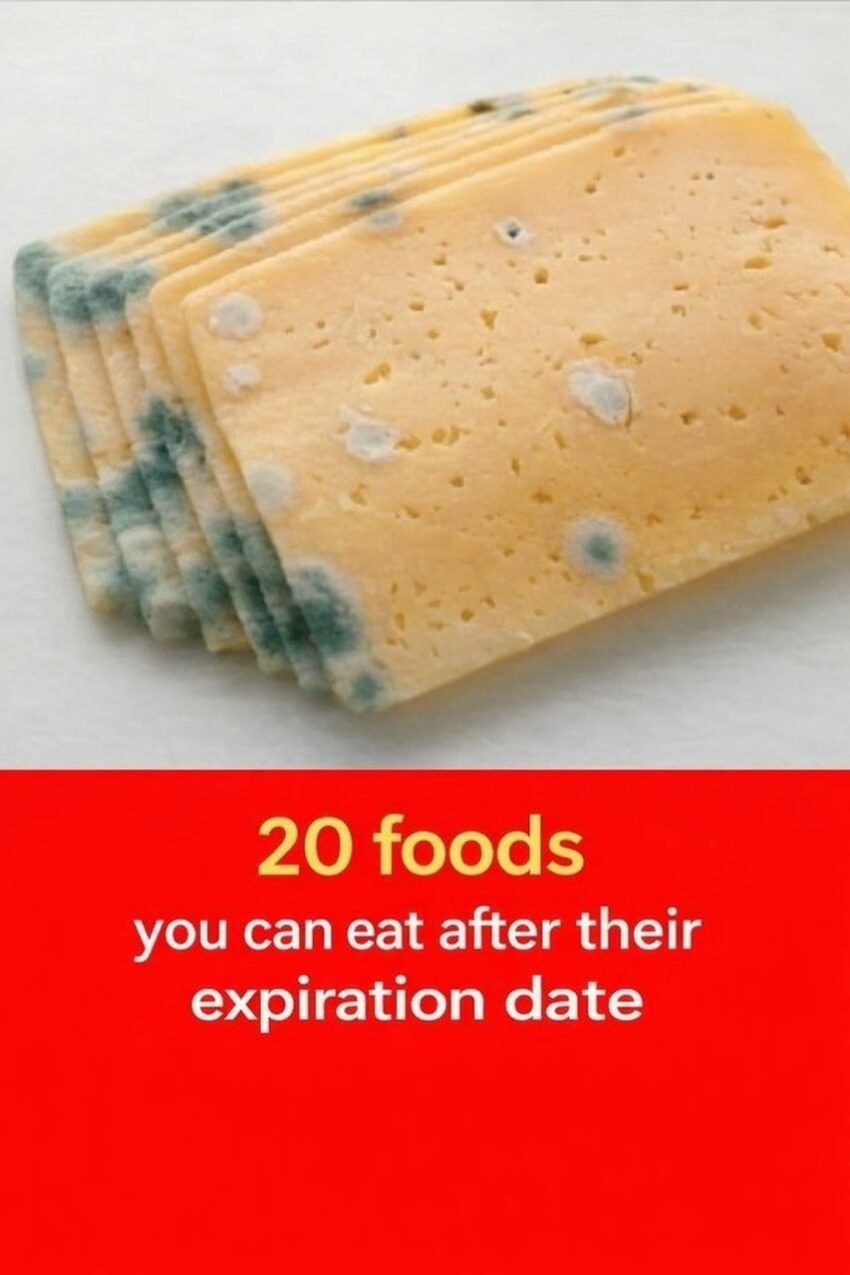
5. Cheese (Hard)
How long after? Several weeks
Cut off mold (about 1 inch around it), and the rest is safe.
6. Cheese (Soft)
How long after? Be cautious
Soft cheeses spoil faster. If mold appears, it’s best to discard the whole product.
7. Butter
How long after? 1–2 months
Butter is resilient. If it smells fresh and tastes normal, it’s safe.
8. Cereal
How long after? Several months
It may lose crunch but remains safe if kept dry.
9. Pasta (Dry)
How long after? Years
Dry pasta has an incredibly long shelf life if sealed.
10. Rice (Dry)
How long after? Indefinitely
White rice can last for years. Brown rice has oils that shorten its lifespan.
11. Canned Goods
How long after? 1–5 years
If the can isn’t bulging, leaking, or rusted, it’s usually safe.
12. Frozen Foods
How long after? Indefinitely (quality may decline)
Freezing stops bacterial growth. Taste and texture may suffer, but safety remains.
13. Peanut Butter
How long after? Several months
Oil separation is normal. Stir and use.
14. Chips
How long after? Weeks
They get stale—not dangerous.
15. Chocolate
How long after? Months
White spots (fat bloom) look odd but are harmless.
16. Honey
How long after? Forever
Honey never spoils. Crystallization is natural—just warm it gently.
17. Vinegar
How long after? Indefinitely
Highly acidic—virtually immune to spoilage.
18. Pickles
How long after? Months to years
The brine preserves them well.
19. Salad Dressing (Unopened)
How long after? 1–3 months
Check smell and separation.
20. Deli Meats
How long after? Use caution
These spoil quickly. Only consume within a few days past the date—and only if properly stored.
How to Tell If Food Is Actually Bad
Forget the date for a moment. Use your senses:
Look
- Mold
- Discoloration
- Unusual texture
Smell
- Sour or rancid odor
Taste (only if safe to try)
- Off or bitter flavor
If something feels wrong, trust that instinct.
Step-by-Step Guide to Safely Eating Food Past Expiration
- Check the label type (sell by vs use by)
- Inspect the packaging (damage, swelling, leaks)
- Use sensory checks
- Consider storage conditions
- When in doubt, throw it out
Real-Life Scenario
A typical American household throws out a half-full yogurt container because it’s two days past the date.
But if unopened and refrigerated, it’s still perfectly safe.
Multiply that across groceries each week—and you’re looking at hundreds of dollars lost annually.
Comparison: Safe vs Risky Foods After Expiration
| Category | Generally Safe | Risk Level |
|---|---|---|
| Dry goods | Yes | Low |
| Canned foods | Yes | Low |
| Dairy | Sometimes | Medium |
| Meat | Rarely | High |
| Prepared foods | Rarely | High |
Pros and Cons of Ignoring Expiration Dates
Pros
- Saves money
- Reduces food waste
- Encourages smarter consumption
Cons
- Requires judgment
- Slight risk if mishandled
- Not all foods are safe past dates
Common Mistakes (And Fixes)
Mistake: Trusting the date blindly
Fix: Learn label meanings
Mistake: Poor storage
Fix: Use airtight containers and proper refrigeration
Mistake: Ignoring signs of spoilage
Fix: Always inspect before eating
Expert-Level Insights Most People Miss
- Temperature fluctuations spoil food faster than time
- Opening a product shortens its safe window dramatically
- Freezing extends life but not flavor
- Acidic foods last longer than neutral ones
2026 Trend: Smarter Food Labels Are Coming
New packaging technologies are emerging, including:
- Smart labels that change color based on spoilage
- QR codes with real-time freshness tracking
- AI-powered fridge monitoring systems
Food safety is getting smarter—but until then, your judgment matters most.
Mini Case Scenario
Jake, a busy professional, used to throw away groceries weekly.
After learning how expiration dates actually work, he cut his food waste by nearly 50%—saving over $1,200 a year.
No drastic changes. Just smarter decisions.
FAQs
1. Can you eat food after the expiration date?
Yes—many foods are still safe if properly stored and show no signs of spoilage.
2. What foods should never be eaten past expiration?
Raw meat, seafood, and deli items carry higher risk and should be handled cautiously.
3. Is expired milk dangerous?
Not always. If it smells and tastes fine, it’s usually safe within a few days.
4. How accurate are expiration dates?
They’re conservative estimates for quality, not strict safety cutoffs.
5. Can canned food last forever?
Almost. As long as the can is intact, it can last years.
6. What happens if you eat expired food?
Usually nothing—if it hasn’t spoiled. But contaminated food can cause illness.
7. How can I make food last longer?
Store properly, keep temperatures stable, and seal tightly.
8. Is freezing food after expiration safe?
Yes, if it hasn’t spoiled yet.
9. Why do foods expire so quickly after opening?
Exposure to air and bacteria speeds up spoilage.
10. Are “best by” dates legally enforced?
No—except for infant formula.
Action Checklist
✅ Do This
- Learn label meanings
- Use smell, sight, and taste
- Store food properly
- Freeze when possible
- Rotate older items forward
❌ Avoid This
- Blindly trusting dates
- Ignoring spoilage signs
- Storing food in warm areas
- Keeping opened food too long
Conclusion
Expiration dates aren’t the enemy—misunderstanding them is.
Once you know what to look for, you’ll waste less, save more, and feel more confident in your kitchen decisions.
This isn’t about taking risks. It’s about making informed choices.
Most foods don’t expire when you think they do—your senses are often more reliable than the label.
If this changed how you look at your fridge, share it with someone who still throws away perfectly good food—and take control of your kitchen smarter than ever.