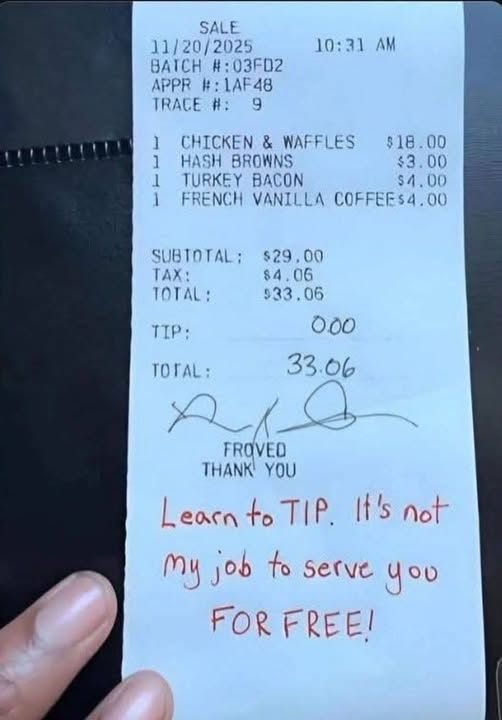
“Stop Saying ‘It’s Not My Job’: The Real Power of Tipping (And Why It Changes Everything)”
Tipping isn’t just extra money—it’s a mindset. Learn why tipping matters, how it impacts service culture, and how to tip smarter in the U.S.
You’ve probably heard it—or maybe even said it yourself:
“It’s not my job to pay their salary.”
On the surface, it sounds reasonable. Why should customers carry the burden of someone else’s wages?
But here’s the uncomfortable truth: in the United States, tipping isn’t just a courtesy—it’s part of the system. Ignoring it doesn’t make a statement… it often just hurts the person serving you.
And that’s where things get complicated.
This guide isn’t about shaming or preaching. It’s about clarity. If you’ve ever felt confused, frustrated, or even resistant about tipping, you’re not alone. We’re going to unpack the psychology, the economics, and the real-world consequences—plus show you how to navigate tipping in a way that feels fair, informed, and intentional.
By the end, you’ll understand not just how to tip—but why it actually matters more than you think.
What “Tipping Culture” Really Means (Beyond the Surface)
Tipping in the U.S. isn’t random generosity. It’s baked into the service economy.
Unlike many countries where workers receive full hourly wages, tipped employees—servers, bartenders, delivery drivers—often earn a base wage far below minimum wage. Employers are legally allowed to do this under the assumption that tips will make up the difference.
That assumption changes everything.
So when someone says, “I shouldn’t have to tip,” they’re technically arguing with a system—but practically affecting an individual.
And that individual? They’re often relying on your tip to cover rent, groceries, or gas.
Why This Matters More Than People Realize
Let’s ground this in reality.
Imagine sitting in a restaurant for an hour:
- Your server greets you warmly
- Takes your order
- Refills your drinks
- Handles special requests
- Checks on you multiple times
At the end, your bill is $60.
If you leave nothing, the server may actually lose money on your table. Why? Because many servers “tip out” a portion of their earnings to bussers, bartenders, or hosts—based on total sales, not tips received.
So your $0 tip doesn’t just mean “no extra.” It can mean a negative outcome for them.
That’s the hidden layer most people never see.
The Psychology Behind “I Don’t Want to Tip”
Resistance to tipping usually comes from a mix of beliefs:
1. Fairness Instinct
People don’t like feeling forced into paying more than advertised.
2. Lack of Transparency
Menu prices don’t clearly show that service wages depend on tips.
3. Cultural Differences
In many countries, tipping is optional or even discouraged.
4. Bad Experiences
Poor service can leave a lasting impression—and reduce willingness to tip again.
All of these are valid feelings. But reacting to them by refusing to tip altogether often punishes the wrong person.
The Real Cost of “No Tip” Behavior
Let’s break down what happens when tipping is ignored:
| Impact Area | What Happens |
|---|---|
| Service Quality | Staff may become disengaged over time |
| Worker Income | Earnings become unstable and unpredictable |
| Customer Experience | Long-term decline in hospitality standards |
| Industry Health | High turnover and burnout increase |
In other words, tipping isn’t just about one meal—it shapes the entire service ecosystem.
Step-by-Step: How to Tip Confidently (Without Overthinking It)
If tipping feels awkward or confusing, use this simple framework:
Step 1: Know the Baseline
- Restaurants: 15–20%
- Exceptional service: 20–25%
- Delivery: $3–$10 depending on distance and weather
- Coffee shops: Optional, but appreciated
Step 2: Adjust for Experience
- Great service → tip more
- Poor service → reduce, but rarely to zero
Step 3: Consider Effort, Not Just Outcome
Busy night? Large group? Complex order? These matter.
Step 4: Be Consistent
Develop your own tipping standard so you don’t have to decide every time.
Real-Life Scenario: Two Customers, Two Outcomes
Let’s compare:
Customer A
Leaves no tip, believing it’s “not their responsibility.”
Customer B
Leaves a 20% tip, even after average service.
Now fast-forward:
- The server remembers Customer B
- Gives quicker, more attentive service next time
- Builds rapport
Meanwhile, Customer A gets neutral—or even slightly colder—service.
Is that fair? Maybe not perfectly. But it’s human nature.
Common Mistakes People Make (And How to Fix Them)
Mistake 1: Tipping Based Only on Food Quality
Fix: Service and kitchen are separate. Tip your server accordingly.
Mistake 2: Skipping Tips During Discounts
Fix: Tip based on the original bill, not the discounted total.
Mistake 3: Zero Tipping for Minor Issues
Fix: Reduce the tip slightly instead of eliminating it.
Mistake 4: Ignoring Delivery Complexity
Fix: Consider distance, traffic, and weather conditions.
Pros and Cons of Tipping Culture
👍 Pros
- Incentivizes better service
- Allows high-performing workers to earn more
- Creates personal connection between customer and server
👎 Cons
- Income instability for workers
- Social pressure on customers
- Confusion for tourists or newcomers
Both sides have merit. The key is understanding the system you’re participating in.
Insider Insight: What Experienced Servers Wish You Knew
This part rarely gets talked about openly.
- Servers often earn less than you think after tip-outs
- Peak hours are physically exhausting
- One bad table can erase an hour’s worth of effort
- Regular tippers are remembered—and prioritized
And here’s the subtle truth: tipping isn’t just about money. It’s about acknowledgment.
2026 Trends: Where Tipping Culture Is Headed
The conversation around tipping is evolving fast:
1. Service Charges Replacing Tips
Some restaurants are adding fixed service fees instead of tips.
2. Digital Payment Prompts
More businesses now suggest tip percentages at checkout.
3. Wage Reform Discussions
There’s ongoing debate about eliminating tipped minimum wage.
4. Consumer Pushback
More customers are questioning when tipping is appropriate.
The system may change—but right now, tipping is still a major part of how service workers earn a living.
Mini Case Scenario: The $5 That Changed Everything
A server finishes a long shift—eight hours on their feet.
Most tables tipped average. One table leaves nothing.
Then, one customer leaves a simple $5 tip on a small bill and says:
“Thanks for taking care of us tonight.”
That moment? It sticks.
Not because of the amount—but because of the recognition.
That’s the human side of tipping people often overlook.
Frequently Asked Questions
1. Do I have to tip in the U.S.?
Legally, no. Socially and culturally, it’s strongly expected in many service settings.
2. What if the service is bad?
Reduce the tip, but avoid zero unless the experience was truly unacceptable.
3. Why don’t businesses just pay higher wages?
Some are starting to—but the current system still relies heavily on tips.
4. Should I tip for takeout?
It’s optional, but a small tip is appreciated—especially for large or complex orders.
5. Is tipping expected everywhere?
No. It’s most common in restaurants, bars, delivery, and personal services.
6. How much should I tip for delivery?
Typically $3–$10, depending on distance and difficulty.
7. Are tip prompts on screens mandatory?
No. They’re suggestions—you control the final amount.
8. Do servers judge customers who don’t tip?
Not always—but patterns are noticed, especially with repeat customers.
9. What if I genuinely can’t afford to tip?
Consider choosing service options where tipping isn’t expected.
10. Is tipping going away?
Not anytime soon, though the system is evolving.
✅ Action Checklist: Tip Smarter, Not Harder
Do This:
- Tip 15–20% at restaurants
- Adjust based on service quality
- Factor in effort and conditions
- Be consistent in your approach
Avoid This:
- Leaving zero tip for minor issues
- Ignoring tipping norms in service settings
- Taking frustration with the system out on workers
- Overthinking every transaction
🏁 Conclusion
Tipping isn’t perfect. It’s messy, emotional, and sometimes frustrating.
But right now, it’s part of the reality of how millions of service workers earn their living in the United States.
Saying “it’s not my job” might feel justified—but it doesn’t change the system. It just shifts the impact onto someone who likely has little control over it.
You don’t have to love tipping.
But understanding it? That’s where real power comes in.
Tipping isn’t about obligation—it’s about awareness. Once you understand the system, your choices become more intentional—and far more impactful.
If this changed how you think about tipping, share it with someone who’s had the same debate—and keep the conversation going.