Found a Small Brown “Pill” Behind Your Cabinet? Here’s What It Actually Is (And What to Do Next)
Found a hard brown capsule behind your cabinet? Learn what it could be, how to identify it, and safe steps to deal with it fast.
You’re cleaning behind your kitchen cabinet… and suddenly you spot it.
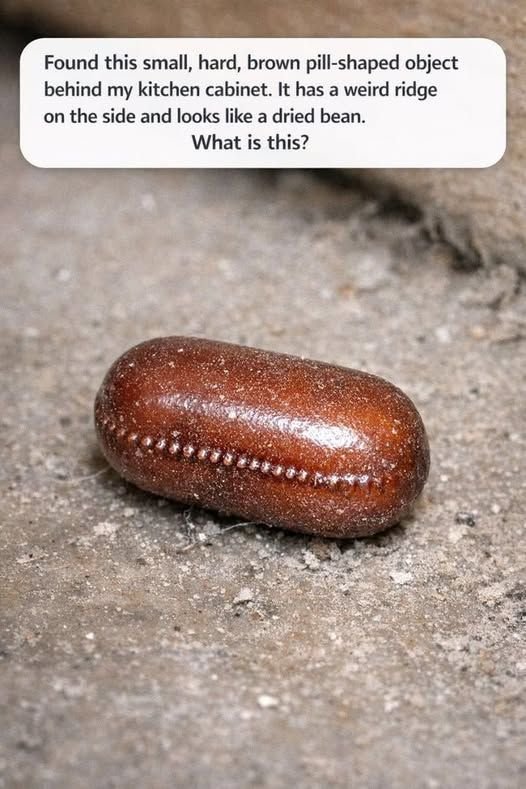
A small, hard, brown object. Pill-shaped. Slight ridge along the side. Looks almost like a dried bean—but it definitely wasn’t there before.
Now your mind starts racing.
Is it food? A seed? Something… alive?
Here’s the truth: objects like this are surprisingly common in kitchens—and they usually point to something you shouldn’t ignore.
This guide will help you identify exactly what you’re looking at, what it means, and what to do next (without panic or guesswork).
The Most Likely Culprit: A Cockroach Egg Case
Based on your description—small, brown, hard, capsule-like with a ridge—the most likely explanation is an ootheca, also known as a cockroach egg case.
Yes, it sounds unpleasant. But understanding it puts you back in control.
What Is an Ootheca?
An ootheca is a protective casing that holds multiple cockroach eggs.
Think of it as a compact capsule designed to:
- Shield eggs from damage
- Keep moisture balanced
- Increase survival rates
Each one can contain 10 to 40 baby roaches, depending on the species.
That’s why spotting even one matters.
How to Identify It (Without Guessing)
Here’s how to confirm what you’re dealing with:
Typical characteristics:
- Brown to dark reddish color
- About the size of a small bean or pill
- Hard outer shell
- A visible ridge or seam along one side
- Slightly glossy or dry texture
Where they’re usually found:
- Behind cabinets
- Under sinks
- Inside drawers
- Near food storage areas
If it matches most of these, it’s very likely an ootheca.
Why You Found It in Your Kitchen
Cockroaches choose locations that offer three things:
- Warmth
- Moisture
- Access to food
Your kitchen checks all three boxes.
They often place egg cases in hidden, protected spots—like behind cabinets—so they can hatch undisturbed.
What Happens If You Ignore It?
This is where things can escalate quietly.
If the egg case hasn’t hatched yet:
- It could release multiple baby roaches soon
If it already hatched:
- You may have a growing infestation starting
Either way, it’s a signal—not something random.
Step-by-Step: What You Should Do Immediately
1. Do NOT Crush It Barehanded
It might release contents—or spread bacteria.
Use tissue or gloves instead.
2. Dispose of It Properly
- Place it in a sealed plastic bag
- Throw it in an outdoor trash bin
For extra safety:
- You can freeze it overnight before disposal
3. Inspect the Surrounding Area
Look for:
- More capsules
- Droppings (small black specks)
- Musty or oily odor
- Live insects
Focus on dark, hidden corners.
4. Deep Clean the Area
Use:
- Warm soapy water
- Vinegar solution
Clean:
- Cabinet backs
- Floor edges
- Cracks and corners
5. Seal Entry Points
Check for:
- Gaps in walls
- Openings near pipes
- Cracks in cabinetry
Seal them with caulk if needed.
6. Monitor for Activity
Over the next 1–2 weeks, watch for:
- Small roaches
- Movement at night
- New droppings
This helps you catch issues early.
Could It Be Something Else?
Yes—but less likely.
Here are a few alternatives:
1. Seed or dried food item
- Usually softer
- No ridge seam
2. Rodent droppings
- Darker, more irregular
- No structured casing
3. Beetle pupae
- Rare in kitchens
- Different shape and texture
The ridge you mentioned is the key detail—it strongly points to a cockroach egg case.
Real-Life Scenario: How This Usually Plays Out
A homeowner in California found a similar object behind their stove.
They ignored it at first.
Two weeks later? Small roaches started appearing at night.
After inspection, more egg cases were found hidden in nearby cabinets.
Early action would’ve made it much easier to control.
Common Mistakes People Make
1. Ignoring a single find
Even one can indicate activity.
2. Only cleaning visible areas
Roaches hide deep in cracks.
3. Using random sprays
Not always effective long-term.
4. Leaving food crumbs overnight
Attracts more pests quickly.
Pros & Cons of DIY Handling
| Pros | Cons |
|---|---|
| Quick response | May miss hidden infestation |
| No cost | Requires thorough effort |
| Immediate control | Not always permanent |
When to Call a Professional
You should consider pest control if:
- You find multiple egg cases
- You see live roaches regularly
- The problem persists after cleaning
Professionals can identify species and apply targeted treatment.
Prevention Tips That Actually Work
- Keep kitchen dry (fix leaks)
- Store food in sealed containers
- Take trash out regularly
- Clean under appliances monthly
- Avoid leaving dishes overnight
Consistency matters more than intensity.
2026 Insight: Why These Issues Are Increasing
Urban homes are seeing more pest activity due to:
- Warmer indoor environments
- Increased food delivery and storage
- Tighter living spaces
Even clean homes aren’t immune.
Frequently Asked Questions
1. Is it definitely a cockroach egg?
Not 100% without inspection—but your description strongly matches one.
2. Are cockroach eggs dangerous?
They don’t bite, but they can lead to infestations.
3. How many roaches come from one egg case?
Usually 10–40, depending on species.
4. Can it hatch after I find it?
Yes, if it hasn’t already.
5. Should I crush it?
Better to dispose of it safely instead.
6. Does one egg mean infestation?
Not always—but it’s a warning sign.
7. Are cockroaches common in clean homes?
Yes. Cleanliness helps—but doesn’t guarantee prevention.
8. What attracts them most?
Food, moisture, and warmth.
9. How fast do they multiply?
Very quickly—within weeks under the right conditions.
10. Can I handle it myself?
Yes, if caught early and handled properly.
✅ Action Checklist
Do this immediately:
- Remove and seal the object
- Inspect nearby areas
- Deep clean thoroughly
- Seal cracks and gaps
Avoid this:
- Ignoring the find
- Leaving food exposed
- Delaying inspection
- Relying on guesswork
🏁 Conclusion
Finding something like this behind your cabinet can feel unsettling—but it’s also an opportunity.
An early warning.
Handled quickly, it can prevent a much bigger problem.
Stay observant, act promptly, and keep your kitchen environment controlled. That small “bean-like” object isn’t random—it’s a signal. Respond early, and you stay ahead.
If you’ve found something similar, share your experience—or explore more practical home fixes to keep your space clean and stress-free.