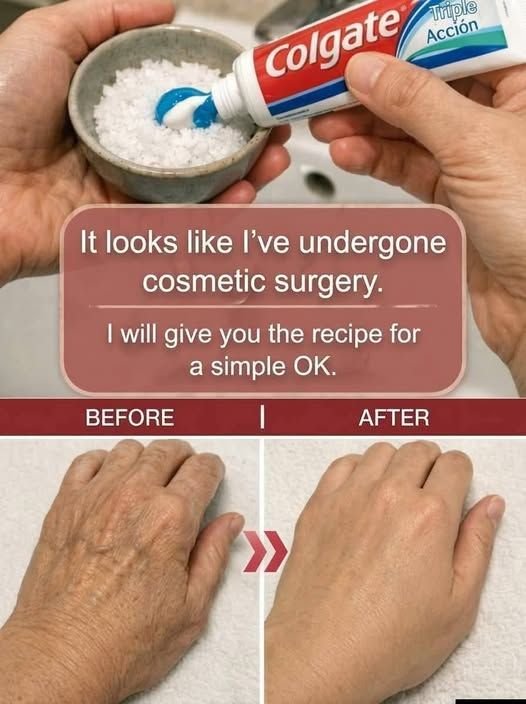
How Toothpaste Became a Viral “Hack” for Age Spots and Wrinkles — and What Actually Works Instead
Can toothpaste really reduce age spots and wrinkles? Discover the truth behind this viral claim and safe, dermatologist-backed alternatives that actually work.
It shows up everywhere online.
A viral video. A quick before-and-after photo. A comment section full of people claiming toothpaste “erases” wrinkles or fades age spots overnight.
At first glance, it sounds like one of those simple, affordable beauty hacks that feel almost too good to ignore.
After all, toothpaste is already in your home. It’s inexpensive. It’s familiar. And if it works on teeth, why not skin?
But here’s where things get interesting—and where most viral beauty claims start to fall apart.
When dermatologists and skin researchers look at toothpaste on skin, the story changes completely. What seems like a quick fix often turns into irritation, barrier damage, and in some cases, worsening pigmentation.
So why does this myth keep circulating? And what actually does help age spots and wrinkles in a natural, safe, and effective way?
That’s what this guide breaks down in detail—without hype, without fear, and without marketing spin.
Why People Believe Toothpaste Works on Skin
Before debunking the idea, it’s worth understanding why it feels believable in the first place.
Toothpaste contains ingredients that sound like they should help skin:
- Baking soda
- Hydrogen peroxide
- Menthol
- Essential oils
- Abrasive cleaning agents
On paper, these ingredients seem like they might “clean” or “brighten” skin the same way they clean teeth.
And that’s where the misunderstanding begins.
The Psychology Behind Viral Beauty Hacks
Beauty shortcuts go viral for one reason: hope meets simplicity.
People want:
- Fast results
- Cheap solutions
- At-home treatments
- Control over aging signs
When a product already sitting in the bathroom is presented as a solution, it lowers resistance. No purchase needed. No appointment needed. Just apply and wait.
But skin is not enamel. And the chemistry of toothpaste is not designed for facial tissue.
What Age Spots and Wrinkles Actually Are
To understand why toothpaste doesn’t work, we need to understand what we’re treating.
Age Spots (Hyperpigmentation)
Age spots are caused by:
- Sun exposure (UV damage)
- Melanin overproduction
- Long-term skin stress
They are not surface stains—they exist within deeper layers of the skin.
Wrinkles
Wrinkles develop due to:
- Collagen loss
- Skin elasticity reduction
- Repeated facial movement
- Environmental damage
Again, this is structural—not surface-level.
Why Toothpaste Fails as a Skin Treatment
Let’s break it down clearly.
1. It Is Not Formulated for Skin
Toothpaste is designed for:
- Enamel cleaning
- Bacteria disruption in the mouth
- Abrasive plaque removal
Facial skin is far more sensitive than teeth and gums.
2. It Can Damage the Skin Barrier
Your skin has a protective layer called the acid mantle.
Toothpaste can disrupt it, leading to:
- Dryness
- Redness
- Burning sensation
- Increased sensitivity
Once this barrier is compromised, skin can actually age faster—not slower.
3. Abrasive Ingredients Can Worsen Pigmentation
Some toothpastes contain mild abrasives meant to scrub teeth.
On skin, this can:
- Cause micro-irritation
- Trigger inflammation
- Worsen dark spots over time
Inflammation is one of the biggest triggers for hyperpigmentation.
4. Fragrance and Menthol Can Irritate Skin
That “cooling” sensation is not skin-friendly.
Menthol and strong flavoring agents can:
- Trigger allergic reactions
- Cause redness
- Lead to long-term sensitivity
The Dangerous Misconception: “If It Tinges, It’s Working”
A common belief online is that burning or tingling means effectiveness.
In dermatology, it usually means:
The skin is being irritated, not improved.
Improvement in skin health should feel neutral—not painful.
What Actually Helps Age Spots and Wrinkles (Evidence-Based)
Now let’s move to what does work—both naturally and clinically supported.
1. Sunscreen: The Most Underrated Anti-Aging Tool
If there is one non-negotiable in skin aging prevention, it is this.
Daily sunscreen helps:
- Prevent new age spots
- Slow wrinkle formation
- Protect collagen
- Reduce UV damage
Even dermatology research consistently shows sunscreen is more effective than most anti-aging creams combined.
2. Retinoids (Vitamin A Derivatives)
Retinoids are one of the most studied anti-aging ingredients.
They help:
- Boost collagen production
- Speed up skin cell turnover
- Fade pigmentation over time
- Improve fine lines
Over-the-counter versions include retinol, while stronger forms are prescription-based.
3. Vitamin C Serums
Vitamin C supports skin by:
- Brightening dark spots
- Fighting free radical damage
- Supporting collagen synthesis
It is especially effective when used in the morning with sunscreen.
4. Niacinamide (Vitamin B3)
A gentle but powerful ingredient that:
- Reduces pigmentation
- Strengthens skin barrier
- Improves texture
- Reduces inflammation
Unlike harsh DIY remedies, it is well tolerated by most skin types.
5. Hyaluronic Acid for Hydration
Wrinkles often look worse when skin is dehydrated.
Hyaluronic acid:
- Pulls moisture into the skin
- Plumps fine lines temporarily
- Improves elasticity appearance
It doesn’t erase wrinkles, but it improves skin quality significantly.
6. Natural Oils (Used Correctly)
Some oils can support skin barrier health:
- Rosehip oil (rich in antioxidants)
- Jojoba oil (mimics skin sebum)
- Squalane (lightweight hydration support)
Important: These support skin but do not “erase” wrinkles.
Comparison: Toothpaste vs Safe Skin Treatments
| Approach | Effect on Age Spots | Effect on Wrinkles | Safety |
|---|---|---|---|
| Toothpaste | May irritate, worsen | No real benefit | Low |
| Sunscreen | Prevents worsening | Prevents deepening | High |
| Retinoids | Fades over time | Improves texture | High (with use) |
| Vitamin C | Brightens | Mild improvement | High |
| Niacinamide | Reduces pigmentation | Supports skin health | High |
Common Mistakes People Make With DIY Skin Hacks
1. Using Kitchen Products on Skin
Lemon juice, baking soda, toothpaste—these often disrupt skin balance.
2. Expecting Overnight Results
Real skin change takes weeks or months, not hours.
3. Ignoring Sun Protection
Without sunscreen, most treatments lose effectiveness.
4. Over-Exfoliating
Too much scrubbing leads to inflammation and darkening.
What Dermatologists Actually Recommend
According to general consensus in dermatology practices (including guidance aligned with organizations like the American Academy of Dermatology), effective skincare follows three principles:
- Protect (sunscreen)
- Repair (retinoids, antioxidants)
- Support (hydration, barrier care)
Anything outside this framework should be approached cautiously.
A Realistic Example
A woman in her late 40s tries toothpaste on age spots after seeing a viral video.
Day 1: Mild tingling
Day 3: Redness and dryness
Week 1: Spots look darker due to irritation
She switches to:
- SPF 50 sunscreen
- Vitamin C serum
- Gentle moisturizer
After 8 weeks:
- Spots begin fading gradually
- Skin texture improves
- No irritation
The difference wasn’t “magic”—it was biology working correctly.
Future Trends in Skin Aging Treatments (2026 Outlook)
Skin science is moving toward:
- Barrier-first skincare
- Microbiome-friendly formulas
- Personalized dermatology routines
- Non-invasive pigmentation treatments
- AI-driven skin analysis tools
The trend is clear: gentle, consistent, science-backed care over harsh DIY methods.
Pros and Cons of DIY Beauty Hacks Like Toothpaste
Pros
- Cheap and accessible
- Feels immediate
- Easy to try
Cons
- High irritation risk
- No clinical support
- Can worsen pigmentation
- Damages skin barrier
Frequently Asked Questions
1. Can toothpaste remove age spots?
No. There is no scientific evidence supporting this.
2. Why do some people think it works?
Temporary dryness or irritation may make spots appear lighter briefly.
3. Is it safe to put toothpaste on skin?
Generally no. It can cause irritation, burning, and dryness.
4. What is the fastest way to fade age spots?
Consistent sunscreen use plus ingredients like vitamin C or retinoids.
5. Do natural remedies help wrinkles?
Some improve hydration, but they do not rebuild collagen significantly.
6. Can wrinkles be reversed naturally?
They can be improved, but not fully reversed without medical treatments.
7. What’s the biggest cause of early aging?
UV exposure is the leading cause of premature skin aging.
8. How long does real skincare take to work?
Typically 4–12 weeks for visible improvements.
Action Checklist
What to Do
- Use sunscreen daily
- Introduce vitamin C or niacinamide
- Keep skin moisturized
- Be consistent for at least 8 weeks
- Focus on barrier health
What to Avoid
- Toothpaste or baking soda on skin
- Lemon juice DIY treatments
- Over-scrubbing or harsh exfoliation
- Expecting overnight results
Conclusion
The idea that toothpaste can improve age spots or wrinkles is understandable—but misleading.
It spreads because it feels simple, cheap, and instantly accessible. But skin aging is a biological process, not a surface stain you can scrub away.
Real improvement comes from consistency, protection, and evidence-based care—not kitchen or bathroom shortcuts.
When you shift from quick fixes to long-term skin health, results may take longer—but they are safer, more stable, and actually visible.
Toothpaste does not treat age spots or wrinkles—it can irritate skin. Real results come from sunscreen, antioxidants, and consistent skincare habits.