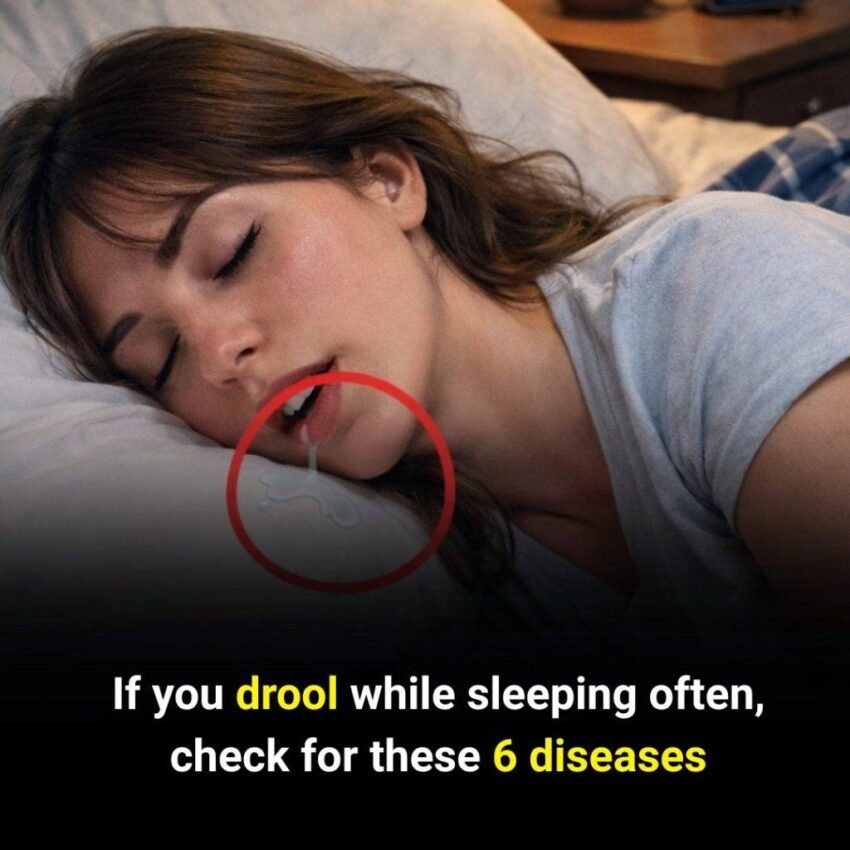
Nighttime Drooling Isn’t Always Harmless — 6 Hidden Health Conditions You Shouldn’t Ignore
Waking up with drool? It might be more than harmless. Discover 6 conditions linked to nighttime drooling—and when to take it seriously.
You wake up, wipe your pillow… and move on. But should you?
Most people brush off nighttime drooling as a minor annoyance—something that happens after a deep sleep or a long day. No big deal, right?
Not always.
For some, that extra saliva on the pillow is a subtle signal your body is trying to send. And the tricky part? It doesn’t come with flashing warning lights.
If you’ve noticed it happening more often—or paired with other symptoms—it might be worth a closer look.
In this guide, you’ll discover six underlying conditions that can cause nighttime drooling, how to recognize red flags, and what you can actually do about it—without spiraling into unnecessary worry.
What Causes Drooling During Sleep?
Let’s start simple.
Drooling (medically called sialorrhea) happens when saliva escapes the mouth unintentionally. At night, this usually comes down to one of three factors:
- Excess saliva production
- Difficulty swallowing saliva
- Mouth staying open during sleep
Occasional drooling is completely normal—especially if you sleep on your side or stomach. But when it becomes frequent, excessive, or sudden, it may point to something deeper.
Why This Matters More Than You Think
Ignoring persistent drooling can mean overlooking early signs of:
- Neurological issues
- Sleep disorders
- Digestive problems
- Oral health concerns
In the U.S., sleep-related disorders and neurological conditions are often underdiagnosed in early stages. Small symptoms—like drooling—can be the first clue.
And catching these early? That’s where outcomes dramatically improve.
6 Conditions That Could Be Behind Your Nighttime Drooling
1. Sleep Apnea: The Silent Disruptor
This is one of the most common—and overlooked—causes.
Sleep apnea causes repeated interruptions in breathing during sleep. When airflow is blocked, your body compensates by opening the mouth, which increases drooling.
Signs to watch for:
- Loud snoring
- Gasping or choking during sleep
- Morning headaches
- Daytime fatigue (even after “8 hours”)
Why drooling happens here:
Mouth breathing becomes the default due to airway obstruction.
Real-life scenario:
A 42-year-old office worker noticed increasing drooling and fatigue. He assumed stress was the cause—until a sleep study revealed moderate sleep apnea.
What helps:
- Sleep study (home or lab-based)
- CPAP therapy or oral appliances
- Weight management if applicable
2. Gastroesophageal Reflux Disease (GERD)
Acid reflux doesn’t just affect your chest—it can impact saliva production too.
GERD can trigger your body to produce more saliva as a defense mechanism against stomach acid.
Clues you might miss:
- Sour taste in the morning
- Chronic throat clearing
- Mild cough at night
- Burning sensation after meals
Why drooling increases:
The body produces saliva to neutralize acid, especially when lying down.
Action steps:
- Avoid late-night meals
- Elevate your head during sleep
- Limit acidic or spicy foods
- Consult a physician if symptoms persist
3. Nasal Congestion or Chronic Sinus Issues
If your nose is blocked, your mouth takes over. Simple.
But chronic mouth breathing during sleep can lead to consistent drooling.
Common triggers:
- Allergies
- Deviated septum
- Sinus infections
Subtle signs:
- Dry mouth in the morning
- Snoring without apnea
- Frequent congestion
What you can do:
- Use saline nasal sprays
- Try a humidifier
- Address allergies proactively
- Consider an ENT evaluation if ongoing
4. Neurological Conditions (Early Indicators)
This is where things get serious—but also where early detection matters most.
Conditions affecting the nervous system can impair your ability to swallow properly, leading to drooling.
Associated conditions may include:
- Parkinson’s disease
- Stroke aftermath
- Multiple sclerosis
Red flags:
- Difficulty swallowing
- Slurred speech
- Facial muscle weakness
- Drooling during the day as well
Important note:
Occasional drooling alone does NOT mean you have a neurological disorder. But combined symptoms should never be ignored.
Next step:
Seek medical evaluation if multiple symptoms appear.
5. Medication Side Effects
Surprisingly common—and often overlooked.
Certain medications can increase saliva production or relax muscles that keep your mouth closed.
Common culprits:
- Antipsychotics
- Some antidepressants
- Sedatives
- Medications for Alzheimer’s
What to watch:
- Drooling started after a new prescription
- Increased saliva during both day and night
Solution:
- Never stop medication abruptly
- Talk to your doctor about alternatives or dosage adjustments
6. Oral or Dental Issues
Sometimes the problem starts right where you’d expect—in your mouth.
Misaligned teeth, gum disease, or poorly fitting dental appliances can interfere with proper mouth closure.
Signs:
- Jaw discomfort
- Gum inflammation
- Mouth breathing habit
- Clicking jaw
Fixes:
- Dental evaluation
- Orthodontic correction
- Night guards if needed
When Should You Actually Be Concerned?
Here’s a simple way to gauge:
| Symptom | Likely Harmless | Needs Attention |
|---|---|---|
| Occasional drooling | ✔ | |
| Happens only after deep sleep | ✔ | |
| Persistent nightly drooling | ✔ | |
| Drooling + fatigue/snoring | ✔ | |
| Drooling + swallowing issues | ✔ | |
| Sudden onset in adults | ✔ |
If it’s frequent, worsening, or paired with other symptoms—don’t ignore it.
Step-by-Step: What You Should Do Next
If nighttime drooling is becoming routine, here’s a practical approach:
Step 1: Track Your Symptoms
Note:
- Frequency
- Sleep position
- Associated symptoms
Step 2: Adjust Sleep Habits
- Try sleeping on your back
- Elevate your head slightly
- Maintain a consistent sleep schedule
Step 3: Address Obvious Triggers
- Treat allergies
- Avoid late meals
- Improve oral hygiene
Step 4: Evaluate Your Breathing
- Are you breathing through your mouth?
- Do you snore regularly?
Step 5: Seek Professional Input
Start with:
- Primary care physician
- Dentist
- Sleep specialist (if needed)
Common Mistakes People Make
1. Ignoring it for years
Small symptoms often become bigger problems.
2. Self-diagnosing too quickly
Not every case points to a serious condition.
3. Overlooking medications
People rarely connect drooling with prescriptions.
4. Treating symptoms, not causes
Mouth guards won’t fix sleep apnea.
Pros & Cons of Addressing the Issue Early
Pros:
- Early detection of serious conditions
- Better sleep quality
- Improved overall health
- Peace of mind
Cons:
- Requires medical visits
- Possible testing costs
- Temporary lifestyle adjustments
Expert Insight Most People Miss
Here’s something rarely discussed:
Saliva is a protective mechanism.
Your body doesn’t produce excess saliva randomly—it’s reacting to something.
In many cases, drooling is less about the saliva itself and more about:
- Airway stability
- Nervous system control
- Digestive balance
Treat the root, not the symptom.
2026 Update: Why More People Are Noticing This Now
There’s been a noticeable rise in sleep-related complaints across the U.S., and nighttime drooling is part of that pattern.
Why?
- Increased screen time disrupting sleep cycles
- Higher stress levels affecting breathing patterns
- Rising rates of sleep apnea and obesity
- More medication use
People are paying closer attention—and catching issues earlier.
A Short Real-World Case
Emily, 34, thought her nighttime drooling was just due to “sleeping hard.” Over time, she also noticed fatigue and morning headaches.
After finally getting a sleep test, she was diagnosed with mild sleep apnea.
A simple oral appliance reduced her symptoms within weeks.
The drooling? Gone.
Frequently Asked Questions
1. Is drooling during sleep normal?
Yes—if it’s occasional. Frequent or excessive drooling may need evaluation.
2. Why do I suddenly start drooling at night?
It could be due to sleep position, congestion, medication changes, or an underlying condition.
3. Can dehydration cause drooling?
Indirectly. Dehydration can affect saliva consistency but doesn’t typically cause excess drooling.
4. Does drooling mean I have sleep apnea?
Not necessarily—but it’s a common symptom when combined with snoring and fatigue.
5. Can stress cause nighttime drooling?
Stress can affect sleep quality and breathing patterns, which may contribute.
6. Should I see a doctor for drooling?
If it’s persistent, worsening, or paired with other symptoms—yes.
7. Can changing sleep position help?
Absolutely. Sleeping on your back often reduces drooling.
8. Do mouth guards stop drooling?
They may help in some cases, but they don’t address underlying causes.
9. Is drooling linked to neurological diseases?
It can be—but usually alongside other symptoms.
10. Can kids and adults have different causes?
Yes. In children, it’s often developmental. In adults, it’s more likely linked to health factors.
Action Checklist
Do This:
- Track frequency and patterns
- Improve sleep posture
- Address nasal congestion
- Review medications
- Maintain oral hygiene
- Seek medical advice if persistent
Avoid This:
- Ignoring long-term symptoms
- Jumping to worst-case conclusions
- Self-medicating without guidance
- Treating symptoms without identifying causes
Nighttime drooling isn’t always a problem—but it isn’t always harmless either.
Sometimes, it’s just your body relaxing deeply. Other times, it’s a quiet signal asking for attention.
The key is knowing the difference.
Pay attention to patterns. Listen to your body. And when something feels off, don’t wait too long to check it out.
Occasional drooling is normal. Persistent drooling is information—use it.
If you’ve noticed changes in your sleep or symptoms, share your experience or questions below. And if this helped you see things differently, pass it along—you never know who might need it.