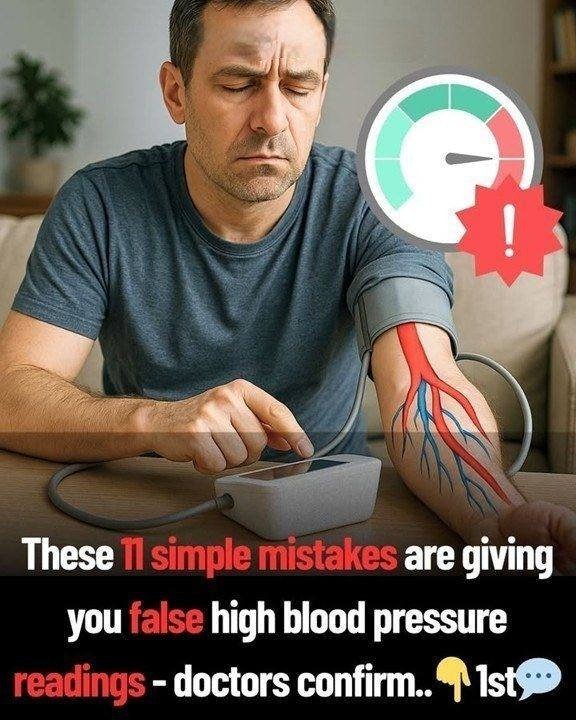
🔥 11 Sneaky Mistakes That Can Falsely Spike Your Blood Pressure Readings (Doctors Say Most People Miss These)
Getting high blood pressure readings? These 11 common mistakes could be skewing your numbers. Learn how to measure it correctly and avoid false alarms.
You sit down, wrap the cuff around your arm, press start… and suddenly your blood pressure looks dangerously high.
Panic sets in.
But here’s something most people don’t realize: your reading might be wrong.
Not slightly off—sometimes significantly inflated.
Doctors see this all the time. Patients walk in worried about hypertension, only to discover their numbers were thrown off by simple, avoidable mistakes.
And the frustrating part? These errors are incredibly common.
In this guide, you’ll uncover 11 hidden mistakes that can falsely raise your blood pressure readings, how to fix them immediately, and how to get numbers you can actually trust.
What Counts as “High” Blood Pressure?
Before we dive into the mistakes, let’s quickly set the baseline.
According to guidelines from organizations like the American Heart Association:
- Normal: Below 120/80 mm Hg
- Elevated: 120–129 / below 80
- High (Stage 1): 130–139 / 80–89
- High (Stage 2): 140+ / 90+
Even small inaccuracies can push you into the wrong category—leading to unnecessary stress or even medication.
Why Accurate Readings Matter More Than Ever
In the U.S., nearly half of adults are classified as having high blood pressure.
That means:
- More home monitoring
- More self-diagnosis
- More room for error
False readings can lead to:
- Unnecessary anxiety
- Incorrect treatment decisions
- Overmedication
- Missed underlying issues
Getting it right isn’t just helpful—it’s critical.
The 11 Mistakes That Can Falsely Raise Your Blood Pressure
Let’s break them down one by one.
1. Talking During the Measurement
Even casual conversation can raise your reading.
Why? Talking activates your nervous system and slightly increases heart rate and pressure.
Fix: Stay completely silent and relaxed during the test.
2. Sitting Incorrectly (Yes, It Matters)
Slouching, crossing your legs, or dangling your feet can all skew results.
Poor posture affects circulation and pressure distribution.
Fix:
- Sit upright
- Feet flat on the floor
- Back supported
3. Your Arm Is in the Wrong Position
If your arm is below heart level, your reading can appear higher than it really is.
Fix: Rest your arm on a table at heart level.
4. Using the Wrong Cuff Size
This is a big one.
A cuff that’s too small can significantly overestimate your blood pressure.
Fix: Make sure the cuff fits your arm properly—most devices offer size guides.
5. Measuring Right After Coffee
Caffeine temporarily raises blood pressure.
Even one cup can affect your reading for up to 30–60 minutes.
Fix: Avoid caffeine at least 30 minutes before measuring.
6. Not Resting Before the Reading
If you’ve just walked around, climbed stairs, or rushed to sit down, your numbers will reflect that activity.
Fix: Sit quietly for at least 5 minutes before measuring.
7. A Full Bladder
This one surprises people.
A full bladder can increase systolic pressure by 10–15 points.
Fix: Use the restroom before taking a reading.
8. Measuring Over Clothing
Placing the cuff over a sleeve reduces accuracy.
It interferes with proper compression and detection.
Fix: Always place the cuff directly on bare skin.
9. Stress or Anxiety (“White Coat Effect”)
Even at home, stress can elevate readings.
If you’re anxious about the result, your body responds accordingly.
Fix:
- Take multiple readings
- Practice slow breathing beforehand
10. Taking Only One Reading
Blood pressure fluctuates naturally.
One reading doesn’t tell the full story.
Fix: Take 2–3 readings, one minute apart, and average them.
11. Measuring at the Wrong Time of Day
Blood pressure changes throughout the day.
It’s usually higher in the morning and lower at night.
Fix: Measure at the same time daily for consistency.
Step-by-Step: How to Get an Accurate Blood Pressure Reading
Here’s a simple, doctor-approved routine:
- Avoid caffeine, smoking, and exercise for 30 minutes
- Empty your bladder
- Sit quietly for 5 minutes
- Position yourself correctly (feet flat, back supported)
- Place cuff on bare arm at heart level
- Stay silent and still
- Take 2–3 readings and average them
Real-Life Scenario
Sarah, a 55-year-old from Ohio, kept getting readings around 145/90 at home.
She assumed she had hypertension.
After reviewing her routine, she realized:
- She measured right after coffee
- Sat with crossed legs
- Took only one reading
After correcting these:
Her average dropped to 128/82.
No medication needed—just better technique.
Comparison: Accurate vs Inaccurate Measurement Habits
| Factor | Incorrect Habit | Correct Approach |
|---|---|---|
| Posture | Slouching | Upright, supported |
| Arm Position | Hanging down | At heart level |
| Timing | After activity | After resting |
| Cuff Placement | Over clothing | Bare skin |
| Readings Taken | One | Multiple averaged |
Pros and Cons of Home Monitoring
✅ Pros
- Convenient
- Helps track trends
- Encourages awareness
- Supports early detection
❌ Cons
- Easy to do incorrectly
- Can cause anxiety
- Device accuracy varies
Common Mistakes People Keep Repeating
- Checking too often out of anxiety
- Ignoring patterns and focusing on one high reading
- Using old or uncalibrated devices
- Comparing readings from different devices
Expert-Level Insights Doctors Emphasize
Consistency Beats Perfection
Taking readings the same way every day matters more than doing it perfectly once.
Trends Matter More Than Single Numbers
Doctors look at patterns over time—not isolated spikes.
Bring Your Monitor to Appointments
This allows your doctor to verify accuracy and technique.
2026 Update: Smarter Blood Pressure Tracking
Newer devices now include:
- App integration
- Automatic averaging
- Error detection for movement
This reduces user error—but doesn’t eliminate it entirely.
Future Outlook
Expect more:
- Wearable blood pressure tracking
- AI-driven health insights
- Personalized monitoring plans
But even with advanced tech, proper technique will always matter.
❓ Frequently Asked Questions
1. How often should I check my blood pressure?
Once daily is enough unless your doctor advises otherwise.
2. Can anxiety alone cause high readings?
Yes, temporary spikes are common due to stress.
3. Is morning or evening better?
Morning is often recommended, but consistency matters most.
4. Should I stop if I get a high reading?
No—wait, relax, and retest.
5. Are wrist monitors accurate?
They can be, but upper-arm devices are generally more reliable.
6. What’s the best position?
Seated, back supported, feet flat, arm at heart level.
7. Can dehydration affect readings?
Yes, it may cause fluctuations.
8. How long should I wait between readings?
About 1 minute.
9. Should both arms be tested?
Initially yes—use the arm with the higher reading afterward.
10. When should I see a doctor?
If readings are consistently above 130/80.
🧾 Action Checklist
✔️ Do This
- Sit properly and stay relaxed
- Use the correct cuff size
- Take multiple readings
- Measure at the same time daily
- Track your results over time
❌ Avoid This
- Talking during measurement
- Drinking caffeine beforehand
- Measuring over clothing
- Relying on one reading
- Ignoring technique
🏁 Conclusion
High blood pressure readings can be scary—but they’re not always accurate.
In many cases, it’s not your health that’s the problem…
…it’s how you’re measuring it.
By fixing these 11 simple mistakes, you can avoid unnecessary stress, get reliable numbers, and make smarter decisions about your health.
Before assuming your blood pressure is high, make sure your measurement habits aren’t the real issue.
If this opened your eyes, share it with someone who checks their blood pressure regularly—or explore more practical health insights to stay informed and in control.