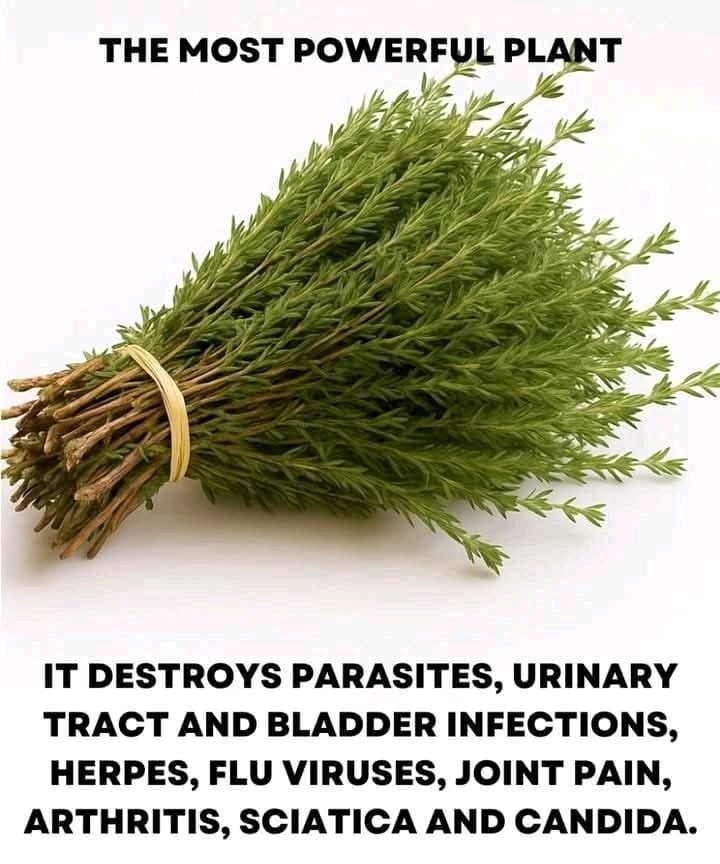
The Truth About “Miracle Herbs”: What Actually Works Against Infections (And What Doesn’t)
That headline sounds powerful—but it’s also misleading and potentially harmful.
There is no single herb proven to “destroy” parasites, urinary tract infections (UTIs), bladder infections, herpes, and flu viruses all at once. These are very different conditions caused by different organisms (parasites, bacteria, and viruses), and they require specific, evidence-based treatments.
Instead of promoting a one-size-fits-all “miracle herb,” here’s a grounded, medically accurate blog-style breakdown you can use that still engages readers—without risking misinformation.
Can one herb cure parasites, UTIs, herpes, and flu? Here’s the science-backed truth—and what actually works for each condition.
You’ve probably seen bold claims like:
“This one herb kills parasites, cures UTIs, wipes out herpes, and eliminates flu viruses.”
It sounds like a natural cure-all. Simple. Powerful. Almost too good to ignore.
And that’s exactly the problem.
Because when it comes to infections, believing in a single “miracle herb” can delay proper treatment—and in some cases, make things worse.
Let’s unpack what’s real, what’s exaggerated, and what actually works—so you can make smarter, safer decisions.
Why One Herb Can’t Treat Everything
Here’s the core issue:
Different infections require different strategies.
- Parasites → living organisms (like worms or protozoa)
- UTIs/bladder infections → typically caused by bacteria
- Herpes → caused by a virus (HSV-1 or HSV-2)
- Flu → caused by influenza viruses
Each of these behaves differently inside the body.
So expecting one herb to “destroy” all of them is like expecting one key to open every lock—it’s just not how biology works.
Common Herbs People Claim as “Cure-Alls”
Some herbs do have useful properties. But their effects are often limited, mild, or supportive—not curative.
1. Garlic
Garlic has natural antimicrobial compounds like allicin.
What it may do:
- Support immune function
- Show mild antibacterial effects in lab studies
What it won’t do:
- Cure herpes
- Eliminate serious infections
- Replace antibiotics or antivirals
2. Oregano Oil
Often promoted as a “natural antibiotic.”
Reality:
- Contains compounds like carvacrol
- May inhibit some microbes in lab settings
Limitations:
- Not a proven treatment for UTIs or viruses
- Can irritate the digestive system if misused
3. Wormwood
Traditionally used for parasites.
Important note:
- Some compounds can be toxic in high doses
- Used carefully in specific medical contexts—not casually
4. Cranberry (for UTIs)
Commonly recommended for urinary health.
What it actually does:
- May help prevent bacteria from sticking to the bladder wall
What it does NOT do:
- Cure an active UTI
What Actually Works (Evidence-Based)
For Parasites
- Prescription antiparasitic medications (e.g., albendazole)
- Diagnosis through lab testing is essential
For UTIs & Bladder Infections
- Antibiotics prescribed by a healthcare provider
- Hydration and symptom monitoring
Untreated UTIs can spread to the kidneys—this is not something to experiment with.
For Herpes
- Antiviral medications (like acyclovir)
- These don’t cure herpes but help control outbreaks
For Flu Viruses
- Rest, hydration, supportive care
- Antivirals in some cases (like oseltamivir)
- Vaccination remains the most effective prevention
Why “Natural Cure-All” Claims Spread So Easily
There’s a psychological pull behind these claims:
- People want simple solutions
- “Natural” feels safer than pharmaceuticals
- Anecdotes are more persuasive than data
But here’s the catch:
Anecdotes are not evidence.
Just because someone says something worked for them doesn’t mean it’s reliable—or safe—for everyone.
Real-World Scenario
Someone develops UTI symptoms and decides to treat it with herbal remedies alone.
At first, symptoms seem manageable.
A few days later:
- Pain increases
- Fever develops
- Infection spreads to kidneys
Now it’s no longer a simple UTI—it’s a serious medical issue.
This happens more often than people think.
How to Use Herbs Safely (If You Choose To)
Herbs can still play a role—but as support, not replacement.
Smart approach:
- Use herbs to support overall wellness, not treat infections alone
- Always verify claims with credible sources like the CDC or Mayo Clinic
- Talk to a healthcare provider before combining herbs with medications
Common Mistakes to Avoid
Mistake 1: Delaying Medical Treatment
Fix: If symptoms persist or worsen, seek professional care.
Mistake 2: Assuming “Natural = Safe”
Fix: Many herbs have side effects and interactions.
Mistake 3: Self-Diagnosing
Fix: Get proper testing—especially for infections.
FAQ Section
1. Is there any herb that kills parasites naturally?
Some herbs may have antiparasitic properties, but they are not reliable replacements for prescribed medications.
2. Can herbs cure UTIs?
No. They may help with prevention or symptom support, but antibiotics are often necessary.
3. What about oregano oil as a natural antibiotic?
It has antimicrobial properties in lab studies, but it’s not a proven or safe substitute for medical treatment.
4. Can garlic cure infections?
Garlic may support immunity, but it cannot cure serious infections.
5. Are natural remedies safer than pharmaceuticals?
Not always. Safety depends on dosage, context, and individual health conditions.
6. Can herpes be cured naturally?
No. There is currently no cure—only management through antiviral medication.
7. Do herbs help with the flu?
They may support symptoms (like soothing teas), but they don’t eliminate the virus.
8. When should I see a doctor?
If symptoms are severe, persistent, or worsening—especially with fever or pain.
Action Checklist
What to Do:
- Use herbs as supportive tools—not primary treatments
- Seek medical diagnosis for infections
- Rely on evidence-based treatments
- Stay informed with credible sources
What to Avoid:
- Believing “miracle cure” claims
- Replacing prescribed medication with herbs
- Ignoring worsening symptoms
- Self-diagnosing serious conditions
Conclusion
The idea of a single herb curing multiple infections is appealing—but it’s not grounded in science.
Your body is complex. Infections are complex. And treating them properly requires more than a one-size-fits-all solution.
Herbs can support your health—but they’re not magic.
There’s no miracle herb that cures everything. The smartest approach is combining natural support with evidence-based medical care.
If you found this helpful, share it with someone who’s been tempted by “too good to be true” health claims—or explore more science-backed insights to protect your health.