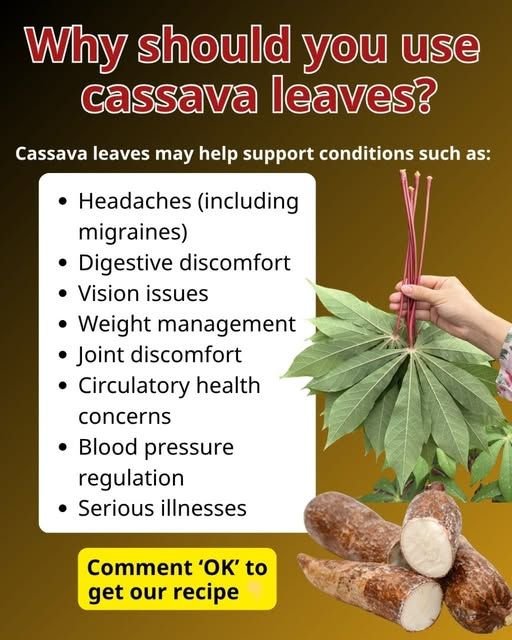
7 Powerful Reasons to Use Cassava Leaves (The Overlooked Superfood Your Body Might Be Missing)
Discover the benefits of cassava leaves, how to use them safely, and why this nutrient-rich superfood is gaining attention in modern diets.
The Leaf Most People Ignore—But Shouldn’t
You’ve probably heard of cassava root. It’s in tapioca, gluten-free flour, and countless global dishes.
But the leaves?
They’re often overlooked—sometimes even discarded.
That’s a mistake.
In many parts of Africa, Asia, and South America, cassava leaves aren’t just food—they’re a staple. A deeply nourishing, protein-rich, vitamin-dense green that quietly does what expensive “superfoods” promise.
So why aren’t more people in the U.S. using them?
And more importantly—should you start?
Let’s break it down.
What Are Cassava Leaves, Really?
Cassava leaves come from the cassava plant (Manihot esculenta), a hardy crop grown in tropical regions.
While the root gets most of the attention, the leaves are where much of the nutrition lives.
They’re typically:
- Dark green
- Slightly bitter (before cooking)
- Rich in essential nutrients
But here’s the catch—and it matters:
Raw cassava leaves contain naturally occurring compounds that can be toxic if not properly prepared.
That’s why traditional cooking methods are essential (we’ll get into that shortly).
Why Cassava Leaves Matter in Today’s Diet
Let’s be real.
Modern diets—especially in the U.S.—tend to lean heavily toward processed foods, low fiber intake, and nutrient gaps.
Even people who “eat healthy” often miss:
- Adequate plant protein
- Certain micronutrients
- Variety in leafy greens
Cassava leaves can help fill those gaps in a surprisingly efficient way.
They’re not trendy like kale or spinach—but nutritionally, they hold their own.
7 Reasons You Should Consider Using Cassava Leaves
1. Surprisingly High in Plant Protein
Most leafy greens offer minimal protein.
Cassava leaves are different.
They contain significantly more protein than many common greens, making them valuable for:
- Vegetarians
- Vegans
- Anyone reducing meat intake
This alone makes them stand out.
2. Rich in Essential Vitamins
Cassava leaves provide a range of key vitamins, including:
- Vitamin A (supports vision and immunity)
- Vitamin C (antioxidant support)
- B vitamins (energy metabolism)
For people who rely on supplements, this is a whole-food alternative worth considering.
3. Strong Antioxidant Profile
They contain compounds that help combat oxidative stress—something linked to:
- Aging
- Chronic inflammation
- Various long-term health conditions
While not a cure-all, adding antioxidant-rich foods is a well-supported strategy for overall health.
4. Supports Digestive Health
Thanks to their fiber content, cassava leaves can:
- Support gut health
- Improve digestion
- Help regulate bowel movements
In a diet often lacking fiber, that’s a meaningful benefit.
5. Budget-Friendly Nutrition
Let’s talk practicality.
Superfoods often come with a premium price tag.
Cassava leaves? Not so much.
In areas where they’re available fresh or frozen, they’re typically affordable and accessible—especially in international or African/Asian grocery stores.
6. Versatile in Cooking
Once properly prepared, cassava leaves can be used in:
- Stews
- Soups
- Sauces
- Rice dishes
They absorb flavors well and pair with ingredients like garlic, coconut milk, and spices.
7. Cultural and Culinary Depth
Using cassava leaves isn’t just about nutrition—it’s about expanding your food perspective.
They’re central to dishes like:
- Saka-saka (Central Africa)
- Pondu (Congo)
- Various Indonesian and Filipino recipes
Exploring them brings both flavor and cultural appreciation into your kitchen.
Important: Safety First (This Part Is Non-Negotiable)
Cassava leaves must never be eaten raw.
They contain compounds that can release cyanide when improperly handled.
Before you panic—this isn’t unusual. Many foods require proper preparation (like kidney beans or certain mushrooms).
How to Make Them Safe:
- Wash thoroughly
- Boil for at least 10–15 minutes
- Discard the cooking water
- Cook again if needed (depending on recipe)
Proper cooking removes harmful compounds and makes them safe to eat.
If you’re unsure, follow trusted recipes or use pre-processed frozen leaves.
Step-by-Step: How to Prepare Cassava Leaves at Home
Step 1: Source Them
Look for:
- Fresh cassava leaves (international markets)
- Frozen, pre-ground cassava leaves (easier option)
Step 2: Clean and Chop
- Remove tough stems
- Chop or grind leaves
Step 3: Boil Thoroughly
- Place in a pot with water
- Boil for at least 15 minutes
- Drain completely
Step 4: Cook with Flavor
Now you can:
- Sauté with garlic and onions
- Add to stews
- Mix with coconut milk
Step 5: Serve and Enjoy
The texture becomes soft, and the flavor turns mild and earthy.
Real-Life Scenario
Imagine someone trying to eat healthier on a budget.
They rotate between:
- Spinach
- Kale
- Broccoli
Eventually, they get bored.
They discover cassava leaves at a local international grocery store.
They try a simple coconut-based stew.
Result?
- New flavor profile
- Higher protein intake
- More variety in meals
It’s not a dramatic life change—but it’s a meaningful upgrade.
Cassava Leaves vs Common Leafy Greens
| Feature | Cassava Leaves | Spinach | Kale |
|---|---|---|---|
| Protein Content | High | Low | Moderate |
| Preparation | Requires cooking | Easy | Easy |
| Flavor | Mild, earthy | Mild | Slightly bitter |
| Safety Concerns | Must be cooked | None | None |
| Availability | Limited (U.S.) | Widely available | Widely available |
Pros and Cons
Pros
- Nutrient-dense
- High in plant protein
- Affordable
- Culturally rich ingredient
Cons
- Must be prepared correctly
- Not widely available everywhere
- Slight learning curve in cooking
Common Mistakes to Avoid
1. Eating Them Raw
This is unsafe. Always cook thoroughly.
2. Under-cooking
Short cooking times don’t fully remove toxins.
3. Overcomplicating Recipes
Start simple—basic stews work best.
4. Ignoring Flavor Pairings
Cassava leaves benefit from rich, savory ingredients.
Expert Insights You Won’t Hear Often
- Freezing cassava leaves can reduce bitterness
- Grinding them improves texture and cooking consistency
- Pairing with fats (like coconut milk) enhances nutrient absorption
- They’re best introduced gradually into your diet
2026 Food Trends: Why Cassava Leaves Are Gaining Attention
There’s a growing shift toward:
- Sustainable crops
- Whole-food nutrition
- Global cuisine exploration
Cassava checks all three boxes.
As interest grows, availability in U.S. markets is slowly increasing—especially in frozen form.
What the Future Looks Like
Expect to see:
- More ready-to-cook cassava leaf products
- Increased use in plant-based diets
- Integration into fusion cuisine
It won’t replace kale—but it doesn’t need to.
Frequently Asked Questions
1. Are cassava leaves safe to eat?
Yes, when properly cooked.
2. Do they taste bitter?
Slightly before cooking, but mild afterward.
3. Can I use them like spinach?
Not exactly—they require longer cooking.
4. Where can I buy them in the U.S.?
International, African, or Asian grocery stores.
5. Are they good for weight loss?
They’re nutrient-dense and low in calories, which can support balanced diets.
6. Can I freeze them?
Yes—many people use frozen cassava leaves.
7. How often can I eat them?
A few times per week is reasonable when properly prepared.
8. Are they better than kale?
They offer different benefits—especially higher protein.
9. Can kids eat cassava leaves?
Yes, if cooked properly.
10. Do they help with immunity?
They contain vitamins that support immune function.
Action Checklist
✅ Do This
- Always cook cassava leaves thoroughly
- Start with small portions
- Use flavorful ingredients
- Source from reliable markets
- Try simple recipes first
❌ Avoid This
- Eating raw or undercooked leaves
- Skipping preparation steps
- Expecting instant health changes
- Overusing without dietary balance
Cassava leaves aren’t flashy.
They won’t trend overnight on social media.
But they’re one of those rare foods that quietly deliver—nutritionally, culturally, and practically.
If you’re looking to diversify your diet, improve nutrient intake, and explore something beyond the usual greens, they’re worth trying.
Cassava leaves are a powerful, underused food—just make sure you respect the preparation process, and they can become a valuable part of your routine.
If you give them a try, share your experience—or explore more hidden foods that actually live up to the hype.