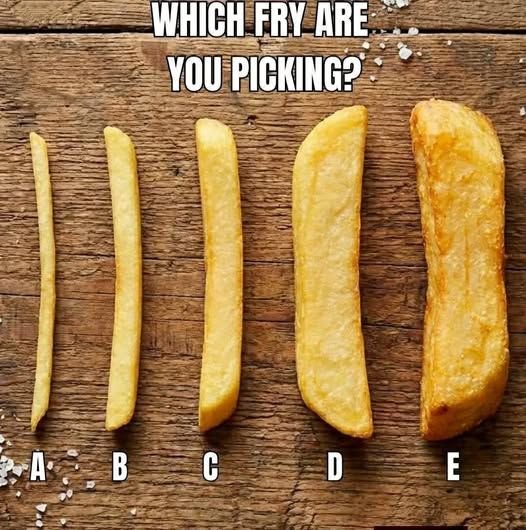
Which Fries Are You Picking? From Thin & Crispy to Thick & Fluffy (A Complete Guide to the World’s Most Loved Side Dish)
Explore the differences between thin crispy fries and thick fluffy fries, how they’re made, taste profiles, and how to choose your perfect fry style.
A Simple Question That Starts a Surprisingly Serious Debate
It usually begins casually.
You sit down at a restaurant, glance at the menu, and see it:
“Fries.”
But then comes the real question—the one that separates food personalities more than most people realize:
Thin and crispy? Or thick and fluffy?
It sounds simple. Almost trivial.
But if you’ve ever strongly preferred one over the other, you already know this isn’t just about potatoes.
It’s about texture, comfort, crunch, softness, and even emotion tied to food.
Let’s break it down properly.
Why Fries Matter More Than You Think
Fries are one of the most universally loved foods in the world.
From fast food chains in the U.S. to street stalls in Europe, they appear everywhere.
But what makes them interesting is how differently they’re experienced depending on style.
The same potato can become:
- Ultra-thin, crunchy sticks
- Soft, fluffy-centered wedges
- Golden, balanced restaurant-style cuts
And each version triggers a different sensory response.
This is where preference becomes personal.
The Two Main Personalities of Fries
Let’s simplify the world of fries into two core categories:
1. Thin & Crispy Fries
2. Thick & Fluffy Fries
Everything else is a variation in between.
And yes—they behave very differently in your mouth.
Thin & Crispy Fries: The Crunch Lovers’ Choice
Thin fries are all about texture.
They’re sliced smaller, cooked faster, and designed for maximum surface crunch.
Think of fast-food style fries or shoestring cuts.
What makes them special:
- High surface-to-oil ratio = extra crispiness
- Quick bite, quick satisfaction
- Loud crunch when you bite in
- Slightly salty intensity
Why people love them:
Thin fries are addictive because they deliver immediate sensory feedback.
No waiting for a soft center. No fluff.
Just crunch.
They pair especially well with:
- Burgers
- Fried chicken
- Dipping sauces like ketchup, mayo, or aioli
The downside:
- They cool down quickly
- Can become soggy fast
- Less “potato flavor” compared to thicker cuts
Thick & Fluffy Fries: The Comfort Food Version
Thick fries are a completely different experience.
Think steak fries, wedges, or chunky hand-cut fries.
These are built around softness inside and structure outside.
What makes them special:
- Soft, almost mashed-potato-like interior
- Crispy golden exterior
- More natural potato flavor
- Heavier, more filling texture
Why people love them:
Thick fries feel comforting.
They slow you down. Each bite is more substantial.
They’re often associated with:
- Diner meals
- Home-style cooking
- Roast dinners or hearty meals
The downside:
- Less crisp surface area
- Can feel heavy if overcooked or oily
- Require longer cooking time for proper texture
The Science Behind the Difference
At the core, the difference comes down to:
Surface area vs interior moisture
Thin fries:
- More surface exposed to oil and heat
- Faster dehydration → crisp texture
Thick fries:
- Moist interior protected by outer crust
- Slower heat penetration → fluffy center
This simple physical difference creates completely different eating experiences.
A Quick Comparison Table
| Feature | Thin & Crispy Fries | Thick & Fluffy Fries |
|---|---|---|
| Texture | Crunchy | Soft inside, crisp outside |
| Cooking time | Short | Longer |
| Flavor intensity | Salty, crisp | Potato-rich |
| Weight | Light | Heavy |
| Eating style | Quick snacking | Slow enjoyment |
| Best pairing | Fast food | Diner-style meals |
Which Fries Fit Your Personality?
Food preferences often reflect eating behavior more than people realize.
You might prefer thin fries if you:
- Love fast-paced eating
- Enjoy strong crunch textures
- Prefer salty snack-style foods
- Like dipping sauces
You might prefer thick fries if you:
- Enjoy slow, relaxed meals
- Value comfort food
- Prefer soft textures
- Like hearty, filling sides
Neither is better.
They simply serve different moods.
Real-World Scenario: The Fry Decision Moment
Imagine this:
You’re in a restaurant after a long day.
You’re tired. Slightly hungry. Not thinking too hard.
The server asks:
“Fries or salad?”
You choose fries.
Then the next question hits:
“Thin or thick?”
That’s where instinct kicks in.
Because at that moment, your choice says more about your mood than your appetite.
Thin fries = quick satisfaction
Thick fries = comfort and slowing down
The Hidden Psychology of Fries
Food texture plays a bigger role in satisfaction than most people realize.
Crunch (thin fries):
- Stimulates alertness
- Feels exciting and active
- Creates sensory stimulation
Softness (thick fries):
- Signals comfort and relaxation
- Slows down eating pace
- Feels grounding
That’s why people often switch preferences depending on mood.
Popular Fry Styles Around the World
Fries aren’t just “thin or thick.”
Different cultures have created variations:
- Shoestring fries (very thin, ultra crispy)
- Steak fries (very thick, soft-centered)
- Waffle fries (structured, crunchy edges)
- Crinkle-cut fries (ridged texture for extra crisp)
- Hand-cut rustic fries (uneven, natural texture)
Each variation changes how oil, heat, and potato interact.
Common Mistakes When Cooking Fries at Home
1. Skipping double frying
This is key for crispiness.
2. Cutting uneven sizes
Leads to inconsistent cooking.
3. Overcrowding the pan
Steams fries instead of crisping them.
4. Not drying potatoes properly
Extra moisture ruins texture.
Health Perspective (Simple Truth)
Fries are not a health food.
But preparation matters:
- Baked fries reduce oil intake
- Air frying reduces fat content
- Portion control matters more than style
Neither thin nor thick fries are “better” nutritionally in isolation—it depends on preparation.
Expert Insight: Why Restaurants Choose One Style Over Another
Restaurants don’t choose fry style randomly.
They consider:
- Cost efficiency
- Cooking speed
- Customer expectations
- Menu pairing
Fast food chains often prefer thin fries because they cook faster and stay consistent.
Diners and restaurants lean toward thick fries for premium, homemade appeal.
FAQ: Fries Edition
1. Which fries are crispier?
Thin fries are generally crispier due to higher surface area.
2. Which fries taste more like potatoes?
Thick fries have a stronger potato flavor.
3. Are thick fries healthier than thin fries?
Not necessarily—it depends on cooking method and oil.
4. Why do thin fries get soggy quickly?
They lose heat and moisture faster due to thin structure.
5. What are steak fries?
Very thick-cut fries with a soft interior and crispy edges.
6. Why do restaurants serve thin fries with burgers?
They cook quickly and pair well with fast-food meals.
7. Can I make crispy thick fries at home?
Yes—double frying or air frying helps achieve crispiness.
8. Which fries are more filling?
Thick fries are generally more filling.
9. Do different potatoes matter?
Yes—starchy potatoes like Russet work best for fries.
10. What’s the best fry style overall?
There isn’t one—it depends on personal preference and mood.
Action Checklist
✅ Do This:
- Choose fry style based on mood
- Try different cuts for variety
- Pair fries with complementary sauces
- Experiment with cooking methods at home
- Enjoy in moderation
❌ Avoid This:
- Assuming one style is “better”
- Overcrowding fries while cooking
- Ignoring texture differences
- Overcooking until dry or burnt
The debate between thin crispy fries and thick fluffy fries isn’t really about potatoes.
It’s about experience.
One gives you crunch and speed.
The other gives you comfort and depth.
And the interesting part?
Most people don’t stick to just one.
They choose based on the moment.
Thin fries are about excitement. Thick fries are about comfort. The best choice isn’t universal—it’s personal, and it changes with your mood, your meal, and your moment.