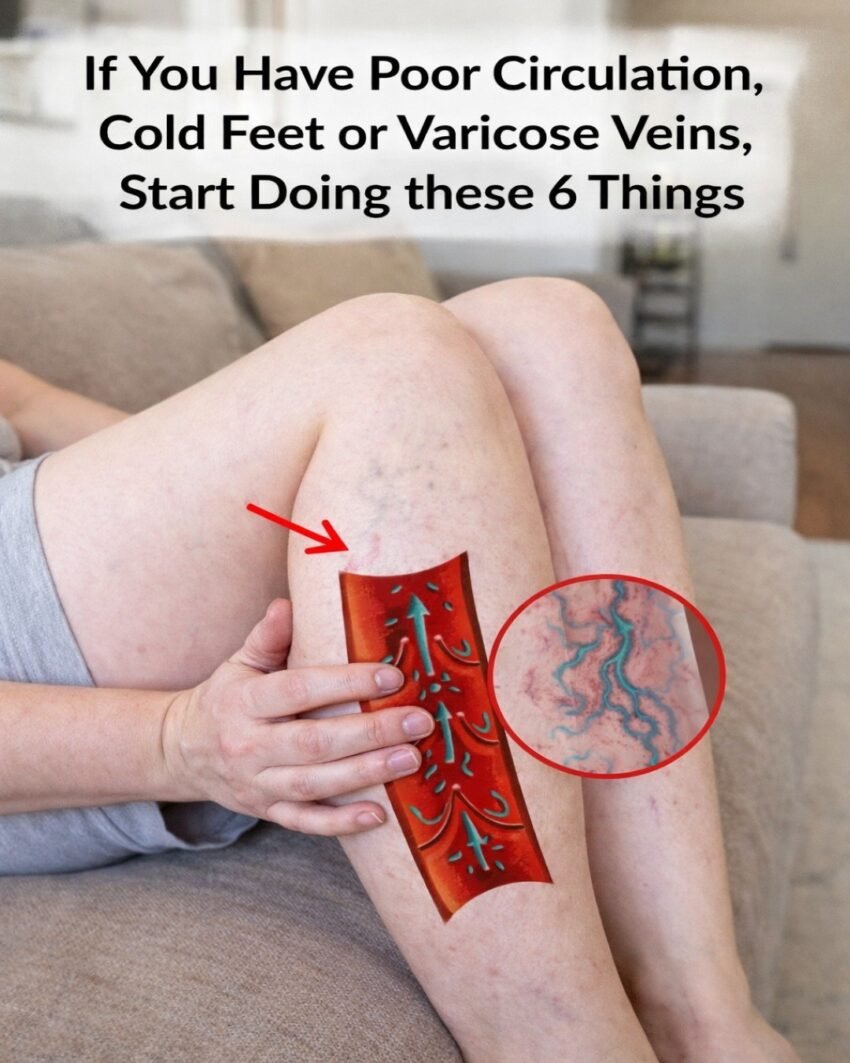
🔥 Cold Feet or Poor Circulation? 6 Simple Daily Habits That Can Warm You Up (and Protect Your Health)
Cold feet or poor circulation? Discover 6 simple, science-backed habits that improve blood flow, reduce discomfort, and support long-term health.
You slip into bed, pull the blanket up—and your feet are still freezing.
Or maybe it’s not just at night. Sitting at your desk, walking through the grocery store, even on a warm day… your toes feel cold, numb, or oddly stiff.
So what’s going on?
Is it just cold feet… or something deeper like poor circulation?
Most people brush it off. But persistent cold feet can be your body’s way of saying: something needs attention.
The good news? In many cases, small daily habits can make a surprisingly big difference—often without medication.
In this guide, you’ll learn:
- The real difference between cold feet and circulation issues
- Subtle signs you shouldn’t ignore
- 6 simple habits that actually improve blood flow
- When it’s time to see a doctor
- And how to keep your feet warm naturally
Let’s get into it.
👣 Cold Feet vs Poor Circulation: What’s the Difference?
Cold feet alone aren’t always a problem.
Your body naturally reduces blood flow to extremities (like feet and hands) to preserve heat for vital organs. That’s normal—especially in colder environments.
But when it happens frequently or intensely, it may point to underlying issues like:
- Reduced blood flow
- Nerve sensitivity
- Hormonal changes
- Stress response
One condition often linked to circulation-related coldness is Raynaud’s phenomenon, where blood vessels constrict excessively in response to cold or stress.
Another possibility is Peripheral artery disease, which limits blood flow to the limbs.
👉 Important: Not all cold feet mean disease—but persistent symptoms deserve attention.
🇺🇸 Why This Matters More Than You Think
In the U.S., millions of adults deal with circulation-related issues—often without realizing it.
Sedentary lifestyles, long desk hours, and limited movement all contribute.
According to research supported by organizations like Centers for Disease Control and Prevention, poor circulation can be linked to:
- Increased cardiovascular risk
- Nerve damage over time
- Reduced mobility
So while cold feet may feel minor—it can be part of a bigger picture.
⚠️ Subtle Signs You Might Be Overlooking
Cold feet rarely show up alone.
Watch for these clues:
- Tingling or “pins and needles”
- Numbness in toes
- Skin turning pale or bluish
- Slower healing of cuts
- Cramping in legs when walking
If you’re noticing multiple signs, it’s worth taking action early.
🔥 6 Simple Habits That Can Improve Circulation (Starting Today)
These aren’t extreme changes. They’re small, consistent actions that compound over time.
1. Move Every 30–60 Minutes
Sitting is one of the biggest culprits behind poor circulation.
When you stay still, blood pools in your lower body.
What to do:
- Stand up every hour
- Walk for 2–5 minutes
- Stretch your calves
Even light movement signals your body to increase blood flow.
2. Try Targeted Foot Exercises
Your feet have small muscles that rely on movement to stay active.
Simple routine:
- Toe curls (10–15 reps)
- Ankle circles (both directions)
- Heel raises
These movements act like a pump—helping push blood back toward your heart.
3. Use Contrast Temperature Therapy
Alternating between warm and cool water can stimulate circulation.
How it works:
- Warm water expands blood vessels
- Cool water contracts them
This creates a “pumping” effect.
Try this:
- 3 minutes warm water
- 1 minute cool water
- Repeat 3–4 times
4. Stay Hydrated (More Than You Think)
Dehydration thickens your blood—making circulation less efficient.
Most people underestimate how much water they need.
Quick tip:
- Aim for steady hydration throughout the day—not just when thirsty
5. Wear the Right Socks (It Matters)
Tight or non-breathable socks can restrict blood flow.
Look for:
- Loose-fitting options
- Moisture-wicking fabric
- Thermal insulation if needed
Avoid anything that leaves marks on your skin.
6. Manage Stress (Yes, Really)
Stress triggers your body’s fight-or-flight response—which constricts blood vessels.
That means less blood reaching your feet.
Try:
- Deep breathing
- Short walks
- Mindfulness practices
Even a few minutes can help regulate circulation.
⚖️ Quick Comparison: Healthy vs Poor Circulation
| Feature | Healthy Circulation | Poor Circulation |
|---|---|---|
| Foot temperature | Warm or neutral | Frequently cold |
| Skin color | Normal | Pale, bluish, or red |
| Sensation | Normal | Tingling or numb |
| Recovery | Quick | Slow |
🧭 Step-by-Step Daily Routine (Simple & Realistic)
Morning:
- Stretch feet before getting out of bed
- Drink a glass of water
Midday:
- Take a 5-minute walk every hour
- Do quick foot exercises
Evening:
- Warm foot soak or contrast therapy
- Light stretching
Before bed:
- Wear breathable socks if needed
Consistency matters more than intensity.
🧪 Mini Case Scenario
Lisa, a 42-year-old office worker in Denver, noticed her feet were constantly cold—even indoors.
She assumed it was just the weather.
After making a few changes:
- Standing every hour
- Adding short walks
- Switching to better socks
Within weeks, she noticed:
- Warmer feet
- Less tingling
- Better overall comfort
No drastic changes—just smarter habits.
⚠️ Common Mistakes That Make It Worse
1. Ignoring Early Signs
Waiting too long can allow underlying issues to progress.
2. Sitting for Long Periods
Even with good posture, lack of movement slows circulation.
3. Wearing Tight Footwear
Shoes that compress your feet restrict blood flow.
4. Relying Only on External Heat
Heating pads help temporarily—but don’t fix the root issue.
✅ Pros & Cons of Natural Circulation Habits
Pros
- Safe and non-invasive
- Easy to implement
- Improve overall health
- No cost or low cost
Cons
- Require consistency
- Results aren’t instant
- Not a substitute for medical care if needed
🧠 Expert Insights Most People Miss
1. Movement Beats Medication (In Early Stages)
Lifestyle changes often have the biggest impact initially.
2. Your Feet Reflect Your Heart Health
Circulation issues often start subtly in extremities.
3. Warmth ≠ Circulation
Just because your feet feel warm doesn’t mean blood flow is optimal.
4. Prevention Is Easier Than Treatment
Early action saves long-term complications.
📈 2026 Health Trend: Micro-Habits That Actually Work
Instead of extreme routines, health experts are focusing on:
- Small daily actions
- Sustainable habits
- Consistency over intensity
Organizations like Harvard Medical School emphasize that simple lifestyle adjustments often outperform drastic changes over time.
🔮 Future Outlook
Wearable health tech is evolving fast.
Soon, devices will:
- Track circulation in real time
- Alert you to early warning signs
- Suggest movement based on your patterns
But until then, awareness is your best tool.
❓ Frequently Asked Questions
1. Are cold feet always a sign of poor circulation?
No. They can be caused by temperature, stress, or temporary factors.
2. When should I see a doctor?
If symptoms are persistent, painful, or worsening.
3. Can exercise really help that much?
Yes—movement is one of the most effective ways to improve blood flow.
4. Do socks actually make a difference?
Absolutely. Tight or poor-quality socks can restrict circulation.
5. Is this related to heart health?
It can be. Circulation issues sometimes reflect broader cardiovascular concerns.
6. Can dehydration affect circulation?
Yes. It makes blood thicker and harder to pump efficiently.
7. What’s the fastest way to warm cold feet?
Movement and warm water—not just external heat.
8. Is tingling normal?
Occasional tingling can happen, but frequent symptoms should be checked.
9. Does age play a role?
Yes—circulation tends to decline with age.
10. Can stress alone cause cold feet?
Yes. Stress can constrict blood vessels temporarily.
🧾 Action Checklist
✅ What To Do
- Move every hour
- Stay hydrated
- Practice foot exercises
- Wear proper socks
- Manage stress daily
❌ What To Avoid
- Sitting too long
- Ignoring symptoms
- Wearing tight footwear
- Relying only on heat
- Delaying medical advice
🏁 Conclusion
Cold feet might seem like a small annoyance—but your body rarely sends signals without a reason.
The difference between discomfort and long-term health issues often comes down to what you do next.
And the truth is—small, consistent habits can go a long way.
You don’t need extreme changes.
You need awareness, movement, and a little consistency.
If your feet are always cold, don’t just cover them—understand why and take simple steps to improve circulation from within.
If this helped you, share it with someone who’s always saying “my feet are freezing”—they might need this more than they think.