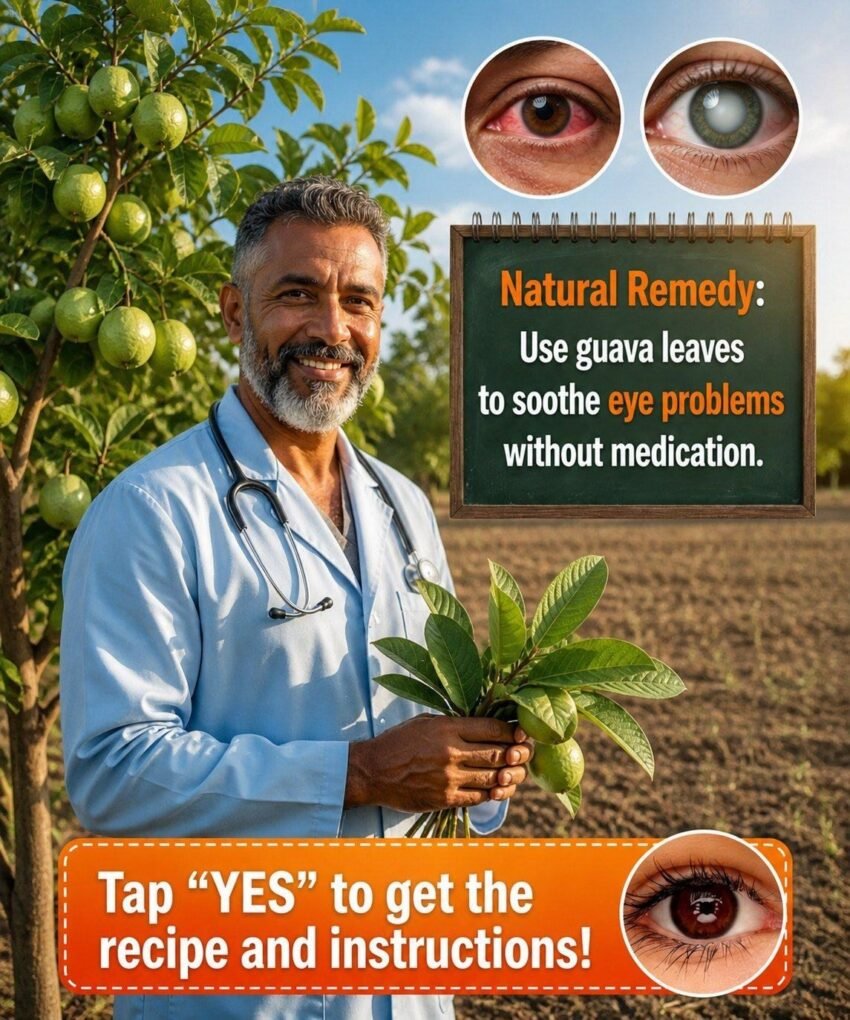
Guava Leaves for Eye Care: A Natural Soothing Method for Eye Fatigue, Irritation, and Daily Strain
Discover how guava leaves are traditionally used to soothe tired eyes, reduce irritation, and support eye comfort naturally with simple home care methods.
Eyes carry more strain today than almost any other part of the body.
Screens, long work hours, artificial lighting, late nights, and constant visual focus have quietly turned eye fatigue into one of the most common daily discomforts in modern life.
Many people notice it gradually:
- burning or dryness
- heaviness around the eyes
- blurred focus after screens
- sensitivity to light
- headaches after long reading or phone use
While modern eye care is essential for serious conditions, traditional wellness practices have long explored gentle natural ways to support eye comfort.
One of the most talked-about remedies in natural wellness traditions is the use of guava leaves.
Known for their antioxidant and soothing properties, guava leaves have been used in folk remedies for skin and oral health for generations. In some traditional practices, they are also used externally as a cooling compress to help relax tired eyes and reduce discomfort.
But what does the evidence say—and how are they actually used safely?
Let’s explore this in a clear, practical, and realistic way.
Why Eye Fatigue Has Become So Common Today
Before understanding any natural remedy, it helps to understand the real cause of the problem.
Most modern eye strain comes from:
- prolonged screen exposure (phones, laptops, tablets)
- reduced blinking while focusing
- poor lighting conditions
- lack of sleep or irregular sleep cycles
- air pollution and dry environments
- aging-related changes in tear production
This combination leads to what many people call digital eye strain.
According to widely referenced public health guidance from organizations like the American Academy of Ophthalmology, prolonged screen time does not permanently damage vision in most healthy individuals, but it can cause temporary discomfort and fatigue.
That distinction is important:
discomfort is common, but structural vision damage from screen use alone is not typically supported by strong medical evidence.
This is where soothing practices—like warm compresses or herbal infusions—are often used for comfort relief.
Why Guava Leaves Became a Traditional Eye Remedy
Guava leaves (from the guava tree, Psidium guajava) contain:
- flavonoids
- tannins
- antioxidants
- anti-inflammatory compounds
These compounds have been studied more extensively for skin, digestive, and antimicrobial properties than for direct eye treatment.
However, in traditional home wellness practices in parts of Asia, Africa, and Latin America, guava leaves are sometimes used externally in cooled preparations to help:
- relax tired eyes
- reduce mild puffiness
- provide a cooling sensation
- support general eye comfort
It is important to be clear:
guava leaves are not a medical treatment for vision correction or eye diseases.
They are used as a comfort-based natural compress, not a cure.
Important Safety Disclaimer (Very Important)
Before any natural eye remedy:
- Never apply plant material directly into the eye
- Do not use contaminated water or unclean leaves
- Avoid if you have infections, injuries, or severe redness
- Stop immediately if irritation occurs
- Consult an eye specialist for persistent symptoms
The eye is extremely sensitive. Even natural ingredients must be handled carefully.
Traditional Method: Guava Leaf Eye Compress (External Use Only)
This is the most commonly described traditional approach.
Ingredients:
- Fresh guava leaves (clean and pesticide-free)
- Clean water
- Cotton pads or soft cloth
Step 1: Wash the Leaves Thoroughly
Rinse guava leaves under clean running water to remove dust or contaminants.
Step 2: Boil and Prepare Infusion
- Boil a handful of guava leaves in clean water for 5–10 minutes
- Let the water cool completely
- Strain the liquid carefully
This creates a mild herbal infusion used externally.
Step 3: Prepare a Compress
- Dip cotton pads or a clean cloth into the cooled liquid
- Squeeze out excess water
Step 4: Apply to Closed Eyes
- Lie down comfortably
- Place pads gently over closed eyelids
- Leave for 10–15 minutes
The sensation is usually cooling and relaxing.
Step 5: Repeat Occasionally
Some people use this:
- once daily after screen exposure
- or 2–3 times per week for relaxation
What People Report Feeling (Traditional Use Experience)
In traditional wellness contexts, users often describe:
- reduced eye heaviness
- temporary relief from dryness
- a cooling, calming effect
- reduced puffiness in the morning
These effects are typically linked to:
- moist heat or cool compress benefits
- rest and reduced eye muscle strain
- relaxation of surrounding facial muscles
What Guava Leaves Cannot Do
It is important to avoid exaggerated claims.
Guava leaves do NOT:
- cure nearsightedness or farsightedness
- permanently improve vision clarity
- treat cataracts or glaucoma
- replace prescription glasses or medical care
- eliminate serious eye diseases
Any claim suggesting permanent vision correction from leaves alone is not supported by clinical ophthalmology research.
What Actually Helps Improve Eye Comfort (Scientifically Supported)
If your goal is real improvement in eye comfort and long-term vision care, these methods are strongly supported:
1. The 20-20-20 Rule
Every 20 minutes:
- look at something 20 feet away
- for at least 20 seconds
This reduces digital eye strain significantly.
2. Proper Lighting
Avoid:
- dark rooms with bright screens
- harsh overhead lighting
Balanced lighting reduces strain.
3. Regular Blinking
Screen use reduces blink rate, causing dryness.
Conscious blinking helps maintain moisture.
4. Hydration
Dehydration can worsen eye dryness and fatigue.
5. Sleep Quality
Eyes recover during sleep. Chronic fatigue worsens discomfort.
6. Eye Checkups
Regular examinations can detect:
- refractive errors
- dry eye syndrome
- early disease conditions
Pros and Cons of Guava Leaf Eye Compress
| Pros | Cons |
|---|---|
| Natural and low-cost | Not medically proven for vision improvement |
| Cooling and soothing effect | Must be prepared hygienically |
| May reduce temporary fatigue | Cannot treat eye diseases |
| Easy home preparation | Risk of misuse if applied incorrectly |
| Traditional wellness practice | Not a substitute for eye care |
Common Mistakes People Make
Mistake #1: Using unwashed leaves
This can introduce bacteria or dirt.
Mistake #2: Applying directly into eyes
This can cause irritation or infection.
Mistake #3: Expecting vision correction
No herbal compress can replace corrective lenses.
Mistake #4: Ignoring real eye problems
Persistent pain or blurred vision needs medical attention.
Realistic Scenario Many People Relate To
A person works late into the night on a laptop.
Their eyes feel:
- heavy
- dry
- slightly blurry
They try resting, but discomfort remains.
A warm or cool compress—sometimes herbal like guava leaf infusion—provides temporary relief by relaxing the muscles around the eyes.
But once screen habits return unchanged, the discomfort also returns.
This highlights an important truth:
comfort methods help symptoms, but lifestyle habits determine long-term results.
Expert Insight: Why Cooling Compresses Feel Effective
Eye specialists often recommend warm or cool compresses for conditions like:
- eye strain
- mild irritation
- blocked oil glands (like meibomian gland dysfunction)
The reason they work is simple:
- improves circulation
- relaxes muscles
- increases moisture comfort
- reduces inflammation sensation
Guava leaves are sometimes used in traditional versions of this idea, but the primary benefit often comes from the compress itself—not the leaf alone.
Frequently Asked Questions
Can guava leaves improve vision permanently?
No. There is no scientific evidence that guava leaves improve refractive vision errors.
Are guava leaves safe for eyes?
They are safe only when used externally as a clean compress, not placed in the eye.
How often can I use a guava leaf eye compress?
Occasionally—1 to 3 times per week is commonly described in traditional use.
Can this help with eye infections?
No. Eye infections require medical treatment.
Does it reduce eye strain from screens?
It may provide temporary comfort, but does not replace proper eye habits.
Can I use it for children?
Only with caution and after ensuring proper hygiene.
Is boiling necessary?
Yes, boiling helps create a cleaner herbal infusion.
Can I store the solution?
It is best used fresh to avoid contamination.
What if irritation occurs?
Stop immediately and rinse eyes with clean water.
Should I replace my glasses with natural remedies?
No. Prescription glasses or medical advice should always be followed.
Eye Care Checklist
Do This
✔ Take screen breaks regularly
✔ Use proper lighting
✔ Stay hydrated
✔ Get adequate sleep
✔ Use clean warm/cool compresses occasionally
✔ Visit an eye specialist when needed
Avoid This
✘ Putting plant material directly in eyes
✘ Ignoring persistent pain or vision changes
✘ Overusing unverified remedies
✘ Relying only on home treatments
✘ Using unclean ingredients
Final Thoughts
Guava leaves are part of a long tradition of natural home remedies used for general wellness and comfort.
When prepared properly and used externally, they may offer a soothing, cooling sensation that helps tired eyes feel more relaxed—especially after long screen exposure or sleepless nights.
But it is equally important to understand their limits.
They are not a medical treatment for vision correction or eye disease.
The real foundation of healthy eyesight still comes from daily habits, proper eye care, and professional guidance when needed.
Natural methods can support comfort—but they should never replace medical care when it matters.
A guava leaf eye compress may help soothe tired eyes temporarily, but true vision health depends on good habits, proper eye hygiene, and regular medical care when necessary.