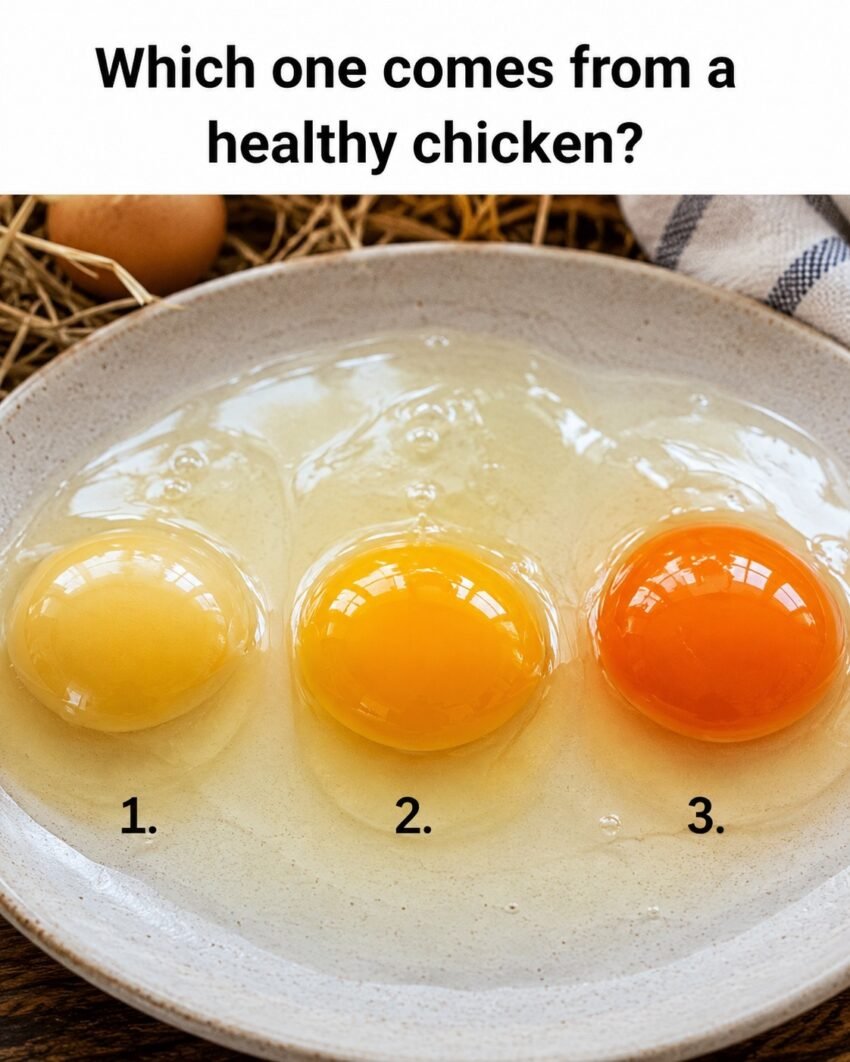
The Egg Yolk That Stopped Me in My Tracks: What One Simple Kitchen Moment Revealed About Food, Freshness, and What We’ve Been Ignoring
A simple egg yolk changed everything. Discover what egg color, texture, and appearance can reveal about freshness, nutrition, and what most people overlook in the kitchen.
It wasn’t supposed to be anything special.
Just a regular morning.
A frying pan warming up.
A couple of eggs cracked into a bowl without much thought.
But then it happened.
One yolk landed differently.
Thicker.
Deeper in color.
Almost unnaturally vibrant compared to what I was used to seeing.
And for a second, I just stared at it.
Because it didn’t look like the eggs I usually buy.
It looked… alive in a way I wasn’t expecting from something so ordinary.
That moment made me stop mid-routine and ask a question most of us never think about:
What exactly are we looking at when we look at an egg yolk?
Why an Egg Yolk Can Look So Different
Most people assume all egg yolks are basically the same.
Yellow is yellow, right?
But in reality, yolk color and texture can vary significantly based on several factors:
- Hen’s diet
- Living conditions
- Freshness of the egg
- Storage time
- Natural pigment intake
The difference is not just cosmetic.
It can reflect how the egg was produced.
The First Thing I Noticed: The Color
That particular yolk was darker than usual — almost orange-gold.
At first, I thought it meant something was wrong.
But in most cases, a deeper yolk color often comes from:
- Diets rich in carotenoids (found in corn, marigold petals, leafy greens)
- Free-range feeding environments
- More natural foraging
Meanwhile, paler yolks are often associated with:
- grain-heavy diets
- indoor-raised hens
- more standardized commercial feed
But here’s the important part:
Color alone doesn’t define quality — it just reflects diet.
Still, it changes perception instantly.
Texture Matters More Than People Realize
That yolk didn’t just look different.
It behaved differently.
It sat higher in the pan.
It didn’t break immediately.
It held shape longer than expected.
That firmness often signals:
- fresher eggs (thicker yolk membranes)
- shorter storage time
- stronger internal structure
Older eggs tend to have flatter, weaker yolks that break easily.
So without realizing it, I was looking at freshness in real time.
Why Freshness Is Something We Forget to Notice
Most people don’t think about egg freshness beyond expiration dates.
But eggs are one of those foods where:
Time quietly changes everything.
Inside an egg over time:
- moisture slowly evaporates
- air pocket grows larger
- yolk structure weakens
- whites become thinner
Nothing dramatic happens at once.
It’s gradual.
Almost invisible.
Until you crack one open and realize something feels different — even if you can’t immediately explain why.
The Psychology of “Normal” Food Expectations
What struck me most wasn’t the egg itself.
It was my reaction to it.
I had unconsciously built a mental image of what an egg yolk should look like:
- pale yellow
- soft
- predictable
Anything outside that expectation felt “off.”
But that’s not reality — that’s habit.
We often mistake familiarity for quality.
And anything that breaks that pattern briefly forces us to re-evaluate what we think we know.
A Simple Kitchen Moment That Became a Lesson
It’s strange how something as small as an egg can make you pause.
But food does that sometimes.
It reminds you that:
- ingredients are not uniform
- sourcing matters
- conditions matter
- time matters
And most importantly:
we rarely pay attention to what we handle every day.
What Egg Yolk Color Can (and Can’t) Tell You
Let’s be clear and practical.
What it can indicate:
- hen diet quality
- type of feed used
- possible carotenoid intake
- general farming conditions
What it cannot guarantee:
- exact nutritional superiority
- safety or contamination status
- overall quality on its own
A darker yolk doesn’t automatically mean “healthier.”
A lighter yolk doesn’t automatically mean “worse.”
Context matters more than color alone.
Real-Life Scenario: The Farm-to-Kitchen Difference
There’s a noticeable difference between:
Store-bought standard eggs
- consistent pale-yellow yolks
- uniform appearance
- longer storage chains
Farm-fresh or pasture-raised eggs
- deeper yolk color
- thicker consistency
- more variation between eggs
Neither is inherently “bad.”
But the experience is different.
And once you notice it, you start noticing it everywhere.
Why That One Yolk Felt So Different Emotionally
It wasn’t just about food.
It was about interruption.
A break in routine forces the brain to pay attention again.
That yolk:
- didn’t match expectation
- didn’t fit memory patterns
- didn’t behave “normally”
So it became memorable.
Not because it was extraordinary.
But because it was slightly unfamiliar in an otherwise automatic moment.
The Hidden Value of Paying Attention to Small Things
Most days, we move through routines without noticing detail.
But moments like this quietly change something:
You start seeing:
- texture in food
- variation in natural ingredients
- differences in sourcing
- subtle changes in freshness
And once you notice, it’s hard to un-notice.
Common Misconceptions About Egg Yolks
Myth #1: Darker yolk means more nutritious
Not necessarily — it mainly reflects diet pigments.
Myth #2: Bright yellow means poor quality
False — it often depends on feed composition.
Myth #3: All eggs are identical
Not true — farming methods create variation.
Myth #4: Freshness can’t be seen
It often can be observed in yolk firmness and white consistency.
What This Experience Changed for Me
I didn’t start eating differently.
But I started looking differently.
Now, when I crack an egg, I notice:
- how it sits in the pan
- how the yolk holds shape
- how the color varies
- how the texture behaves
Small details that used to be invisible suddenly became part of the experience.
Frequently Asked Questions
Why do some egg yolks look darker than others?
Diet is the main factor, especially pigments from natural feed sources.
Does yolk color affect taste?
Slightly, but texture and freshness usually matter more.
Are orange yolks healthier?
Not automatically — color does not directly determine nutritional value.
How can I tell if an egg is fresh?
Fresh eggs have firmer yolks and thicker whites.
Do free-range eggs always have darker yolks?
Often, but not always — diet composition matters more than label alone.
Why do yolks break more easily in older eggs?
The membrane weakens over time as the egg ages.
Can storage affect yolk appearance?
Yes — temperature and time both influence texture.
Is there a “best” yolk color?
No universal best — it varies by preference and diet.
Do organic eggs look different?
They often do, but variation still exists between farms.
Should I be concerned if yolks vary in color?
No — variation is natural and expected.
It was just an egg yolk.
Nothing dramatic.
Nothing unusual in the grand scheme of things.
But it still managed to interrupt a routine moment and make me notice something I had ignored for years:
Not all eggs are the same, even when we treat them like they are.
And sometimes, the smallest details in everyday life are what quietly remind us to slow down and actually look at what we’ve stopped seeing.