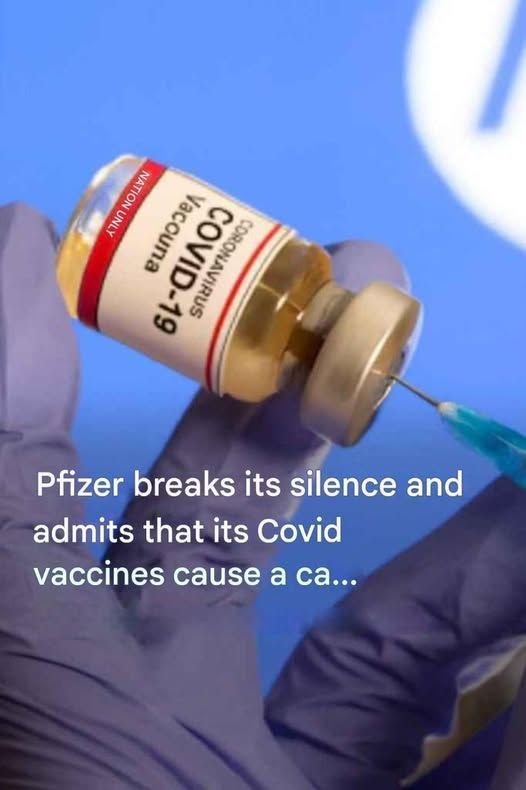
Pfizer, Covid Vaccines, and the Internet Rumor Machine: How Fear, Headlines, and Half-Truths Shape Public Trust
Confused by viral claims about Pfizer and Covid vaccines? Learn how misinformation spreads, what science actually says, and why headlines trigger fear online.
Pfizer, Covid Vaccines, and the Internet Rumor Machine: How Fear, Headlines, and Half-Truths Shape Public Trust
A dramatic headline appears online.
“Pfizer admits…”
Immediately, people click.
Some feel angry.
Others feel vindicated.
Some become scared within seconds.
And before anyone reads the full article—or checks whether the claim is even accurate—the post spreads across Facebook groups, TikTok videos, YouTube shorts, comment sections, and messaging apps at lightning speed.
This pattern has repeated thousands of times since the Covid-19 pandemic began.
Few topics in modern history have generated more confusion, fear, political division, and viral misinformation than Covid vaccines.
And the internet made everything faster.
A partial quote becomes a headline.
A headline becomes outrage.
Outrage becomes “proof.”
Then millions of people argue over information many never fully verified.
The result?
A public health conversation shaped as much by emotion and algorithms as by science itself.
This article is not about blindly defending pharmaceutical companies.
It’s also not about promoting conspiracy theories.
Instead, it’s about understanding:
- Why vaccine misinformation spreads so effectively
- How headlines manipulate emotional reactions
- What Pfizer actually did and did not claim publicly
- Why side effects became misunderstood online
- How fear changes critical thinking
- What science says about vaccine risk
- Why trust in institutions collapsed for many people
- How to evaluate viral medical claims responsibly
Because in the digital age, understanding information may matter almost as much as understanding medicine.
Why Vaccine Headlines Trigger Such Powerful Reactions
Health information activates survival instincts immediately.
When people read claims involving:
- Death
- Disease
- Cancer
- Heart problems
- Hidden risks
the brain reacts emotionally before logically.
Psychologists call this threat prioritization.
Humans evolved to notice danger quickly.
That instinct helped survival historically.
But online, it creates a major problem:
emotion spreads faster than verification.
A frightening headline often travels farther than a nuanced explanation.
Especially on social media.
The Difference Between “Side Effects” and “Secret Harm”
This distinction became massively distorted online.
Every medical treatment has potential side effects.
That includes:
- Aspirin
- Antibiotics
- Surgery
- Anesthesia
- Chemotherapy
- Vaccines
Acknowledging side effects is not the same thing as “admitting hidden evil.”
But internet discussions often blurred that distinction.
For example:
- A rare adverse reaction becomes “proof of mass deception”
- A scientific study becomes “confession”
- Ongoing safety monitoring becomes “evidence they lied”
That misunderstanding fueled enormous confusion.
What Pfizer Actually Publicly Discussed
During and after vaccine rollout, Pfizer and global health agencies publicly acknowledged that:
- Side effects exist
- Adverse event monitoring continues
- Rare complications can occur
- Research evolves over time
This is standard medical practice—not unusual behavior.
Covid vaccines underwent ongoing monitoring because millions of doses were administered globally within a short period.
As larger populations receive any treatment, rare side effects become easier to detect statistically.
That’s how pharmacovigilance works.
Examples of documented rare risks included:
- Myocarditis in some younger individuals
- Allergic reactions
- Temporary flu-like symptoms
These effects were openly studied and discussed by researchers and health agencies worldwide.
But online narratives often transformed “rare monitored risks” into “mass hidden catastrophe.”
Those are not the same thing.
Why So Many People Lost Trust Anyway
This is where the conversation becomes more complicated.
Distrust did not appear from nowhere.
Several factors contributed.
1. Rapidly Changing Guidance
During the pandemic, public health recommendations evolved frequently.
Examples included:
- Mask guidance
- Booster timing
- Surface transmission concerns
- Isolation recommendations
To scientists, evolving guidance reflects updated evidence.
But to many citizens, it looked inconsistent or unreliable.
That gap damaged trust.
2. Political Polarization
Covid became deeply politicized in the United States and globally.
Health discussions stopped feeling purely medical.
Instead, they became tied to:
- Identity
- Ideology
- Media loyalty
- Cultural division
Once that happens, facts become harder to evaluate objectively.
3. Social Media Amplification
Algorithms reward:
- Fear
- Anger
- outrage
- shocking claims
Calm nuance rarely goes viral.
A headline saying:
“Rare side effect under investigation”
generates far less engagement than:
“They finally admitted the truth!”
The internet financially rewards emotional intensity.
How Misinformation Evolves Online
Most misinformation does not begin as pure fabrication.
Often it starts with:
- Partial truth
- Context removal
- Misinterpreted data
- Emotional framing
Then it mutates through sharing.
For example:
Original Statement
“A rare adverse event is under investigation.”
Viral Version
“They knew the vaccine was dangerous.”
That leap may sound irrational afterward.
But emotionally charged environments accelerate distorted interpretation rapidly.
The Psychology of Confirmation Bias
Humans naturally search for information supporting existing beliefs.
This is called confirmation bias.
Someone already distrustful of pharmaceutical companies may interpret any vaccine-related issue as proof of corruption.
Meanwhile, someone strongly pro-vaccine may dismiss legitimate concerns too quickly.
Both extremes reduce objective thinking.
That’s why emotionally loaded medical topics become difficult to discuss productively online.
Were Covid Vaccines Perfect?
No.
No medical intervention is perfect.
But perfection is not the standard scientists use.
Risk-benefit analysis is.
The key question public health experts asked was:
“Do the benefits outweigh the risks for most people?”
Large-scale evidence suggested Covid vaccines significantly reduced:
- Severe illness
- Hospitalization
- Death risk
particularly during earlier pandemic phases.
At the same time, researchers continued monitoring rare complications transparently.
That dual reality confused many people because online discussions often framed issues in absolute terms:
- “Completely safe”
or - “Completely dangerous”
Science rarely works in absolutes.
Why “Admission” Headlines Spread So Easily
The word “admits” is psychologically powerful.
It implies:
- Hidden truth
- Forced confession
- Prior deception
Media outlets and viral accounts know this.
That’s why headlines often use phrases like:
- “finally admits”
- “reveals shocking truth”
- “confesses”
Even when the underlying information was already publicly available.
This style of framing maximizes clicks.
Mini Scenario: Two People Read the Same Headline
Imagine two readers.
Reader One
Already distrusts pharmaceutical companies.
Sees:
“Pfizer admits vaccine side effects.”
Interpretation:
“They lied all along.”
Reader Two
Trusts mainstream medical institutions strongly.
Interpretation:
“This is standard safety monitoring.”
Same headline.
Completely different conclusions.
Because humans don’t interpret information neutrally.
They filter it through:
- Experience
- Identity
- Fear
- Prior beliefs
The Role of Pharmaceutical Companies in Public Skepticism
It’s also important to acknowledge reality honestly:
Large pharmaceutical companies are businesses.
And historically, some corporations across industries have made unethical decisions.
That history contributes to public suspicion today.
Healthy skepticism is reasonable.
But skepticism becomes dangerous when:
- Evidence gets ignored entirely
- Every institution becomes automatically “evil”
- Fear replaces critical thinking
Balanced thinking matters.
How To Evaluate Viral Medical Claims More Responsibly
This skill has become essential in modern life.
Step 1: Read Beyond the Headline
Many viral headlines exaggerate dramatically.
Always ask:
“What exactly was said?”
Step 2: Check Original Sources
Look for:
- Research papers
- Official statements
- Regulatory agency updates
Avoid relying solely on reposted screenshots or clipped videos.
Step 3: Watch for Emotional Manipulation
Extreme emotional language often signals weak evidence.
Examples:
- “They don’t want you to know”
- “Shocking confession”
- “Hidden truth exposed”
These phrases are engagement tools.
Step 4: Understand Relative Risk
A rare side effect does not automatically mean widespread danger.
Context matters enormously.
Step 5: Avoid Absolutist Thinking
Medical science usually involves probabilities—not certainty.
Be cautious of anyone claiming:
- “100% safe”
or - “100% deadly”
Both extremes oversimplify reality.
The Social Cost of Misinformation
False or exaggerated medical claims create real-world consequences.
They can lead to:
- Panic
- Distrust
- Delayed treatment
- Polarization
- Fear-based decisions
At the same time, dismissing public concerns entirely also damages trust.
People want transparency—not perfection.
That distinction matters.
Comparison Table: Healthy Skepticism vs Fear-Driven Misinformation
| Healthy Skepticism | Fear-Driven Misinformation |
|---|---|
| Questions evidence carefully | Assumes conspiracy immediately |
| Reads full context | Relies on viral clips |
| Accepts uncertainty | Demands absolute narratives |
| Uses credible sources | Uses emotionally charged rumors |
| Updates beliefs with evidence | Rejects conflicting information |
| Distinguishes rare vs common risk | Treats isolated cases as universal proof |
Why Pandemic Trauma Changed Public Thinking
The pandemic affected psychology globally.
People experienced:
- Isolation
- Fear
- Economic instability
- Information overload
- Social conflict
- Loss
Under stress, humans seek certainty.
Conspiracy narratives often provide emotionally satisfying certainty:
- Clear villains
- Clear answers
- Clear blame
Reality is usually messier.
And emotionally harder to accept.
Expert Insight: Information Literacy Is Now a Survival Skill
In previous generations, people worried mostly about access to information.
Today, the challenge is filtering overwhelming amounts of it.
Modern citizens must navigate:
- Algorithms
- Clickbait
- Edited clips
- Viral misinformation
- Emotional manipulation
- AI-generated content
That requires a new kind of literacy:
critical information analysis.
Without it, fear spreads faster than facts.
The Future of Medical Trust in 2026 and Beyond
Public trust in institutions remains fragile.
Future healthcare communication will likely require:
- Greater transparency
- Clearer risk explanation
- Faster misinformation response
- More public education
- Better scientific communication
Because trust cannot simply be demanded.
It must be earned repeatedly.
Pros and Cons of Online Health Information Access
| Pros | Cons |
|---|---|
| Faster access to medical updates | Massive misinformation spread |
| More public awareness | Emotional manipulation |
| Easier educational access | Context collapse |
| Greater transparency opportunities | Viral fear amplification |
| More patient empowerment | Difficulty identifying credible sources |
Frequently Asked Questions
Did Pfizer publicly discuss vaccine side effects?
Yes. Like all major medical treatments, Covid vaccines underwent ongoing safety monitoring and side effects were publicly studied and discussed.
Does acknowledging side effects mean vaccines were secretly dangerous?
No. Monitoring side effects is standard practice in medicine and pharmacovigilance.
Were rare vaccine complications real?
Yes. Certain rare complications, such as myocarditis in specific populations, were identified and researched openly.
Why do misleading vaccine headlines spread so quickly?
Fear-based and emotionally charged content performs extremely well on social media algorithms.
What is confirmation bias?
The tendency to favor information that supports existing beliefs while ignoring conflicting evidence.
Are pharmaceutical companies always trustworthy?
Like all large industries, pharmaceutical companies deserve scrutiny and accountability. But skepticism should remain evidence-based.
Why did public trust decline during the pandemic?
Changing guidance, political division, misinformation, and emotional stress all contributed.
How can people evaluate medical claims better?
By checking sources carefully, reading beyond headlines, and avoiding emotionally manipulative content.
Were Covid vaccines perfect?
No medical intervention is perfect. Scientists evaluate treatments through risk-benefit analysis, not perfection.
Why are people still arguing about vaccines years later?
Because the pandemic combined science, politics, fear, identity, and social media into one emotionally charged global event.
Action Checklist: How To Navigate Viral Health Claims
What To Do
✔ Read full articles instead of headlines only
✔ Check original medical sources when possible
✔ Stay aware of emotional manipulation tactics
✔ Understand the difference between rare and common risk
✔ Accept scientific uncertainty realistically
✔ Practice balanced skepticism
✔ Discuss health topics calmly and critically
What To Avoid
✘ Sharing alarming claims without verification
✘ Assuming every side effect equals conspiracy
✘ Trusting viral screenshots blindly
✘ Consuming outrage content nonstop
✘ Treating complex science as simple “good vs evil” narratives
The internet changed how humans experience health information forever.
Today, one emotional headline can influence millions before facts fully emerge.
That reality makes critical thinking more important than ever.
The conversation around Pfizer, Covid vaccines, and public trust is not just about medicine.
It’s about fear.
Perception.
Algorithms.
Identity.
And the growing challenge of separating information from emotional manipulation in a hyperconnected world.
Because in the end, the biggest danger may not be disagreement itself.
It may be losing the ability to think clearly while overwhelmed by noise.
In the age of viral headlines, understanding how information spreads is just as important as understanding the information itself.