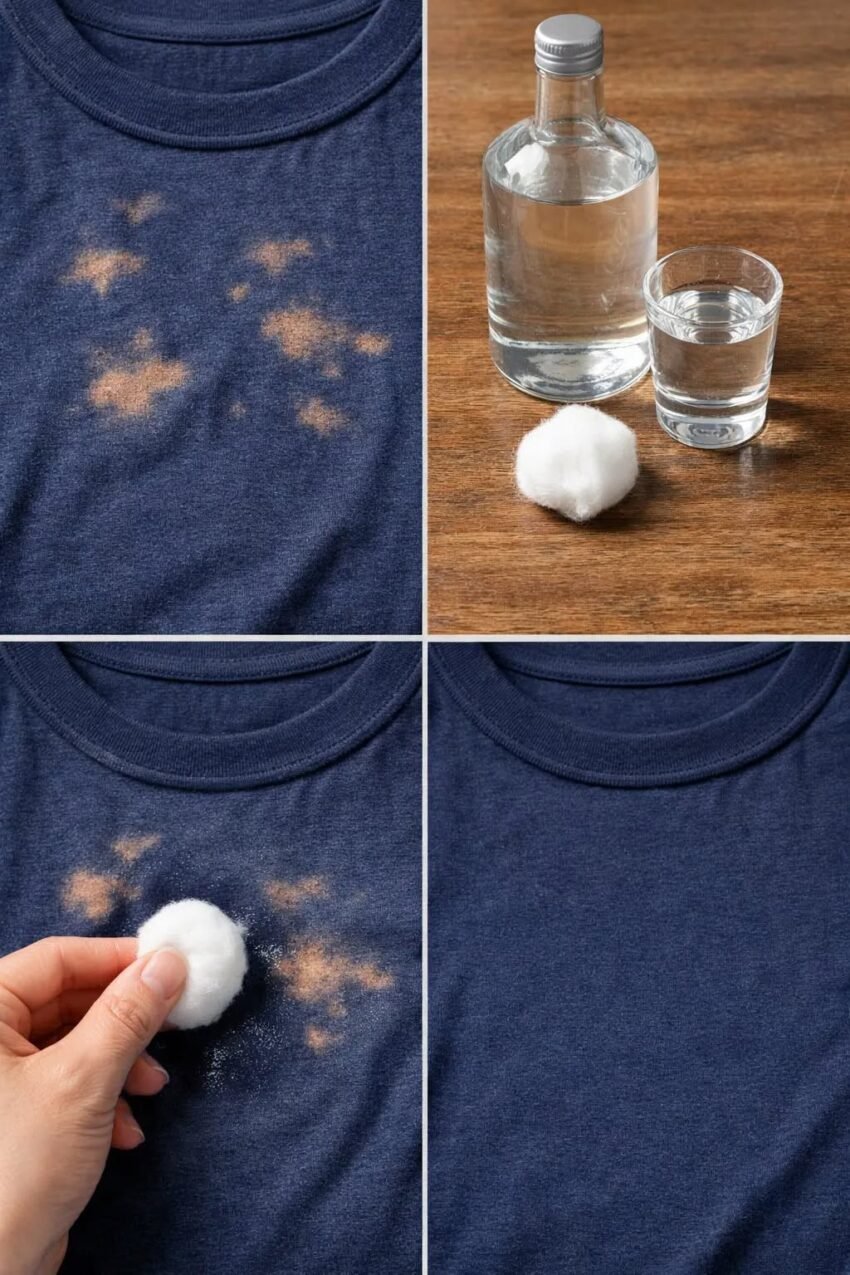
Bleach Stains on Your Clothes? Don’t Throw Them Away Yet — Here’s How to Actually Fix, Hide, or Rescue Them
Got bleach stains on your favorite clothes? Learn practical ways to fix, dye, patch, or creatively hide bleach spots without ruining the fabric.
Bleach Stains on Your Clothes? Don’t Throw Them Away Yet — Here’s the Solution
It happens in seconds.
You’re cleaning the bathroom.
Wiping the kitchen.
Doing laundry.
Then suddenly you notice it:
a strange orange, pink, or white spot spreading across your favorite shirt.
Your stomach drops immediately.
Because bleach stains feel permanent.
Unlike coffee spills or dirt, bleach doesn’t just “stain” fabric.
It removes color entirely.
That’s why so many people assume ruined clothes belong straight in the trash.
But here’s the surprising truth:
Many bleach-damaged clothes can still be rescued, restored, disguised, or transformed creatively—sometimes so well nobody notices what happened.
The key is understanding what bleach actually does to fabric.
Once you know that, the solutions become much smarter.
And in many cases, surprisingly simple.
Why Bleach Stains Look So Bad
Bleach doesn’t add color.
It removes it.
Specifically, chlorine bleach breaks down dyes inside fabric fibers through oxidation.
That means:
- dark fabrics may turn orange or red first
- black clothes often become copper-colored
- bright colors may fade unevenly
- severe exposure creates pale white patches
The fabric itself may still be perfectly wearable.
The problem is mostly visual.
And that changes how you should approach fixing it.
The Biggest Mistake People Make Immediately
Most people panic and:
- scrub aggressively
- apply random cleaners
- rewash repeatedly
- use more bleach accidentally
Unfortunately, that often worsens damage.
The first thing you should do is stop the chemical reaction quickly.
Step 1: Rinse the Area Immediately
As soon as bleach touches fabric:
- rinse with cold water thoroughly
- flush out remaining bleach
- avoid hot water initially
This won’t restore lost color.
But it can prevent the damaged area from spreading further.
That’s critical.
Can Bleach Stains Actually Be Removed?
Technically, bleach stains usually cannot be “removed” because color pigment has already been stripped away.
Instead, solutions focus on:
- restoring color
- blending damage
- disguising affected areas
- redesigning the garment creatively
That distinction matters.
You’re repairing color loss—not cleaning a stain.
Solution #1: Use a Fabric Marker or Permanent Marker
For small bleach spots, this is often the easiest fix.
Fabric markers work especially well on:
- black clothing
- navy fabrics
- dark jeans
- solid-color garments
Choose a shade slightly lighter at first.
You can darken gradually if needed.
This method works surprisingly well for tiny spots near:
- sleeves
- collars
- pant legs
- seams
Solution #2: Dye the Entire Garment
This is one of the most effective solutions for larger bleach damage.
If bleach spots are widespread, redyeing the clothing can restore a uniform appearance.
Popular options include:
- black fabric dye
- navy dye
- dark brown
- deep green
Natural fibers like cotton often absorb dye best.
Synthetic fabrics may require specialized products.
Why Black Clothing Turns Orange Instead of White
This confuses many people.
Black fabric usually contains multiple dye layers.
Bleach removes those layers gradually.
Often:
- black fades to red
- then orange
- then yellow
- eventually pale white
That’s why bleach accidents on black clothes often look rusty or copper-colored first.
Solution #3: Turn the Damage Into a Design
This is where creativity changes everything.
Instead of hiding bleach marks, some people intentionally expand the pattern artistically.
Popular ideas include:
- tie-dye effects
- bleach splatter designs
- distressed streetwear styling
- custom patterns
- artistic fading
Ironically, some fashion brands intentionally sell bleach-treated clothing for premium prices.
A mistake can become a style upgrade.
Solution #4: Iron-On Patches and Embroidery
Bleach spots in awkward locations can be covered beautifully using:
- embroidered patches
- decorative stitching
- fabric appliqués
- minimalist embroidery
This works especially well on:
- denim jackets
- jeans
- hoodies
- backpacks
- casual clothing
And honestly, custom patches often make clothing feel more unique afterward.
Solution #5: Fabric Paint for Precision Repair
Fabric paint provides better blending than markers for some materials.
Use:
- small brushes
- layered application
- light dabbing techniques
This works best on:
- artistic fabrics
- textured materials
- larger irregular bleach spots
Allow complete drying before washing.
Mini Scenario: The Hoodie That Was “Ruined”
A college student accidentally splashed bleach across the sleeve of a black hoodie while cleaning an apartment bathroom.
At first, she planned to throw it away.
Instead, she used additional controlled bleach splatters across the hoodie intentionally.
The result looked like trendy streetwear.
Friends started asking where she bought it.
That’s the funny thing about fashion:
sometimes “damage” becomes design.
What NOT To Do With Bleach Stains
This part is important.
Don’t Keep Applying More Bleach
Some people try “evening out” damage with additional bleach.
This often destroys fabric strength completely.
Don’t Use Random Household Chemicals
Mixing cleaners can become dangerous and damage fabric further.
Especially avoid combining bleach with:
- ammonia
- vinegar
- strong acids
Some mixtures produce toxic gases.
Don’t Scrub Aggressively
Bleach weakens fibers.
Hard scrubbing may tear or thin fabric permanently.
Best Fixes Based on Clothing Type
| Clothing Type | Best Solution |
|---|---|
| Black t-shirts | Fabric marker or full dye |
| Jeans | Patches or artistic distressing |
| Hoodies | Bleach pattern redesign |
| White clothing | Usually easier to blend |
| Athletic wear | Fabric paint or replacement |
| Denim jackets | Embroidery or patches |
Why Some Fabrics React Worse Than Others
Fabric composition changes everything.
Natural fibers like:
- cotton
- linen
- rayon
often absorb bleach differently than synthetic materials like:
- polyester
- nylon
- spandex
Some blends create strange discoloration patterns that are difficult to predict.
That’s why two similar shirts may react completely differently to the same bleach exposure.
The Hidden Reason Bleach Accidents Happen So Often
Most bleach disasters happen during multitasking.
Examples:
- cleaning while dressed casually
- distracted laundry routines
- rushing household chores
- pouring bleach carelessly
Bleach splashes surprisingly far.
Tiny droplets often go unnoticed until discoloration appears later.
That delayed reaction catches people off guard constantly.
How To Prevent Future Bleach Damage
Simple habits make a huge difference.
Wear “Cleaning Clothes”
Keep designated clothing for bleach-related tasks.
This alone prevents countless accidents.
Dilute Carefully
Concentrated bleach splashes more aggressively and damages faster.
Use Gloves and Controlled Pouring
Messy handling increases airborne droplets and splash spread.
Never Mix Bleach With Other Cleaners
This is both a clothing and safety issue.
Certain combinations can create toxic fumes.
Why Bleach Damage Feels More Emotional Than Other Clothing Stains
This sounds dramatic—but many people genuinely feel upset after ruining favorite clothes.
Why?
Because clothing often carries:
- memories
- identity
- comfort
- confidence
- emotional attachment
A favorite hoodie isn’t always “just fabric.”
That emotional reaction is normal.
Especially if the damaged item:
- was expensive
- felt irreplaceable
- had sentimental value
Expert Insight: Visible Imperfection Is Becoming More Accepted
Fashion trends shifted significantly in recent years.
Perfectly untouched clothing is no longer the only aesthetic people value.
Distressed, customized, repaired, and visibly altered clothing now appears everywhere in:
- streetwear
- vintage fashion
- sustainable fashion culture
Repair is increasingly viewed as creativity—not failure.
That cultural shift changes how people respond to clothing accidents.
The Sustainability Angle Most People Overlook
Throwing away bleach-damaged clothing contributes to textile waste.
Millions of garments enter landfills annually due to minor cosmetic damage.
Repairing or redesigning clothing:
- saves money
- reduces waste
- encourages creativity
- extends garment lifespan
Sometimes the most sustainable choice is simply learning how to adapt damaged items.
The Rise of Visible Mending in 2026
Visible clothing repair continues growing globally.
Popular trends include:
- decorative stitching
- visible patchwork
- artistic repairs
- customized upcycling
- DIY redesign
Instead of hiding flaws completely, many people now intentionally highlight repaired areas creatively.
What once looked “ruined” can become personal style.
Pros and Cons of Different Bleach Repair Methods
| Method | Pros | Cons |
|---|---|---|
| Fabric markers | Quick and cheap | May fade over time |
| Full dyeing | Uniform restoration | Requires effort and care |
| Patches | Stylish and durable | Not subtle |
| Fabric paint | Precise customization | Needs artistic control |
| Bleach redesign | Trendy appearance | Risk of overdoing damage |
Frequently Asked Questions
Can bleach stains be completely removed?
Usually no. Bleach removes fabric dye permanently, but the appearance can often be repaired or disguised.
Why did my black shirt turn orange?
Bleach strips color layers gradually, often revealing reddish or copper tones before turning white.
Do fabric markers actually work?
Yes, especially for small spots on dark clothing.
Is dyeing clothes after bleach damage effective?
Often yes, particularly on cotton and natural fabrics.
Can bleach weaken fabric?
Yes. Prolonged exposure can damage fibers and increase tearing risk.
Should I use more bleach to “balance” the stain?
Generally no. This often worsens damage significantly.
What’s the easiest fix for small bleach spots?
Fabric markers or fabric paint are usually simplest.
Can bleach stains spread after washing?
If bleach remains in the fabric initially, discoloration may continue temporarily.
Are bleach patterns fashionable now?
Yes. Distressed and bleach-treated styles are popular in many fashion trends.
Is it worth repairing bleach-damaged clothing?
Often absolutely—especially if the garment is comfortable, sentimental, or expensive.
Action Checklist: What To Do After a Bleach Accident
What To Do
✔ Rinse immediately with cold water
✔ Stop bleach exposure quickly
✔ Use fabric markers for tiny spots
✔ Consider full-garment dyeing for large damage
✔ Explore creative redesign ideas
✔ Use patches or embroidery when needed
✔ Wash separately after repairs
What To Avoid
✘ Scrubbing aggressively
✘ Mixing bleach with other cleaners
✘ Applying more bleach randomly
✘ Throwing clothes away immediately
✘ Ignoring fabric compatibility before dyeing
Bleach stains feel permanent because technically, they are.
But permanent doesn’t always mean hopeless.
In many cases, damaged clothes can still become:
- wearable
- stylish
- customized
- creatively transformed
Sometimes even better than before.
And honestly, there’s something satisfying about rescuing an item people assumed was ruined completely.
Because the best repair solutions don’t just save clothing.
They change how you see imperfection itself.
Bleach stains may remove color permanently, but with the right repair method, your clothes often deserve a second chance—not the trash bin.