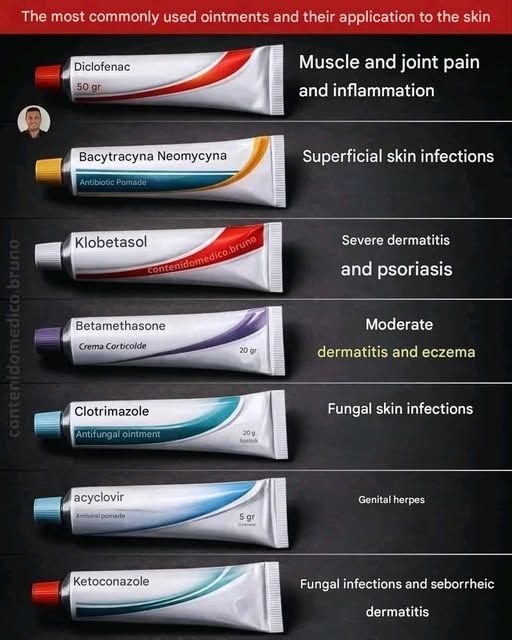
The Most Commonly Used Ointments — What They Actually Do and When You Should Use Them
From antibiotic creams to pain-relief gels, discover the most commonly used ointments, what they treat, and when to use them safely and effectively.
The Most Commonly Used Ointments — What They Actually Do and When You Should Use Them
Almost every household has one.
A small tube tossed into a bathroom drawer, medicine cabinet, purse, or first-aid kit.
You barely think about it until:
- a cut appears
- your skin starts itching
- muscles ache
- lips crack
- a rash suddenly flares up
Then comes the familiar question:
“Which ointment should I use?”
The problem is that many people apply creams, gels, and ointments almost automatically—without fully understanding what they’re actually designed to treat.
And that matters more than most realize.
Using the wrong ointment may:
- irritate skin further
- delay healing
- worsen infections
- trigger allergic reactions
- mask serious symptoms temporarily
At the same time, the right product can provide surprisingly fast relief when used properly.
This guide breaks down:
- the most commonly used ointments
- what they’re actually for
- when to use them
- common mistakes people make
- safety considerations
- when professional medical care matters more than self-treatment
Important: This article is informational only and not a substitute for professional medical advice. Persistent, severe, or unusual symptoms should always be evaluated by a qualified healthcare professional.
What’s the Difference Between an Ointment, Cream, and Gel?
People often use these words interchangeably.
But they work differently.
Ointments
Ointments are oil-based and thicker.
They:
- lock in moisture
- stay on skin longer
- work well for dry or cracked skin
They can feel greasy but are highly protective.
Creams
Creams contain both oil and water.
They:
- absorb faster
- feel lighter
- work well for larger skin areas
Gels
Gels are lightweight and often alcohol- or water-based.
They:
- dry quickly
- feel cooling
- work well for muscle or joint pain
Understanding texture helps you choose the right product for the situation.
1. Antibiotic Ointments
Commonly used for:
- minor cuts
- scrapes
- small burns
These products help reduce bacterial infection risk in minor skin injuries.
Popular ingredients may include:
- bacitracin
- neomycin
- polymyxin B
When To Use
Use after:
- cleaning the wound gently
- stopping bleeding
- drying the area carefully
Apply a thin layer only.
More is not better.
Common Mistake
People often use antibiotic ointments too long or on unnecessary areas.
Overuse may contribute to skin irritation or allergic reactions.
2. Hydrocortisone Cream or Ointment
This is one of the most commonly used anti-itch medications.
It helps reduce:
- inflammation
- itching
- redness
- mild rashes
Often used for:
- insect bites
- eczema flare-ups
- allergic irritation
- poison ivy
When To Use
Short-term use on minor inflammatory skin conditions.
Important Warning
Do not use hydrocortisone on:
- fungal infections
- open wounds
- untreated bacterial infections
- facial areas excessively without guidance
Steroids may worsen some underlying conditions.
3. Antifungal Creams and Ointments
Designed for fungal skin infections such as:
- athlete’s foot
- ringworm
- jock itch
- certain yeast-related rashes
Common ingredients include:
- clotrimazole
- terbinafine
- miconazole
Why Misdiagnosis Happens Frequently
Many fungal rashes resemble:
- eczema
- allergic reactions
- dry skin
Using steroid creams incorrectly on fungal infections can make them worse temporarily while masking symptoms.
4. Pain Relief Gels and Ointments
These products help relieve:
- muscle soreness
- joint pain
- stiffness
- sports-related discomfort
Common ingredients include:
- menthol
- diclofenac
- capsaicin
- lidocaine
Some create cooling sensations.
Others reduce inflammation directly.
When To Use
Often helpful after:
- exercise
- strain
- repetitive movement
- arthritis discomfort
Common Mistake
Applying excessive amounts does not improve results and may irritate skin.
Always follow label instructions carefully.
5. Petroleum Jelly-Based Ointments
Simple but extremely versatile.
Petroleum jelly products help:
- protect skin barriers
- prevent moisture loss
- support healing
- reduce cracking
Useful for:
- dry skin
- chapped lips
- minor irritation
- healing tattoos
- friction prevention
Why Dermatologists Still Recommend It
Despite endless “miracle skincare” products online, simple barrier protection remains one of the most effective skin-care strategies available.
Sometimes basic products outperform expensive alternatives.
6. Burn Ointments
Minor burn products may contain:
- aloe vera
- lidocaine
- soothing moisturizers
These help:
- cool skin
- reduce discomfort
- protect damaged tissue
Important Note About Serious Burns
Large, blistering, or severe burns require medical attention.
Home ointments are only appropriate for mild superficial burns.
7. Diaper Rash Ointments
These products create protective barriers against moisture and irritation.
Common ingredients include:
- zinc oxide
- petrolatum
They help soothe:
- redness
- friction irritation
- moisture damage
Adults sometimes use similar products for skin-chafing protection as well.
8. Hemorrhoid Ointments
Used for:
- swelling
- irritation
- itching
- discomfort around hemorrhoids
Some contain:
- hydrocortisone
- numbing agents
- soothing protectants
Why People Delay Treatment
Many people feel embarrassed discussing hemorrhoids, even though they’re extremely common.
Delaying care may worsen discomfort unnecessarily.
9. Cold Sore Ointments
Designed to reduce discomfort and speed healing during herpes simplex flare-ups around the lips.
Best results often occur when treatment starts early—before full blister development.
Why Timing Matters
Many antiviral products work best during the “tingling” phase before visible sores fully appear.
Mini Scenario: The Rash That Got Worse
A man developed an itchy circular rash after visiting a gym.
Assuming it was eczema, he used steroid cream repeatedly.
The rash spread.
Eventually, a doctor diagnosed ringworm—a fungal infection worsened by steroid overuse.
The lesson?
Not all rashes are the same.
And the wrong ointment may accidentally complicate healing.
Why “Natural” Ointments Aren’t Automatically Safer
This surprises many people.
Natural products can still cause:
- allergic reactions
- irritation
- chemical sensitivity
Examples include:
- tea tree oil
- essential oils
- herbal salves
Natural does not always mean harmless.
Patch testing matters.
Signs You Should Stop Using an Ointment Immediately
Discontinue use and seek guidance if you experience:
- worsening redness
- swelling
- severe burning
- rash spreading
- blistering
- difficulty breathing
- facial swelling
These may indicate allergic reactions or worsening conditions.
How To Apply Ointments Correctly
Simple technique matters more than most realize.
Step 1: Wash Hands
Prevents introducing bacteria.
Step 2: Clean the Area Gently
Remove dirt and irritation carefully.
Step 3: Apply a Thin Layer
More product does not equal faster healing.
Step 4: Follow Directions Carefully
Frequency and duration matter.
Overuse can become harmful.
Why Skin Problems Often Look Similar
This is one reason self-treatment becomes tricky.
Many skin conditions share overlapping symptoms:
- redness
- itching
- peeling
- irritation
But causes differ dramatically:
- bacteria
- fungi
- allergies
- autoimmune conditions
- viruses
- irritation
That’s why persistent symptoms deserve professional evaluation.
Comparison Table: Common Ointments and Uses
| Ointment Type | Common Use |
|---|---|
| Antibiotic ointment | Minor cuts and scrapes |
| Hydrocortisone | Itching and inflammation |
| Antifungal cream | Fungal infections |
| Pain-relief gel | Muscle and joint discomfort |
| Petroleum jelly | Dry skin and protection |
| Burn ointment | Minor burns |
| Zinc oxide ointment | Diaper rash and irritation |
| Cold sore ointment | Lip blister management |
Common Mistakes People Make
Mistake #1: Using Steroid Cream on Fungal Infections
This can worsen fungal growth.
Fix: Get persistent rashes evaluated properly.
Mistake #2: Overusing Antibiotic Ointments
Excessive use may irritate skin unnecessarily.
Fix: Use short term for minor wounds only.
Mistake #3: Ignoring Expiration Dates
Old ointments may lose effectiveness or become contaminated.
Fix: Check packaging regularly.
Mistake #4: Sharing Ointments Between People
Skin infections may spread through shared products.
Fix: Keep personal medications personal.
Expert Insight: Simpler Skincare Often Works Better
Modern marketing encourages complicated routines and endless specialty products.
But many dermatologists consistently emphasize:
- gentle cleansing
- barrier repair
- targeted treatment
- minimal irritation
Over-treating skin often creates additional problems.
Sometimes the best approach is simply supporting the skin’s natural healing process.
The Growing Trend Toward At-Home Treatment in 2026
People increasingly rely on:
- telemedicine
- online symptom searches
- self-care products
- over-the-counter treatment
This creates convenience—but also risk.
The challenge is recognizing when self-care is appropriate and when professional diagnosis matters more.
Pros and Cons of Over-the-Counter Ointments
| Pros | Cons |
|---|---|
| Convenient access | Easy to misuse |
| Helpful for minor conditions | May delay proper diagnosis |
| Affordable treatment options | Incorrect self-diagnosis risk |
| Effective for mild symptoms | Overuse may irritate skin |
Frequently Asked Questions
What’s the difference between cream and ointment?
Ointments are thicker and oil-based, while creams are lighter and absorb faster.
Can I use antibiotic ointment on every cut?
Minor cuts may benefit, but not every wound requires antibiotics.
Is hydrocortisone safe for daily use?
Long-term or excessive use should be avoided without medical guidance.
Why did my rash worsen after steroid cream?
Some fungal infections worsen when treated with steroids alone.
Are pain-relief gels safe?
Generally yes when used as directed, but overuse can irritate skin.
Can expired ointments still work?
Some may lose effectiveness or become contaminated over time.
Is petroleum jelly good for healing?
Yes. It helps protect and retain moisture in damaged skin.
Should burns always be treated at home?
No. Severe or blistering burns require medical evaluation.
Can natural ointments cause allergic reactions?
Absolutely. Natural ingredients can still irritate sensitive skin.
When should I see a doctor for a skin issue?
If symptoms persist, worsen, spread, or become painful, professional evaluation is important.
Action Checklist: Using Ointments Safely
What To Do
✔ Read labels carefully
✔ Use products only as directed
✔ Apply thin layers
✔ Wash hands before application
✔ Monitor for worsening symptoms
✔ Store products properly
✔ Seek medical help for persistent conditions
What To Avoid
✘ Using expired ointments
✘ Sharing skin medications
✘ Overusing steroid creams
✘ Self-diagnosing serious rashes repeatedly
✘ Applying excessive amounts unnecessarily
Final Thoughts
Ointments seem simple.
But using the right one at the right time can make a major difference in how skin heals, feels, and recovers.
The challenge is that many skin problems look deceptively similar.
That’s why thoughtful use matters more than grabbing the nearest tube automatically.
Sometimes a basic ointment provides fast relief.
Sometimes persistent symptoms signal something deeper that deserves professional attention.
Knowing the difference is the real skill.
The best ointment isn’t always the strongest or most expensive—it’s the one correctly matched to the actual problem.