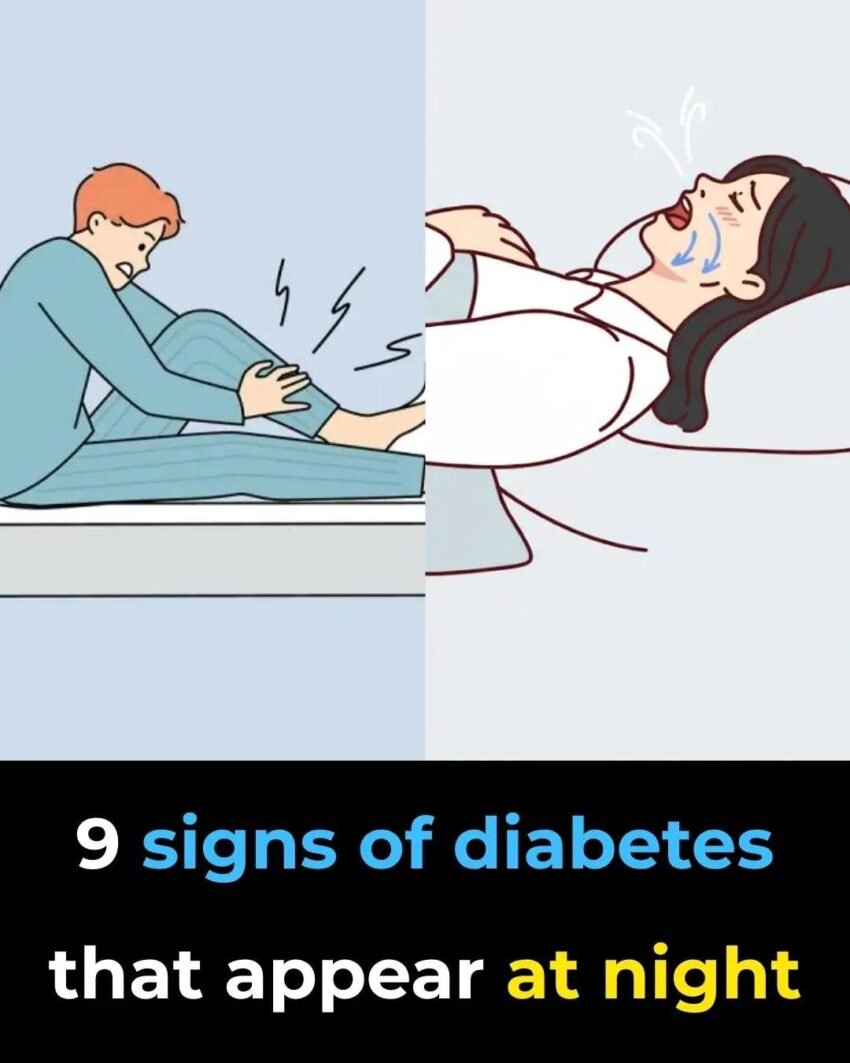
9 Nighttime Signs of Diabetes You Should Never Ignore — What Your Body May Be Trying to Tell You
Discover 9 common signs of diabetes that appear at night, including excessive thirst, night sweats, and frequent urination. Learn when to seek medical help.
9 Nighttime Signs of Diabetes You Should Never Ignore — What Your Body May Be Trying to Tell You
Most people expect diabetes symptoms to show up during the day.
Fatigue. Thirst. Cravings. Weight changes.
But for many adults, some of the earliest warning signs appear quietly at night — when the body is supposed to be resting, repairing, and stabilizing blood sugar levels.
You wake up drenched in sweat.
You’re making repeated trips to the bathroom.
Your legs feel restless. Your mouth feels dry. Sleep becomes fragmented for reasons you can’t explain.
At first, it seems harmless. Stress, aging, dehydration, maybe too much coffee.
But when these symptoms start stacking together, your body may be signaling something deeper.
According to the Centers for Disease Control and Prevention, millions of Americans live with diabetes or prediabetes without realizing it. And because many symptoms develop gradually, people often dismiss the early warning signs for years.
This article breaks down nine nighttime symptoms linked to diabetes, why they happen, what they may mean, and when it’s time to take them seriously.
Why Diabetes Symptoms Often Get Worse at Night
Blood sugar regulation doesn’t stop while you sleep.
Throughout the night, your body continues balancing:
- insulin
- glucose levels
- hormone release
- hydration
- nerve signaling
When blood sugar becomes too high — or swings unpredictably — nighttime symptoms often become more noticeable because the body is in a resting state with fewer distractions.
Sleep can also expose hidden metabolic problems.
That’s why many people with undiagnosed diabetes first notice:
- disrupted sleep
- unexplained sweating
- increased thirst
- nighttime urination
- strange sensations in the feet or legs
The tricky part is that these symptoms can seem unrelated at first.
Individually, they may not raise concern.
Together, they tell a different story.
1. Frequent Urination During the Night (Nocturia)
One of the most common nighttime signs of diabetes is waking repeatedly to urinate.
If you’re getting up multiple times every night — especially when this is new for you — elevated blood sugar may be involved.
Why It Happens
When glucose builds up in the bloodstream, the kidneys work harder to remove excess sugar through urine.
That process pulls more fluid from the body, leading to:
- larger urine volume
- dehydration
- constant nighttime bathroom trips
What Makes This Important
Occasional nighttime urination is common, especially with aging.
But diabetes-related urination often comes with:
- excessive thirst
- dry mouth
- fatigue
- increased hunger
The pattern matters.
2. Intense Thirst That Wakes You Up
Do you wake up feeling desperately thirsty even after drinking enough water during the day?
Persistent nighttime thirst is another classic diabetes symptom.
What’s Happening Inside the Body
As blood sugar rises, fluid is pulled from tissues to help dilute excess glucose in the bloodstream.
The result:
- dehydration
- dry mouth
- strong thirst signals
Some people describe it as:
“No matter how much water I drink, I still feel thirsty.”
That’s often a red flag worth discussing with a healthcare provider.
3. Night Sweats
Not every case of night sweats points to diabetes.
Hormones, infections, anxiety, medications, and menopause can also trigger them.
But diabetes-related night sweats are surprisingly common.
Possible Reasons
Night sweats may happen because of:
- low nighttime blood sugar (hypoglycemia)
- blood sugar instability
- stress hormone fluctuations
- autonomic nervous system dysfunction
The sweating can range from mild dampness to soaking through sheets.
A Clue Many People Miss
If night sweats happen alongside:
- shakiness
- headaches
- vivid dreams
- morning fatigue
- rapid heartbeat
low blood sugar episodes during sleep may be contributing.
4. Tingling, Burning, or Numb Feet at Night
Many people first notice diabetic nerve symptoms while lying in bed.
The room is quiet.
Distractions disappear.
Suddenly:
- feet tingle
- legs burn
- toes feel numb
- sharp pains appear randomly
This may point to diabetic neuropathy, a type of nerve damage linked to prolonged elevated blood sugar.
According to the National Institute of Diabetes and Digestive and Kidney Diseases, nerve damage is one of the most common complications of diabetes.
Why Symptoms Feel Worse at Night
Nerve pain often becomes more noticeable during inactivity because there’s less external stimulation competing for attention.
Many people describe:
- pins-and-needles sensations
- electric shock feelings
- crawling sensations
- hypersensitivity to bedsheets
5. Restless Sleep or Frequent Waking
Some people with diabetes don’t realize their sleep disruption may be tied to blood sugar instability.
You may:
- wake repeatedly without explanation
- toss and turn constantly
- feel overheated
- wake exhausted despite “sleeping”
Blood Sugar Swings Can Interrupt Sleep
Both high and low glucose levels may disrupt:
- melatonin balance
- stress hormone regulation
- nervous system stability
Poor sleep also worsens insulin resistance — creating a frustrating cycle.
The Hidden Problem
Many people blame stress alone when blood sugar imbalance is actually contributing underneath.
6. Sudden Hunger Late at Night
Extreme nighttime hunger can sometimes signal glucose regulation problems.
This often happens because the body struggles to move glucose efficiently into cells for energy.
Even when sugar levels are high in the bloodstream, cells may still feel “starved.”
The result:
- intense cravings
- nighttime snacking
- waking hungry
- sugar cravings before bed
Common Pattern
People sometimes notice:
- they eat dinner
- feel hungry again shortly after
- wake up craving carbs
That pattern may deserve medical evaluation, especially if combined with fatigue or thirst.
7. Dry Mouth and Bad Breath During Sleep
Diabetes can contribute to dry mouth overnight because of dehydration and elevated blood sugar levels.
Some people also develop:
- thick saliva
- cracked lips
- sore throat in the morning
- unpleasant breath odor
Why Breath Changes Matter
In more serious cases, uncontrolled diabetes can cause breath that smells:
- fruity
- sweet
- acetone-like
This may indicate diabetic ketoacidosis, a potentially dangerous medical condition requiring urgent care.
If fruity breath occurs alongside:
- vomiting
- confusion
- abdominal pain
- rapid breathing
seek emergency medical attention immediately.
8. Blurred Vision at Night or Upon Waking
Fluctuating blood sugar levels can affect the eyes surprisingly quickly.
Some people notice:
- blurry nighttime vision
- trouble focusing
- halos around lights
- fluctuating eyesight
What Causes This
High glucose levels can temporarily change fluid levels in the eye, affecting lens shape and visual clarity.
The American Diabetes Association warns that long-term uncontrolled diabetes can also damage blood vessels in the retina.
Nighttime vision changes should never be ignored — especially if symptoms are increasing.
9. Waking Up Exhausted Every Morning
One of the most overlooked diabetes symptoms is waking up feeling like you barely slept.
Even after 7–8 hours in bed, you may feel:
- drained
- foggy
- irritable
- physically heavy
Why This Happens
Blood sugar instability can interfere with:
- restorative sleep cycles
- oxygen balance
- hormone regulation
- nervous system recovery
Sleep apnea is also more common in people with Type 2 diabetes and insulin resistance.
A Pattern Worth Watching
If exhaustion combines with:
- snoring
- nighttime urination
- headaches
- daytime fatigue
- weight gain
a medical evaluation is worth considering.
Comparison Table: Common Nighttime Diabetes Symptoms
| Symptom | Possible Cause |
|---|---|
| Frequent urination | Excess glucose filtered through kidneys |
| Excessive thirst | Dehydration from fluid loss |
| Night sweats | Blood sugar fluctuations |
| Tingling feet | Diabetic neuropathy |
| Restless sleep | Glucose instability |
| Extreme hunger | Poor glucose utilization |
| Dry mouth | Dehydration and high blood sugar |
| Blurred vision | Fluid changes in the eye |
| Morning exhaustion | Sleep disruption and insulin resistance |
Who Is Most at Risk?
While diabetes can affect anyone, nighttime symptoms may deserve extra attention if you have risk factors such as:
- Family history of diabetes
- Obesity or excess abdominal weight
- Sedentary lifestyle
- High blood pressure
- Polycystic ovary syndrome (PCOS)
- History of gestational diabetes
- Age over 45
- Prediabetes diagnosis
Certain ethnic groups in the United States also face higher diabetes risk, according to the National Institutes of Health.
A Real-World Scenario Many People Relate To
David, a 47-year-old office manager, thought stress was ruining his sleep.
He woke up several times every night:
- thirsty
- overheated
- needing the bathroom
He blamed work pressure and getting older.
Months later, after experiencing blurry vision and overwhelming fatigue, he finally scheduled bloodwork.
His fasting blood sugar and A1C levels were significantly elevated.
What surprised him most wasn’t the diagnosis.
It was realizing how many symptoms had been quietly building for years.
Common Mistakes People Make With Nighttime Diabetes Symptoms
Mistake #1: Assuming It’s “Just Aging”
Many adults normalize symptoms like:
- fatigue
- poor sleep
- frequent urination
But recurring patterns deserve attention.
Mistake #2: Treating Symptoms Separately
People often:
- see an eye doctor for blurry vision
- buy sleep aids for insomnia
- drink more water for thirst
without realizing the symptoms may share one metabolic cause.
Mistake #3: Ignoring Mild Symptoms
Diabetes symptoms often begin subtly.
That’s why early detection matters.
According to the Mayo Clinic, untreated diabetes can gradually damage:
- nerves
- kidneys
- blood vessels
- eyes
- heart health
What To Do If These Symptoms Sound Familiar
You don’t need to panic.
But you also shouldn’t ignore persistent warning signs.
Consider Scheduling a Medical Evaluation
A healthcare provider may recommend:
- fasting glucose testing
- A1C blood testing
- urine testing
- blood pressure evaluation
- cholesterol screening
Track Patterns Before Your Appointment
Write down:
- nighttime symptoms
- sleep disruptions
- bathroom frequency
- thirst levels
- food cravings
- energy changes
Patterns help doctors identify underlying issues more effectively.
Lifestyle Changes That Can Help Support Healthy Blood Sugar
For people with prediabetes or diabetes risk factors, daily habits matter enormously.
Helpful Strategies
Improve Sleep Consistency
Poor sleep can worsen insulin resistance.
Aim for:
- consistent bedtimes
- reduced screen exposure before bed
- cooler sleep environments
Reduce Added Sugar Intake
Focus on:
- whole foods
- fiber-rich meals
- balanced carbohydrates
- protein intake
Increase Physical Activity
Even moderate movement improves insulin sensitivity.
Examples:
- walking after meals
- strength training
- cycling
- swimming
Manage Stress Levels
Chronic stress affects blood sugar regulation through cortisol and other hormones.
Helpful tools may include:
- mindfulness
- therapy
- journaling
- breathing exercises
- outdoor activity
The 2026 Shift in Diabetes Awareness
Healthcare experts are increasingly recognizing the importance of:
- early metabolic warning signs
- sleep-related diabetes symptoms
- continuous glucose monitoring
- preventive care before full diabetes develops
More Americans are also using wearable technology to track:
- sleep quality
- nighttime heart rate
- glucose trends
- activity levels
This shift toward earlier detection may help reduce long-term complications in the future.
Frequently Asked Questions
Can diabetes symptoms really appear only at night?
Yes. Some symptoms become more noticeable during sleep because blood sugar fluctuations affect hydration, nerves, and hormone balance overnight.
Is waking up to urinate always a sign of diabetes?
No. Aging, medications, prostate issues, pregnancy, and high fluid intake can also cause nighttime urination. But persistent symptoms should be evaluated.
Why does diabetes cause thirst?
High blood sugar pulls fluid from body tissues, leading to dehydration and intense thirst.
Are night sweats common with diabetes?
They can be, especially when blood sugar drops too low during sleep or fluctuates significantly.
Can prediabetes cause nighttime symptoms too?
Yes. Some people with prediabetes experience mild symptoms before developing full Type 2 diabetes.
What does diabetic nerve pain feel like at night?
People commonly describe:
- burning
- tingling
- numbness
- electric sensations
- hypersensitivity
especially in the feet and legs.
Does poor sleep worsen diabetes?
Yes. Sleep deprivation can worsen insulin resistance and blood sugar control over time.
When should someone seek urgent medical care?
Seek immediate help if symptoms include:
- fruity-smelling breath
- vomiting
- confusion
- severe weakness
- difficulty breathing
These may indicate diabetic ketoacidosis.
Can lifestyle changes reverse early diabetes?
In some cases, Type 2 diabetes progression can be slowed or improved with weight management, nutrition, physical activity, and medical guidance.
What test confirms diabetes?
Doctors commonly use:
- fasting blood glucose
- A1C testing
- oral glucose tolerance tests
to diagnose diabetes or prediabetes.
Action Checklist: What To Watch For
What To Do
✔ Monitor recurring nighttime symptoms
✔ Schedule blood sugar testing if symptoms persist
✔ Track sleep disruptions and thirst patterns
✔ Maintain regular physical activity
✔ Reduce excess sugar intake
✔ Prioritize quality sleep
✔ Stay hydrated
✔ Follow medical advice consistently
What To Avoid
✘ Ignoring recurring symptoms
✘ Self-diagnosing without testing
✘ Assuming fatigue is “normal aging”
✘ Overusing sugary nighttime snacks
✘ Delaying doctor visits for worsening symptoms
✘ Relying only on internet advice for diagnosis
Final Thoughts
Diabetes rarely appears all at once.
For many people, the body whispers before it screams.
Nighttime symptoms — frequent urination, unexplained thirst, restless sleep, tingling feet, waking exhausted — may seem minor individually. But together, they can reveal important clues about blood sugar health.
The good news is that early awareness creates opportunity.
Many complications linked to diabetes can be reduced or delayed through earlier diagnosis, lifestyle changes, and proper medical care.
If several of these symptoms sound familiar, don’t ignore the pattern.
Your body may already be asking for attention.
Repeated nighttime symptoms like thirst, frequent urination, night sweats, and exhaustion may signal blood sugar problems worth evaluating early. Catching diabetes sooner can make a major difference in long-term health.
If you found this article helpful, share it with someone who may benefit, leave a comment with your experience, or explore more health insights to stay informed.