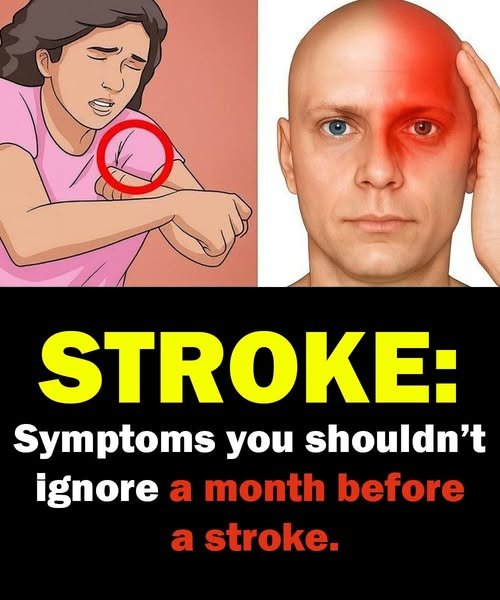
Most People Think Strokes Happen Suddenly — But Doctors Say the Body Often Whispers Before It Screams
Stroke symptoms often appear as subtle warning signs before a major event. Learn the early “whispers” doctors say you should never ignore.
Most people imagine a stroke as something dramatic and immediate.
One moment everything is normal.
The next, something catastrophic happens—speech fails, vision blurs, one side of the body goes weak.
And in many cases, that image is partly true.
But it’s not the full story.
Because according to neurologists and stroke specialists, the body often gives warning signs long before a major stroke occurs.
Subtle ones.
Easy-to-ignore ones.
The kind people dismiss as fatigue, stress, or “just a bad day.”
And that’s where the danger begins.
What a Stroke Actually Is (In Simple Terms)
A stroke happens when blood flow to part of the brain is interrupted.
This can occur in two main ways:
- Ischemic stroke: a blockage in an artery
- Hemorrhagic stroke: bleeding in the brain
When brain cells are deprived of oxygen, they begin to die within minutes.
That’s why strokes are medical emergencies.
But what many people don’t realize is this:
A major stroke is often preceded by smaller warning events or transient symptoms.
The “Whispers” Doctors Talk About
Doctors often describe early stroke signs as “whispers” because they can be mild, brief, and easy to overlook.
These warning signs may include:
1. Sudden numbness or weakness
Often on one side of the face, arm, or leg.
It might last a few minutes and disappear.
People often say:
- “My arm felt weird for a bit”
- “My face went slightly numb but it passed”
That temporary nature is what makes it dangerous—people ignore it.
2. Brief speech difficulties
This can include:
- slurred words
- trouble finding words
- speaking in confusion for a short time
Even if it resolves quickly, it may indicate a transient ischemic attack (TIA), sometimes called a “mini-stroke.”
3. Sudden vision disturbances
This may involve:
- blurred vision
- loss of vision in one eye
- double vision
Even short episodes matter.
4. Dizziness or balance issues
Not the mild kind from standing up too fast—but sudden imbalance or coordination problems.
People often dismiss it as:
- fatigue
- dehydration
- low blood sugar
But in some cases, it signals reduced blood flow to the brain.
5. Unusual severe headache
Especially in hemorrhagic strokes, a sudden intense headache can appear.
It is often described as:
“The worst headache of my life”
This symptom should never be ignored.
Why These Early Signs Are Missed
The human brain is wired to normalize discomfort.
When symptoms are:
- brief
- mild
- non-repeating
people tend to rationalize them.
Common explanations include:
- stress
- lack of sleep
- dehydration
- anxiety
- fatigue
And because the symptoms disappear, people assume the problem is gone.
But in many cases, the issue was never gone—it was temporary restoration of blood flow.
That’s what makes TIAs especially dangerous.
What a TIA (Mini-Stroke) Really Means
A transient ischemic attack is often called a “warning stroke.”
It happens when blood flow to the brain is temporarily blocked and then restored.
Symptoms may last:
- a few minutes
- up to 24 hours
No permanent damage may occur—but it is a serious warning sign.
Medical research shows that:
A significant percentage of people who experience a TIA may go on to have a full stroke within days or weeks if untreated.
This is why doctors treat TIAs as emergencies, not minor incidents.
The Critical Window Most People Don’t Know About
One of the most important facts in stroke medicine is this:
Early intervention can significantly reduce damage.
But the problem is timing.
Many people delay seeking help because:
- symptoms disappear
- they feel “normal again”
- they don’t want to overreact
This delay can be life-changing.
Stroke care is extremely time-sensitive because brain cells do not regenerate quickly once they die.
The FAST Test Doctors Want Everyone to Remember
Medical professionals often recommend the FAST method for identifying strokes:
- F – Face: one side drooping?
- A – Arms: one arm weak or drifting downward?
- S – Speech: slurred or strange speech?
- T – Time: act immediately
If any of these signs appear, emergency care is critical.
Even if symptoms improve.
Even if they disappear.
Why Stroke Symptoms Vary So Much
No two strokes look exactly the same because the brain is highly complex.
Symptoms depend on:
- location of blockage or bleeding
- size of affected area
- speed of blood flow interruption
- individual health conditions
That’s why some strokes appear dramatic, while others begin quietly.
Risk Factors That Increase Stroke Likelihood
While strokes can happen to anyone, risk increases with:
- high blood pressure
- diabetes
- smoking
- high cholesterol
- obesity
- sedentary lifestyle
- heart rhythm disorders (like atrial fibrillation)
- family history
Importantly, many of these risk factors are silent themselves—meaning people may not know they are at risk.
Why “Sudden Stroke” Is Only Half the Story
The idea that strokes come without warning is partly true in presentation—but not always in development.
In many cases, the body gives subtle signals beforehand.
The problem is not absence of warning.
It is recognition.
Modern medicine increasingly emphasizes prevention and early detection rather than reaction.
Because once a major stroke occurs, recovery becomes significantly more difficult.
A Real-Life Pattern Doctors See Often
Neurologists frequently report a common sequence:
- A brief episode of numbness or confusion
- Symptoms disappear within minutes
- Patient ignores it
- A major stroke occurs days or weeks later
This pattern is why awareness matters so much.
The first event is often the body’s warning system testing limits.
The Emotional Side People Don’t Talk About
Stroke is not just a medical condition.
It is also a psychological shock for patients and families.
One of the hardest realities is regret:
“I thought it would go away.”
“I didn’t think it was serious.”
“I should have gone sooner.”
That’s why education around early symptoms is so important.
Not to create fear—but to encourage faster action.
Final Thought
Stroke is often portrayed as sudden, but the reality is more complex.
In many cases, the body gives early signals—small interruptions in function that should not be ignored.
The challenge is not noticing the dramatic event.
It is recognizing the quiet ones before they escalate.
Because in neurology, time is not just important.
It is brain tissue.
Strokes can appear suddenly, but early warning signs like brief weakness, speech changes, or vision issues may occur beforehand—and recognizing them early can make a life-saving difference.