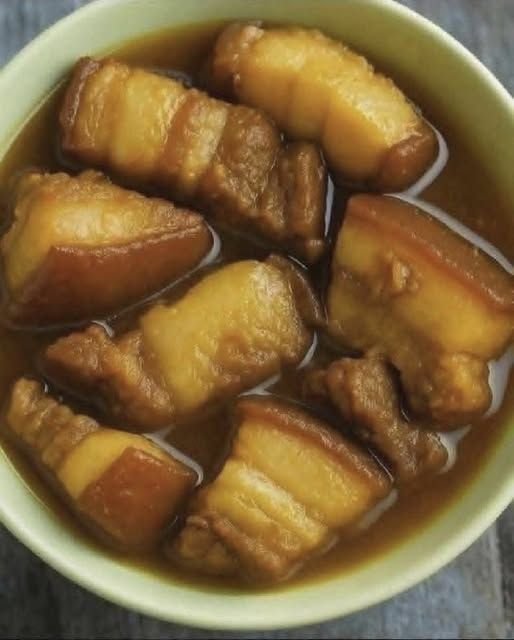
Japanese Buta Kakuni (Braised Pork Belly) — A Melt-in-Your-Mouth Recipe That Defines Comfort Cooking
Learn how to make Japanese Buta Kakuni—slow-braised pork belly simmered in soy, sake, and sugar until tender, rich, and deeply flavorful.
There’s a certain kind of dish that doesn’t rush you.
It doesn’t care about shortcuts.
It doesn’t respond well to impatience.
And it absolutely refuses to taste the same if you try to speed it up.
Buta Kakuni is one of those dishes.
A traditional Japanese braised pork belly recipe that transforms a tough, fatty cut of meat into something unbelievably tender—soft enough to break apart with chopsticks, rich enough to coat every bite with deep umami flavor.
It’s the kind of food that feels like it carries time inside it.
And once you understand it, you realize something important:
Great flavor isn’t rushed. It’s built.
What Is Buta Kakuni Really?
At its core, Buta Kakuni literally means:
- Buta = pork
- Kakuni = “square simmered”
Traditionally, pork belly is cut into thick cubes, then slowly simmered in a mixture of soy sauce, sake, sugar, and aromatics until it becomes tender and deeply infused with flavor.
Unlike quick stir-fries or grilled dishes, Kakuni is about transformation over time.
The fat renders slowly.
The collagen breaks down gently.
The sauce becomes richer as it absorbs into the meat.
It’s not just cooking.
It’s controlled patience.
Why This Dish Feels So Special
There’s a reason Buta Kakuni is served in both home kitchens and high-end Japanese restaurants.
It hits multiple sensory layers at once:
- rich umami from soy sauce
- subtle sweetness from sugar and mirin
- deep savoriness from pork fat
- aromatic warmth from ginger and sake
But what makes it memorable is texture.
The pork doesn’t feel chewy or dense.
It feels:
- soft
- silky
- almost spoonable
It’s comfort food that doesn’t shout—it settles.
Ingredients You’ll Need
This recipe stays true to traditional Japanese home cooking.
Main ingredients:
- 800g pork belly (skin-on or skinless)
- 3–4 slices fresh ginger
- 3 tablespoons soy sauce
- 3 tablespoons sake
- 2 tablespoons mirin
- 2–3 tablespoons sugar
- Water (enough to cover)
Optional but traditional:
- boiled eggs (for soaking in sauce)
- green onions for garnish
- mustard (Japanese karashi) for serving
Step 1: Pre-Boiling the Pork (The Hidden Secret)
This step is often skipped—but it changes everything.
Place pork belly in a pot of cold water. Bring to a boil and simmer for 10–15 minutes.
Then discard the water and rinse the pork.
Why this matters:
- removes excess fat
- reduces strong pork odor
- improves final texture
- keeps sauce clean and balanced
This is not just cleaning.
It’s preparing the meat to absorb flavor properly.
Step 2: Cutting Into Traditional Chunks
Once cooled slightly, cut the pork into large cubes.
Not small pieces.
Not thin slices.
Kakuni is meant to be hearty.
Each piece should hold its shape while still becoming tender later.
Think “bite-sized richness,” not shredded meat.
Step 3: The Slow Simmer Begins
In a clean pot, combine:
- pork cubes
- ginger slices
- soy sauce
- sake
- mirin
- sugar
- water (just enough to cover)
Bring to a gentle boil.
Then immediately reduce to low heat.
This is where the transformation begins.
Step 4: The Waiting Phase (Where Flavor Builds)
Now comes the part most people underestimate.
Let it simmer slowly for 1.5 to 2 hours.
Not a rolling boil.
Not aggressive heat.
Just a quiet, steady simmer.
During this time:
- fat slowly melts into the broth
- collagen breaks down into gelatin
- sauce thickens naturally
- flavors concentrate
If foam rises, skim it off occasionally.
This keeps the broth clean and balanced.
Step 5: Optional Eggs (Highly Recommended)
If you want a richer experience, add boiled eggs during the last 30–40 minutes.
They absorb the sauce beautifully and turn into savory, amber-colored additions.
The yolk becomes creamy.
The white becomes infused with soy sweetness.
It’s a small step that adds a lot of depth.
Step 6: Reducing the Sauce
Once the pork is tender enough to break apart easily with chopsticks, increase the heat slightly and reduce the sauce.
This step:
- thickens glaze
- intensifies flavor
- coats each piece evenly
You’ll know it’s ready when the sauce clings lightly to the pork instead of pooling in the pot.
What Buta Kakuni Tastes Like
It’s difficult to describe Kakuni without experiencing it.
But here’s the closest breakdown:
- first bite: soft, rich, slightly sweet
- middle: deep umami and soy complexity
- finish: lingering warmth from ginger and fat
It’s not heavy in the way greasy food is.
It’s heavy in the way comfort feels.
Common Mistakes (And How to Avoid Them)
1. Cooking too fast
High heat tightens the meat instead of softening it.
Fix: always simmer gently.
2. Skipping pre-boil
This leads to greasy, strong-tasting broth.
Fix: always blanch first.
3. Using lean cuts
Lean pork becomes dry and loses the signature texture.
Fix: pork belly is essential.
4. Not reducing sauce
Without reduction, flavor feels diluted.
Fix: always finish with concentration.
Why This Recipe Works (The Science Behind It)
Buta Kakuni is a perfect example of how heat transforms protein structure.
Slow cooking:
- converts collagen into gelatin
- breaks down connective tissue
- allows fat to emulsify into sauce
- enhances umami perception through amino acid release
This is why pressure-cooking shortcuts exist—but traditional slow simmering produces deeper integration of flavor.
It’s chemistry and patience working together.
Variations You Can Try
Once you master the base version, you can adapt it.
1. Spicy Kakuni
Add chili or Japanese shichimi spice for heat contrast.
2. Miso Kakuni
Replace part of soy sauce with miso paste for deeper earthiness.
3. Honey Kakuni
Swap sugar with honey for softer sweetness and glossy finish.
4. Garlic Kakuni
Add whole garlic cloves during simmering for aroma depth.
What to Serve It With
Buta Kakuni pairs beautifully with:
- steamed white rice
- pickled vegetables
- soft-boiled eggs
- simple miso soup
- shredded cabbage
The richness of the pork balances best with light, clean sides.
Why People Keep Coming Back to This Dish
There’s a reason Kakuni is considered comfort food in Japan.
It’s not just flavor.
It’s rhythm.
You prepare it slowly.
You wait.
You let it change.
And eventually, it rewards you.
In a fast world, that experience feels rare.
Final Thought
Buta Kakuni is more than a recipe—it’s a lesson in patience disguised as food.
It reminds you that some of the best things in cooking (and in life) don’t respond to speed.
They respond to time, attention, and care.
Buta Kakuni transforms simple pork belly into melt-in-your-mouth richness through slow simmering, proving that patience is the most important ingredient in Japanese comfort cooking.