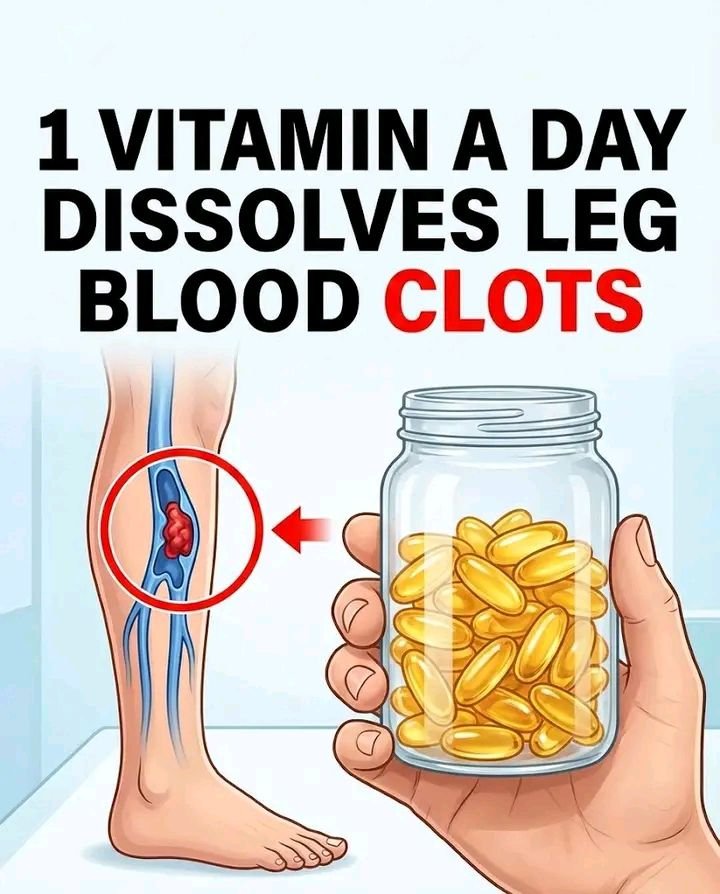
Can “1 Vitamin a Day” Dissolve Leg Blood Clots? Here’s the Truth Backed by Science
Can one daily vitamin dissolve leg blood clots? Learn the medical facts, risks, and safe treatment options for deep vein thrombosis (DVT).
Introduction: A Dangerous Claim You Shouldn’t Ignore
You may have seen headlines or social media posts claiming:
“Just one vitamin a day dissolves leg blood clots.”
It sounds simple. Easy. Almost too good to be true.
And when it comes to something as serious as a blood clot in your leg, also known as deep vein thrombosis (DVT), believing the wrong information can be life-threatening.
Let’s be very clear from the start:
There is no vitamin proven to dissolve leg blood clots.
In this article, we’ll break down:
-
What leg blood clots really are
-
Why they’re dangerous
-
Whether any vitamins help
-
What treatments actually work
-
And how to reduce your risk safely
If you or someone you love is concerned about blood clots, this guide could help you make informed, safer decisions.
What Is a Leg Blood Clot?
A blood clot in the leg is medically known as:
Deep Vein Thrombosis
DVT occurs when a clot forms in a deep vein, typically in the calf or thigh.
Why It’s Dangerous
The real risk isn’t just the clot itself.
If a piece breaks off and travels to the lungs, it can cause:
Pulmonary Embolism
A pulmonary embolism can be fatal if not treated immediately.
This is not something to experiment with using home remedies.
Can a Vitamin Dissolve Blood Clots?
Short Answer: No.
There is currently no scientific evidence that any single vitamin can dissolve an existing blood clot.
Blood clots are complex biological structures made of:
-
Fibrin
-
Platelets
-
Red blood cells
-
Clotting proteins
Dissolving them requires targeted medical treatment.
Where Did This Vitamin Claim Come From?
Health myths often spread because:
-
People confuse prevention with treatment
-
Certain nutrients support circulation
-
Natural remedies sound safer than medication
-
Viral posts exaggerate small studies
But supporting circulation is not the same as dissolving a clot.
That distinction matters.
Let’s Examine the Vitamins Often Mentioned
Vitamin E
Vitamin E has mild blood-thinning properties.
But:
-
It does NOT dissolve existing clots
-
High doses increase bleeding risk
-
It may interact with prescription blood thinners
Vitamin K
Vitamin K is actually involved in clot formation.
It plays a role in helping blood clot normally.
This is why people taking blood thinners like:
Warfarin
must monitor vitamin K intake carefully.
Vitamin K does not dissolve clots—it affects clotting balance.
Vitamin D
Some studies show low vitamin D levels are associated with increased clot risk.
But:
Association does not mean treatment.
Taking vitamin D does not break down an active clot.
What Actually Dissolves Blood Clots?
Medical professionals use:
1. Anticoagulants (Blood Thinners)
These don’t dissolve clots immediately—but they prevent growth and allow the body to gradually break them down.
Common examples include:
-
Warfarin
-
Eliquis
-
Xarelto
2. Thrombolytics (Clot-Busting Drugs)
In emergency cases, hospitals may use clot-dissolving medications under strict supervision.
These are powerful drugs—not vitamins.
3. Compression Therapy
Medical-grade compression stockings help reduce swelling and improve circulation.
4. Lifestyle Support
-
Movement
-
Hydration
-
Weight management
-
Smoking cessation
These help reduce risk—but again, they do not dissolve existing clots.
Why Relying on a Vitamin Could Be Dangerous
Believing a simple supplement can treat DVT may lead to:
-
Delayed medical care
-
Increased clot growth
-
Pulmonary embolism
-
Permanent vein damage
-
Death
According to major US health authorities, DVT requires professional medical evaluation and treatment.
This is not a DIY condition.
Real-Life Scenario: Why Timing Matters
Imagine:
You feel calf pain and notice swelling.
You read online that “one vitamin a day dissolves clots.”
You wait.
Days pass.
The clot enlarges.
Then suddenly, you experience:
-
Chest pain
-
Shortness of breath
-
Dizziness
That’s a potential pulmonary embolism emergency.
Early medical care dramatically reduces risk.
What Vitamins CAN Do (Safely & Realistically)
While no vitamin dissolves clots, some support overall cardiovascular health:
Helpful Nutrients for Prevention
-
Omega-3 fatty acids
-
Vitamin D (if deficient)
-
Magnesium
-
B-complex vitamins
But these are preventative lifestyle tools, not acute treatments.
Always consult a healthcare provider before starting supplements—especially if taking anticoagulants.
Who Is at Higher Risk for Leg Blood Clots?
Americans at increased risk include:
-
Adults over 60
-
Smokers
-
People who sit for long periods (long flights, desk jobs)
-
Post-surgery patients
-
Individuals with obesity
-
Pregnant women
-
Those on hormone therapy
Understanding your risk is more powerful than chasing viral cures.
Common Symptoms of Deep Vein Thrombosis
Seek medical attention if you notice:
-
Leg swelling (usually one side)
-
Warmth in the affected area
-
Red or discolored skin
-
Persistent calf pain
-
Tenderness when walking
Emergency symptoms include:
-
Sudden shortness of breath
-
Chest pain
-
Rapid heart rate
Call 911 immediately if these occur.
Common Mistakes People Make
1. Trying Home Remedies First
Time matters with blood clots.
2. Stopping Prescribed Blood Thinners Early
This can increase recurrence risk.
3. Taking Supplements Without Medical Advice
Some supplements increase bleeding risk when combined with anticoagulants.
4. Ignoring Minor Symptoms
DVT can begin subtly.
Frequently Asked Questions
1. Can vitamin E dissolve blood clots?
No. It may slightly affect clotting, but it does not dissolve established clots.
2. Can natural remedies replace blood thinners?
No. Blood thinners are medically necessary for treating DVT.
3. How long does it take for a clot to dissolve?
With treatment, the body gradually breaks it down over weeks to months.
4. Are blood clots always painful?
Not always. Some cause mild or vague symptoms.
5. Can exercise break up a clot?
Exercise does not dissolve a clot and may be unsafe without medical evaluation.
6. Is aspirin enough to treat DVT?
Aspirin is not sufficient treatment for most DVT cases.
7. Can dehydration cause blood clots?
Severe dehydration may increase risk but is rarely the sole cause.
8. What’s the safest way to prevent clots during travel?
Move every 1–2 hours, stay hydrated, and consider compression socks if high-risk.
There is no vitamin that dissolves leg blood clots.
Deep vein thrombosis is a serious medical condition that requires:
-
Professional diagnosis
-
Evidence-based treatment
-
Ongoing monitoring
Supplements may support overall health—but they are not substitutes for medical care.
If you suspect a clot, seek medical attention immediately.
Take Action Today
If this article helped clarify a confusing health claim:
-
Share it with someone who might benefit
-
Leave a comment with your thoughts
-
Talk to your healthcare provider about your personal risk factors
Accurate information saves lives.
And when it comes to blood clots, facts matter more than viral headlines.