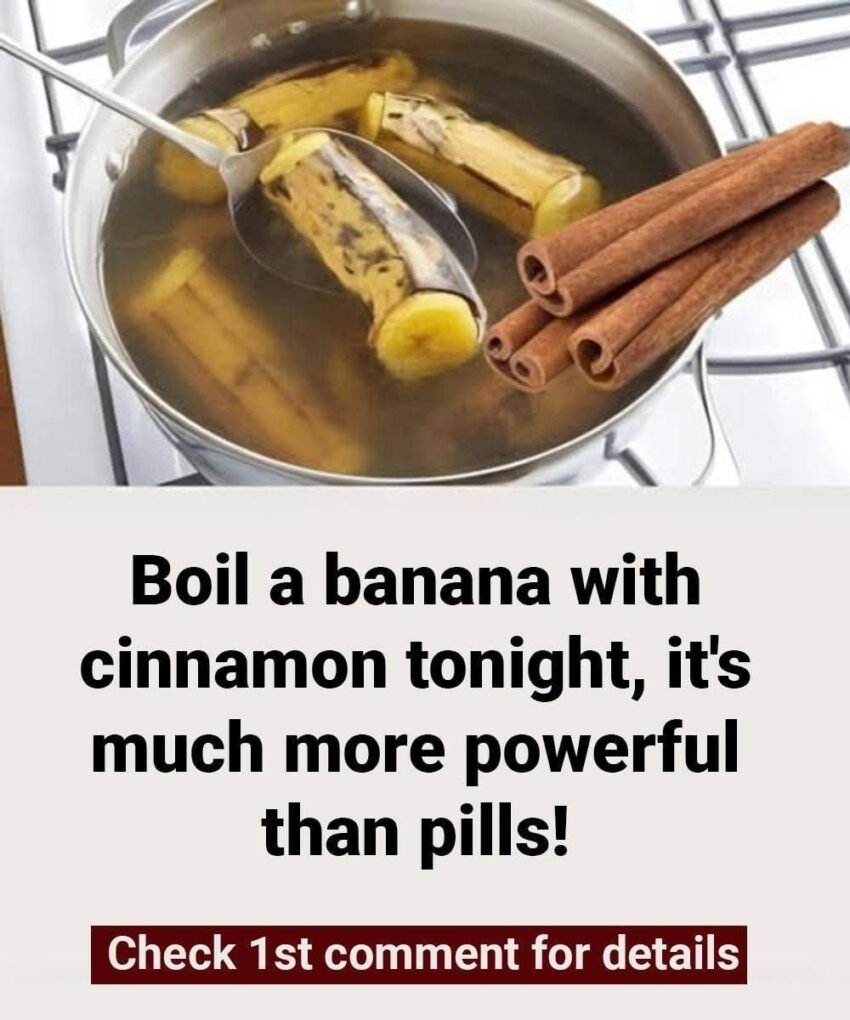
Why More Seniors Are Boiling Bananas with Cinnamon Before Bed — And What You Should Know Before Trying It
Boiled bananas with cinnamon are trending for sleep and relaxation. Learn what seniors are doing, why it works, and whether you should try it safely.
A Strange Bedtime Habit That Keeps Showing Up
It sounds almost too simple to take seriously.
Boil a banana. Add cinnamon. Drink it before bed.
Yet across wellness blogs, TikTok clips, and senior health circles, this quiet little routine keeps popping up—especially among older adults looking for natural ways to improve sleep quality without medication.
And that raises an obvious question:
Why would something as basic as banana water become a nighttime ritual?
The answer isn’t about hype. It’s about how food, minerals, and bedtime routines interact with the nervous system in surprisingly subtle ways.
Before dismissing it—or rushing to try it—it’s worth understanding what’s actually happening behind this trend, what’s supported by nutrition science, and what’s more tradition than proven fact.
Why Seniors Are Paying Attention to This Simple Drink
As people age, sleep often becomes lighter, shorter, and more fragmented. According to sleep research summarized by institutions like the National Institute on Aging, older adults commonly experience:
- Difficulty falling asleep
- Nighttime awakenings
- Reduced deep sleep stages
- Increased sensitivity to stress or discomfort
Because of this, many seniors look for gentle, non-pharmaceutical routines that support relaxation.
That’s where natural combinations like banana and cinnamon enter the picture.
It’s not a medical treatment—it’s a calming ritual built around familiar, accessible ingredients.
And rituals matter more than most people realize.
What’s Actually in a Boiled Banana with Cinnamon?
Let’s break it down simply.
Bananas contain:
- Potassium
- Magnesium (in small amounts)
- Vitamin B6
- Natural carbohydrates
Cinnamon contains:
- Antioxidants
- Aromatic compounds (like cinnamaldehyde)
- Mild blood sugar–supporting properties in some studies
When combined in hot water, the result is a warm infusion that carries trace nutrients and strong sensory cues—smell, warmth, and taste.
But the real impact is not just chemical. It’s neurological.
The Real Reason It May Help You Sleep (It’s Not Magic)
Here’s where most explanations online go too far.
Boiled banana water is not a sedative. It doesn’t “knock you out.” And it doesn’t directly produce melatonin in meaningful amounts.
So why do people swear by it?
1. Warm drinks activate relaxation pathways
Warm liquids before bed can signal the body to slow down. This is linked to parasympathetic nervous system activation—the “rest and digest” mode.
2. Routine reduces sleep resistance
Doing the same calming action nightly trains the brain to expect rest. This is behavioral conditioning, similar to sleep hygiene strategies recommended in cognitive behavioral therapy for insomnia (CBT-I).
3. Magnesium and potassium support muscle relaxation (indirectly)
While bananas aren’t extreme sources of magnesium, they do contribute to electrolyte balance, which supports normal muscle and nerve function.
4. Cinnamon adds sensory comfort
The smell of cinnamon is strongly associated with warmth, comfort, and seasonal nostalgia in many cultures, especially in the United States.
Put together, it becomes less of a “drink that causes sleep” and more of a “signal that sleep is coming.”
The Science vs the Story People Tell Themselves
This is where things get interesting.
Nutritionally speaking, boiled banana water is relatively mild. You’re not extracting powerful sedatives from fruit.
But psychologically, the effect can feel strong because:
- The ritual is consistent
- The ingredients are familiar
- The drink is warm and soothing
- The act forces a slowdown in nighttime behavior
Sleep specialists often emphasize that bedtime routines can be just as important as what you consume.
So while the drink itself is modest, the behavior around it is meaningful.
Why Bananas Specifically Became the “Sleep Fruit”
Bananas have been associated with sleep for a long time, mostly due to their nutrient profile and accessibility.
They contain:
- Potassium: helps regulate muscle contractions
- Vitamin B6: involved in neurotransmitter production
- Natural sugars: provide gentle energy stability
However, the amounts are not high enough to act like a sleep medication.
What matters more is perception.
Bananas are:
- Soft
- Easy to digest
- Non-acidic
- Widely available
- Associated with health and simplicity
That makes them psychologically “safe” before bed.
Cinnamon: The Overlooked Emotional Ingredient
Cinnamon isn’t just flavor here—it’s atmosphere.
Studies in sensory psychology show that smell is strongly tied to memory and emotional regulation. Cinnamon, in particular, is often associated with:
- Warm kitchens
- Home cooking
- Holidays and comfort food
- Stability and nostalgia
This matters at night when the brain is transitioning from alertness to rest.
Even if cinnamon has minimal physiological sleep impact, it can enhance relaxation through emotional association.
Step-by-Step: How People Prepare It
While variations exist, the most common method is simple:
- Slice one ripe banana (often with peel in some traditional versions)
- Simmer in water for 10–15 minutes
- Strain the liquid
- Add a pinch of cinnamon
- Drink warm, 30–60 minutes before bed
Some versions include honey, but that changes the sugar content significantly.
Important Reality Check: What This Drink Does NOT Do
Let’s be clear to avoid misunderstanding:
- It does NOT cure insomnia
- It does NOT replace medical sleep treatment
- It does NOT significantly boost melatonin
- It does NOT guarantee deeper sleep cycles
If someone experiences chronic sleep issues, underlying causes like stress, sleep apnea, medication side effects, or anxiety should be evaluated by a healthcare professional.
Who Might Actually Benefit From It?
This type of bedtime drink may be most useful for people who:
- Struggle with winding down at night
- Want to reduce late-night snacking
- Enjoy warm bedtime beverages
- Benefit from structured nightly routines
- Prefer non-pharmaceutical relaxation methods
For seniors specifically, the value often lies in routine stability rather than biochemical change.
Comparison: Natural Sleep Drinks vs Boiled Banana Water
| Option | Purpose | Strength of Effect | Main Benefit |
|---|---|---|---|
| Chamomile tea | Mild calming | Moderate | Herbal relaxation |
| Warm milk | Comfort + tryptophan | Mild | Routine + warmth |
| Tart cherry juice | Melatonin support | Moderate | Sleep hormone support |
| Boiled banana + cinnamon | Ritual + comfort | Mild | Relaxation signaling |
The pattern is clear: most “sleep drinks” work more through behavior and comfort than direct sedation.
Common Mistakes People Make With This Trend
1. Expecting instant sleep
It’s not a sedative, so effects are subtle.
2. Adding too much sugar or honey
This can spike energy instead of calming it.
3. Drinking it too close to bedtime
Some people prefer 30–60 minutes earlier for digestion comfort.
4. Relying on it instead of fixing sleep habits
Screen use, stress, and irregular schedules matter far more.
A Mini Scenario: Why Seniors Stick With It
A retired man in his late 60s starts drinking boiled banana water after hearing about it from a friend.
At first, he notices no dramatic change.
But over two weeks, something shifts:
- He stops eating heavy snacks at night
- He spends 10 minutes preparing the drink each evening
- That preparation time naturally slows his routine
- He falls asleep slightly easier—not because of chemistry, but consistency
The drink becomes a “transition signal” between day and rest.
That’s the real mechanism at work.
Expert Insight: Why Bedtime Rituals Matter More Than Ingredients
Sleep researchers and behavioral psychologists consistently highlight one key factor:
The brain responds strongly to predictable routines.
When repeated nightly, small actions—like making tea, dimming lights, or drinking something warm—help regulate circadian expectations.
This aligns with principles used in CBT-I, one of the most effective non-drug treatments for insomnia.
In that context, boiled banana water is less about nutrition and more about structure.
Future Trend: The Rise of “Functional Comfort Drinks”
In 2026, wellness culture in the U.S. is moving toward what some nutritionists call functional comfort:
- Drinks that are not medicinal
- But psychologically supportive
- Built around ritual, warmth, and routine
Expect to see more blends combining:
- Fruits
- Herbs
- Spices
- Adaptogens (in some cases)
Boiled banana with cinnamon fits into this broader category—even if it’s one of the simplest versions.
FAQ: Boiled Banana with Cinnamon Before Bed
1. Does boiled banana with cinnamon help you sleep?
It may help relaxation indirectly, but it is not a sleep medication.
2. Can I eat the banana instead of boiling it?
Yes. Eating a banana provides similar nutrients without the infusion step.
3. Is cinnamon safe every night?
In small culinary amounts, yes. Large doses should be avoided long-term.
4. Why do seniors drink it more often?
Many prefer gentle, natural bedtime routines over stronger interventions.
5. Does it work for insomnia?
Not as a treatment. Chronic insomnia should be evaluated medically.
6. Can I add milk or honey?
Yes, but honey adds sugar and milk changes digestion timing.
7. When should I drink it?
Typically 30–60 minutes before bed works best for routine effect.
8. Are there side effects?
Generally minimal, but excessive cinnamon or sugar may cause issues.
Action Checklist: If You Want to Try It Safely
Do:
- Use moderate cinnamon (culinary amount)
- Keep the drink warm, not boiling hot
- Pair it with a consistent bedtime routine
- Focus on relaxation, not instant results
- Observe how your body responds
Don’t:
- Expect it to cure sleep disorders
- Add large amounts of sugar
- Replace medical advice if you have chronic sleep issues
- Use it as your only sleep strategy
- Overconsume cinnamon regularly in high doses
A Simple Drink, a Bigger Idea
Boiled banana with cinnamon isn’t a miracle sleep cure.
But it doesn’t need to be.
Its real power lies in how it reshapes nighttime behavior—slowing you down, adding warmth to your routine, and signaling your brain that the day is ending.
For many seniors, that structure alone can make evenings feel more peaceful.
And for anyone struggling with restless nights, it’s a reminder that sometimes better sleep doesn’t come from stronger solutions—but from simpler habits done consistently.
Boiled banana with cinnamon won’t force sleep—but it may gently guide your body and mind toward it through comfort, routine, and calm.