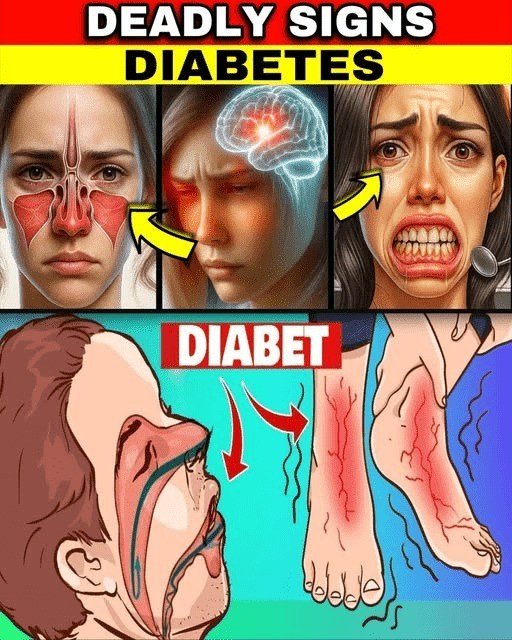
8 Warning Signs Your Body Is Dying from Diabetes
Diabetes can silently damage your body. Learn the 8 critical warning signs and steps to protect your health before complications become life-threatening.
Introduction: Diabetes Can Be Silent but Deadly
Diabetes isn’t just high blood sugar—it’s a serious condition that can affect your heart, nerves, kidneys, and eyes over time. Many people don’t notice the early signs until damage has already begun.
“Unchecked diabetes quietly harms your body. Recognizing the warning signs early can save your life.”
In this guide, you’ll learn:
-
8 warning signs of severe diabetes complications
-
How to respond if you notice these signs
-
Practical steps to protect your body
1. Frequent Urination and Excessive Thirst
-
Why it happens: High blood sugar causes your kidneys to work overtime, drawing water from your body and producing more urine.
-
Red flags: Urinating multiple times per night, feeling constantly thirsty despite drinking water.
What to do:
-
Monitor blood sugar regularly.
-
Consult your doctor for medication adjustment.
-
Reduce added sugars and refined carbs in your diet.
2. Unexplained Weight Loss
-
Why it happens: When your body can’t properly use glucose, it starts breaking down fat and muscle for energy.
-
Red flags: Losing 5–10 pounds or more without changing diet or exercise habits.
What to do:
-
Schedule a medical evaluation.
-
Track blood sugar and insulin levels.
-
Eat balanced meals with lean protein and complex carbs.
3. Persistent Fatigue
-
Why it happens: Cells can’t absorb glucose efficiently, leaving you feeling drained.
-
Red flags: Feeling tired even after a full night’s sleep, struggling to concentrate or stay alert.
What to do:
-
Manage blood sugar with diet and exercise.
-
Maintain consistent sleep routines.
-
Discuss possible medication adjustments with your doctor.
4. Slow-Healing Wounds or Frequent Infections
-
Why it happens: Diabetes impairs circulation and weakens the immune system.
-
Red flags: Cuts, scrapes, or sores that take weeks to heal; recurring infections in the skin, gums, or urinary tract.
What to do:
-
Keep wounds clean and covered.
-
Monitor blood sugar closely.
-
Seek medical care immediately for persistent or worsening sores.
5. Numbness or Tingling in Hands and Feet
-
Why it happens: High blood sugar damages nerves, a condition called diabetic neuropathy.
-
Red flags: Tingling, burning, or loss of sensation, especially in the feet.
What to do:
-
Protect your feet with proper footwear.
-
Schedule regular foot exams.
-
Consult your doctor for nerve-protective treatments.
6. Vision Problems
-
Why it happens: Diabetes can damage blood vessels in the eyes (diabetic retinopathy).
-
Red flags: Blurred vision, floaters, sudden vision loss, difficulty seeing at night.
What to do:
-
Schedule an eye exam at least once a year.
-
Control blood sugar and blood pressure.
-
Seek immediate care for sudden changes in vision.
7. Persistent Skin Issues
-
Why it happens: Poor circulation and high blood sugar increase the risk of bacterial and fungal infections.
-
Red flags: Dry, itchy skin, dark patches (acanthosis nigricans), recurrent fungal infections.
What to do:
-
Maintain skin hygiene and moisture.
-
Use antifungal treatments as needed.
-
Monitor blood sugar closely to prevent worsening conditions.
8. Chest Pain, Shortness of Breath, or Swelling
-
Why it happens: Diabetes increases the risk of heart disease and kidney damage.
-
Red flags: Chest discomfort, rapid heartbeat, swelling in legs or feet, unexplained shortness of breath.
What to do:
-
Seek emergency care if severe symptoms occur.
-
Regularly monitor blood pressure and cholesterol.
-
Follow a heart-healthy diet and exercise routine.
Steps to Protect Your Body from Diabetes Damage
-
Monitor blood sugar daily – Keep a log and notice patterns.
-
Eat a balanced diet – Focus on vegetables, whole grains, lean protein, and healthy fats.
-
Exercise regularly – Walking, swimming, or cycling improves insulin sensitivity.
-
Stay hydrated – Helps kidneys flush excess sugar.
-
Routine check-ups – Eye exams, foot exams, and lab tests to catch complications early.
-
Medication adherence – Take insulin or oral diabetes medications as prescribed.
Frequently Asked Questions
Q1: Can diabetes complications be reversed?
Early intervention can prevent further damage, and some complications improve with strict blood sugar control.
Q2: How fast can diabetes cause serious damage?
Damage occurs over months to years. Chronic uncontrolled blood sugar accelerates complications.
Q3: What blood sugar levels are dangerous?
Persistent fasting blood sugar above 130 mg/dL or post-meal above 180 mg/dL warrants medical attention.
Q4: Are type 1 and type 2 diabetes at equal risk?
Both types can cause complications if not managed, though type 2 is more common in adults and often develops gradually.
Q5: Can lifestyle changes alone prevent damage?
Lifestyle changes can dramatically reduce risk, but medication may still be necessary for many people.
Conclusion: Take Action Before It’s Too Late
Diabetes can quietly damage your body, but recognizing the 8 warning signs gives you the chance to act early and prevent life-threatening complications.
“Don’t wait for symptoms to become severe. Early detection, blood sugar management, and medical guidance save lives.”
Your Turn:
Have you or someone you know noticed these warning signs? Share your experience and tips for managing diabetes naturally in the comments below!