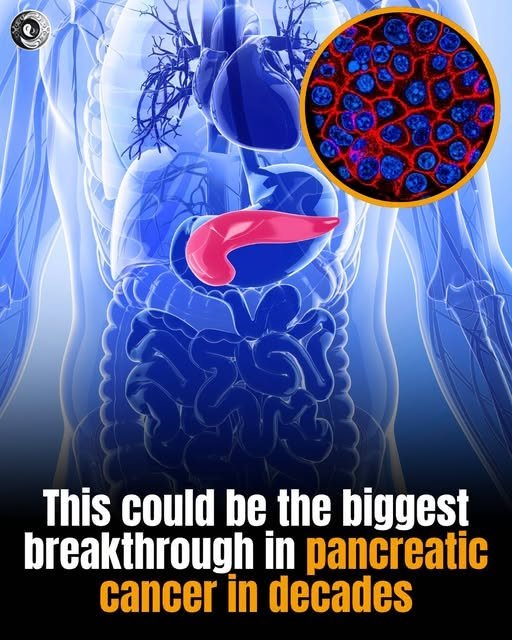
A Major Breakthrough Could Bring New Hope for Pancreatic Cancer Patients
Disclaimer: This article is for informational and educational purposes only and does not constitute medical advice, diagnosis, or treatment. Always consult a qualified oncologist or healthcare provider regarding cancer treatment options and clinical decisions.
For decades, pancreatic cancer has stood as one of the most formidable and heartbreaking diagnoses in all of modern oncology. Due to its aggressive nature and the tendency to remain silent until advanced stages, the disease has historically carried a devastatingly low long-term survival rate. For patients diagnosed with metastatic pancreatic cancer, traditional treatment options have largely relied on broad-spectrum, highly toxic intravenous chemotherapies that offer limited extensions of life while imposing heavy physical tolls.
That long-standing narrative is undergoing a monumental shift.
Recent regulatory approvals, highlighted by the U.S. Food and Drug Administration’s green light for groundbreaking targeted therapies like daraxonrasib (marketed as Rasonque), have cracked open a new era of precision medicine. By finally unlocking a genetic driver that scientists spent decades labeling “undruggable,” medical researchers have delivered a milestone advance that nearly doubles overall survival rates for advanced pancreatic cancer patients.
Overcoming the “Undruggable” Enemy: The Science of RAS Mutations
To understand why this development represents a seismic shift in oncology, you have to look at the underlying genetics of the disease.
More than 90% of the most common form of pancreatic cancer—pancreatic ductal adenocarcinoma—is driven by mutations in the RAS family of genes. These mutated proteins act like a broken switch stuck in the “on” position, continuously broadcasting unmitigated growth signals that tell cancer cells to multiply rapidly and aggressively.
For generations, scientists considered the RAS protein structurally “undruggable.” Its surface is exceptionally smooth, lacking the distinct molecular pockets or binding sites that standard pharmaceutical drugs require to latch on and turn a switch off.
How the New Therapy Works
Breakthrough targeted treatments change the game through an ingenious mechanism. Instead of attempting to bind directly to the slippery exterior of the RAS protein, drugs like daraxonrasib act as a form of “molecular glue.”
The once-daily oral pill attaches itself to an abundant cellular chaperone protein called cyclophilin A. This newly formed drug-chaperone complex seamlessly conforms to the active RAS protein, locking together into a tight tri-complex that physically blocks RAS from interacting with its downstream signaling partners. By effectively neutralizing these cancer-driving signals, the therapy halts tumor growth and induces cancer cell death without relying on the indiscriminate, carpet-bombing approach of traditional chemotherapy.
Why It Matters: Real Clinical Impact
Clinical trial data presented to the oncology community reveal a profound transformation in patient outcomes.
-
Dramatically Extended Survival: In clinical studies involving patients with advanced metastatic pancreatic cancer who had previously undergone chemotherapy, those receiving the targeted therapy achieved a median overall survival rate of approximately 13.2 months, compared to just 6.7 months with standard chemotherapy alone.
-
Reduced Risk of Death: The therapy demonstrated an ability to reduce the overall risk of death for metastatic patients by roughly 60%.
-
Quality of Life Improvements: Because it replaces grueling, scattergun intravenous treatments with a targeted oral pill, patients experience fewer systemic interruptions, better preservation of daily functioning, and reduced overall pain.
Step-by-Step Guide: Navigating New Treatment Options
If you or a loved one are navigating a pancreatic cancer diagnosis, understanding how to approach modern precision medicine is critical.
Step 1: Request Comprehensive Genomic Profiling
Ensure your oncology team performs comprehensive molecular and genetic testing on your tumor tissue. Identifying specific mutations—such as RAS variants—is the foundational first step toward matching a patient with targeted therapies or active clinical trials.
Step 2: Discuss FDA-Approved Precision Options with Your Oncologist
With recent approvals expanding the landscape of first-line and subsequent treatments, consult your specialist specifically about whether targeted oral inhibitors align with your clinical stage and health history.
Step 3: Proactively Manage Side Effects
While targeted therapies spare patients from many traditional chemotherapy toxicities, they introduce unique side effects—such as prominent skin rashes, mouth sores (mucositis), or gastrointestinal changes. Work with your care team to establish proactive prophylactic treatments for skin rashes and closely monitor side effects so you can maintain an effective dosage.
Step 4: Explore Active Clinical Trials
Research does not stop at current approvals. Numerous next-generation inhibitors and combination therapies—pairing targeted drugs with immunotherapies or other agents—are actively recruiting patients to overcome drug resistance and push survival curves even higher.
Comparison Matrix: Traditional Chemotherapy vs. Targeted RAS Therapy
| Feature | Traditional Chemotherapy | Targeted RAS Inhibitor (e.g., Daraxonrasib) |
| Mechanism | Indiscriminately attacks both rapid-growth healthy cells and cancer cells. | Precision-targeted oral mechanism that blocks cancer-driving proteins. |
| Average Survival (Metastatic) | ~6.5 to 7 months. | ~13.2 months (nearly doubled). |
| Administration | Intravenous (IV) infusions, often in a clinical setting. | Convenient, once-daily oral pill taken at home. |
| Primary Side Effects | Severe systemic fatigue, hair loss, bone marrow suppression, severe nausea. | Prominent skin rash, mouth sores, mild diarrhea, and fatigue. |
Common Pitfalls and How to Fix Them
Pitfall 1: Assuming All Pancreatic Cancers Respond Identically
The Fix: Pancreatic tumors possess diverse genetic signatures. Never assume a generalized treatment plan is your only option; insist on biomarker and genetic testing to uncover personalized vulnerabilities.
Pitfall 2: Delaying Specialized Consultations
The Fix: Pancreatic cancer moves quickly, requiring rapid decision-making. If your local care center lacks access to cutting-edge clinical trials or specialized targeted therapy protocols, seek a second opinion at a designated NCI-designated comprehensive cancer center immediately.
Expert Insights: The Shift Toward Precision Oncology
Leading oncologists emphasize that the arrival of multi-selective RAS inhibitors marks a philosophical turning point in how medicine views difficult cancers. For decades, treating pancreatic cancer felt like fighting an untamable wildfire with rudimentary tools. Today, precision medicine has provided a surgical instrument capable of targeting the exact molecular wiring of the disease. While this breakthrough is not a universal cure, it alters the baseline survival horizon and sets a powerful precedent for future iterations of cancer care.
Frequently Asked Questions
Who is eligible for new targeted pancreatic cancer treatments like daraxonrasib?
Eligibility typically depends on the specific stage of the disease (such as metastatic pancreatic cancer), previous treatment history, and the presence of specific genetic mutations confirmed via tumor tissue profiling. Your medical oncologist must evaluate these factors.
Are side effects manageable with these new oral therapies?
Yes, though side effects require careful monitoring. Skin rashes and mouth sores are the most common reported reactions, but proactive management by an experienced oncology team allows most patients to stay on an effective therapeutic dose.
Does this new drug replace chemotherapy entirely?
Not necessarily for every patient or every stage of disease. Many current treatment plans evaluate targeted therapies sequentially after prior chemotherapy or explore them in ongoing clinical trials as part of multi-drug combination regimens.
How is genetic testing performed for pancreatic cancer?
Genetic testing is typically conducted using a small sample of tissue obtained during a biopsy or surgical resection, though blood-based liquid biopsies are also becoming increasingly utilized to analyze circulating tumor DNA.
Are there clinical trials testing combination therapies for pancreatic cancer?
Yes. Researchers are actively conducting clinical trials combining targeted KRAS inhibitors with immunotherapies, novel checkpoint inhibitors, and next-generation companion drugs to prevent resistance and further extend survival.
Where can I find open clinical trials for pancreatic cancer?
Patients and families can search government-backed registries like ClinicalTrials.gov or utilize matching services provided by major advocacy organizations such as the Pancreatic Cancer Action Network (PanCAN).
Why has pancreatic cancer historically been so hard to treat?
Pancreatic tumors are surrounded by a dense, fibrous stroma (scar-like tissue) that restricts blood supply and prevents traditional chemotherapy drugs from easily penetrating the tumor microenvironment, in addition to driven mutations like RAS that evade immune surveillance.
Does insurance cover these new FDA-approved targeted therapies?
FDA approval generally paves the way for insurance coverage and Medicare reimbursement, though pre-authorization requirements and specific coverage criteria vary by provider. Patients should consult their hospital’s financial navigators for assistance.
Action Checklist
-
Request comprehensive biomarker and genetic testing for any newly diagnosed pancreatic cancer case.
-
Consult with a medical oncologist specializing in gastrointestinal cancers regarding targeted therapy eligibility.
-
Review active clinical trial directories if standard treatment paths require augmentation.
-
Establish proactive support systems for managing skin and mucosal side effects if starting a targeted oral regimen.
The approval of targeted therapies like daraxonrasib shatters long-held barriers in oncology, transforming an “undruggable” disease into a treatable target. While the journey ahead in pancreatic cancer research remains challenging, these breakthroughs offer unprecedented survival gains and a renewed sense of hope for patients and their families.