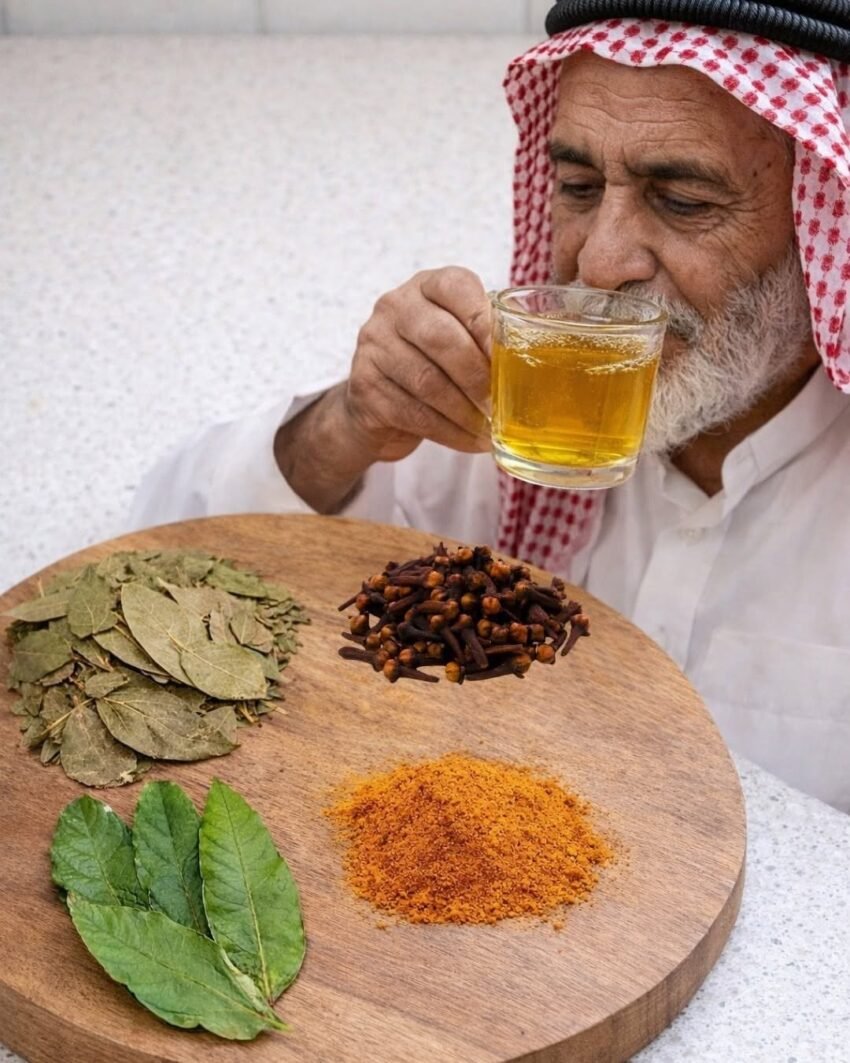
At 70, I Was Told This Homemade Herbal Drink Could “Cure” Diabetes, Poor Circulation, and High Blood Pressure—Here’s What the Evidence Really Says
Can one homemade herbal drink really improve diabetes, poor circulation, and high blood pressure? Learn what may help, what doesn’t, and what to avoid.
At 70, hearing that one simple homemade drink can “cure” diabetes, improve circulation in your feet, and bring high blood pressure back to normal sounds almost too good to ignore.
And that’s exactly why claims like this spread so quickly.
The story usually sounds convincing: someone drinks a homemade herbal mixture every day, their blood sugar improves, their feet feel better, their blood pressure drops, and suddenly they’re supposedly free from three chronic health problems.
But there is a crucial question hiding underneath the story:
Did the drink actually cause those improvements?
The honest answer is more complicated.
There is no good evidence that one homemade herbal drink can cure diabetes, reverse poor circulation, and permanently eliminate high blood pressure. The American Heart Association specifically warns that herbal remedies and drinks should not be used as replacements for prescribed blood-pressure medication or proven lifestyle measures.
That doesn’t mean every herbal drink is useless.
Some ingredients can contribute useful nutrients, antioxidants, hydration, or plant compounds to an otherwise healthy diet. Some may have modest effects on particular health measurements. But “may support health” is very different from “cures three chronic conditions.”
So let’s look at what a homemade herbal drink realistically can—and cannot—do.
First, what does “cured” actually mean?
This is the most important distinction.
Suppose a 70-year-old person previously had type 2 diabetes and now has normal blood-sugar readings.
That doesn’t automatically prove the diabetes has been cured.
The American Diabetes Association and an international expert group define type 2 diabetes remission as an HbA1c below 6.5% that persists for at least three months without glucose-lowering medication. Even then, continued follow-up is recommended because remission can end and long-term outcomes require monitoring.
Blood pressure works differently.
Someone can have normal blood pressure today because of medication, weight loss, improved diet, exercise, reduced sodium intake, or a combination of factors.
That is control, not necessarily a permanent cure.
And “poor circulation in the feet” is even broader.
Reduced circulation can have several causes, including peripheral artery disease, diabetes-related vascular damage, smoking, blood-clot problems, heart disease, or other conditions.
So before giving credit to a drink, you need to know exactly what condition was present in the first place.
Can one drink improve all three conditions?
There is no strong clinical evidence that a single homemade herbal drink can simultaneously cure:
- Type 2 diabetes
- Poor circulation in the feet
- High blood pressure
These conditions can be connected, but they are not identical.
Diabetes can damage blood vessels and nerves.
High blood pressure can damage arteries over time.
Peripheral artery disease can restrict blood flow to the legs and feet.
Improving one risk factor can sometimes improve the overall cardiovascular picture, but that doesn’t mean a drink directly reverses every underlying problem.
The American Heart Association emphasizes lifestyle changes, appropriate medication, and ongoing medical care for blood-pressure control. It specifically states that there are no special drinks, vitamins, or pills that can replace prescribed treatment and lifestyle changes.
That’s a much less exciting claim than a miracle beverage.
It’s also much safer.
So why do people sometimes feel dramatically better after drinking a homemade remedy?
There are several possible explanations.
The drink may have replaced something less healthy
If someone replaces sugary soda with unsweetened herbal tea, their overall calorie and added-sugar intake may fall.
That can be beneficial.
They may have changed several habits at once
People rarely start drinking a homemade remedy in complete isolation.
They may also begin:
- Walking every day
- Eating more vegetables
- Losing weight
- Eating less sodium
- Drinking more water
- Smoking less or quitting
- Sleeping better
- Taking medication more consistently
If their blood pressure improves, which change deserves the credit?
Probably not just the drink.
Their condition may have naturally fluctuated
Blood pressure changes throughout the day.
Blood glucose changes with meals, activity, stress, illness, and medication.
A single measurement before and after a drink can create a misleading impression.
The original diagnosis may have been different
“Poor circulation” is a phrase people use for many different sensations.
Cold feet, numbness, tingling, swelling, leg pain, and skin changes don’t all mean the same thing.
That’s why a medical diagnosis matters.
What could a homemade herbal drink realistically contribute?
This is where the conversation becomes more useful.
A homemade drink can be a healthy addition when its ingredients are appropriate and it replaces something less nutritious.
For example, an unsweetened drink made from herbs, spices, or other plant ingredients may provide:
- Fluid
- Flavor without added sugar
- Small amounts of plant compounds
- A way to replace sugary beverages
- A pleasant daily ritual
Those are legitimate benefits.
But they should be described as supportive, not curative.
A drink doesn’t need to be a miracle to be worthwhile.
The biggest question is what’s actually in the drink
“Herbal drink” is not a single category.
It could mean peppermint tea.
Ginger tea.
Cinnamon infusion.
Hibiscus tea.
Turmeric tea.
Garlic-infused water.
A mixture of several herbs.
Or an extremely concentrated homemade preparation.
These are not interchangeable.
The effects and risks depend on the ingredients, quantities, preparation method, medications, and the person’s medical conditions.
That’s especially important at age 70 because many older adults take several medications.
An herb that seems harmless in a kitchen cupboard can potentially affect blood pressure, blood sugar, bleeding risk, or how medications are metabolized.
The American Heart Association specifically advises discussing supplements and natural remedies with a healthcare professional because they may not work as advertised and can interfere with medications.
Could an herbal drink support blood pressure?
Some plant foods and beverages may fit into a heart-healthy diet.
But that is very different from saying a particular homemade drink treats hypertension.
The strongest nutritional evidence for blood-pressure improvement generally points toward an overall eating pattern rather than one ingredient.
The American Heart Association recommends a diet rich in fruits, vegetables, whole grains, low-fat dairy, fish, poultry, nuts, and legumes while limiting sodium, saturated fat, processed meats, and added sugars.
That pattern matters because blood pressure is influenced by many factors.
If someone replaces a sugary beverage with an unsweetened herbal tea, that’s potentially useful.
If they also reduce sodium, become more physically active, lose excess weight when appropriate, and follow their treatment plan, the effect can be much more substantial.
The drink may be part of the change.
It shouldn’t automatically be called the cause.
What about diabetes?
This is where caution becomes especially important.
If you have diabetes, your blood sugar is not simply “too much sugar that needs to be flushed out.”
Diabetes involves problems with insulin production, insulin action, or both, depending on the type.
Type 2 diabetes can sometimes enter remission, particularly after substantial and sustained metabolic changes.
But there is no credible basis for telling someone that a homemade herbal drink can replace diabetes treatment.
If you’re taking insulin or other glucose-lowering medication, suddenly changing your diet or adding something that affects glucose could potentially alter your blood-sugar levels.
That means “natural” doesn’t automatically mean “risk-free.”
If you’re monitoring glucose, the useful approach is to track your readings and discuss significant changes with your healthcare team.
And what about poor circulation in the feet?
This deserves particular attention.
If someone has genuinely reduced blood flow to the feet because of peripheral artery disease, simply drinking an herbal mixture isn’t an established treatment for reopening narrowed arteries.
Peripheral artery disease can cause symptoms such as leg pain during walking, coldness, numbness, skin changes, slow-healing wounds, or changes in the color of the foot.
Some people with diabetes also develop nerve damage, which can cause numbness or burning sensations that may be mistaken for circulation problems.
That’s why “my feet feel better” doesn’t necessarily prove that circulation has improved.
A person could experience less discomfort while the underlying vascular disease remains.
And that’s precisely why persistent foot symptoms deserve proper evaluation.
The dangerous part of the miracle-drink story
The greatest risk isn’t necessarily the drink itself.
It’s what someone might stop doing because they believe the drink has cured them.
Imagine a 70-year-old person takes blood-pressure medication every morning.
They discover an online recipe for an herbal drink.
After several weeks, they get a few normal blood-pressure readings.
They conclude:
“I don’t need my medication anymore.”
That’s where a harmless wellness habit can become dangerous.
The American Heart Association explicitly advises people not to stop prescribed medications without talking with their healthcare professional.
A normal reading doesn’t prove that the underlying condition has disappeared.
It may simply mean the treatment is working.
A better way to think about natural remedies
Instead of asking:
“What drink cures diabetes?”
ask:
“What daily habits support better metabolic and cardiovascular health?”
That question leads to much more useful answers.
For many people, the evidence-supported basics include:
1. Drink fewer sugary beverages
Water and unsweetened beverages can be better choices than soda, sweet tea, energy drinks, or heavily sweetened coffee.
2. Eat more minimally processed foods
Vegetables, fruit, beans, whole grains, nuts, seeds, and other nutrient-dense foods can form the foundation of a healthy eating pattern.
3. Reduce excess sodium
Sodium reduction can be particularly relevant to blood-pressure management. The American Heart Association recommends limiting sodium and notes that reducing it can help lower blood pressure.
4. Stay physically active
Walking and other appropriate forms of exercise can support cardiovascular and metabolic health.
5. Don’t smoke
Smoking damages blood vessels and is an important cardiovascular risk factor.
6. Take prescribed medications correctly
Medication isn’t a failure of natural health.
For many chronic conditions, it is an important part of preventing complications.
Could the drink still have a place in a healthy routine?
Absolutely.
Suppose your homemade drink contains a safe combination of culinary herbs and spices and contains no added sugar.
If you enjoy it, tolerate it well, and your healthcare professional has no concerns about its ingredients or interactions, it can become part of your routine.
The benefit may come partly from what it replaces.
For example:
Sweetened iced tea → unsweetened herbal tea
That’s a sensible swap.
Sugary soda → unsweetened ginger or mint tea
Also reasonable.
Water → an extremely concentrated herbal mixture because “water isn’t strong enough”
Not necessarily better.
The simplest version is often the safest.
What makes a natural drink more health-friendly?
Look for a few basic characteristics.
No added sugar
If the purpose is to support metabolic health, adding several spoonfuls of honey or sugar can work against that goal.
Honey is still a source of sugar.
Moderate ingredients
More herbs don’t automatically mean more benefit.
Concentration matters.
Known ingredients
Avoid mixtures containing unidentified plants or products without reliable labeling.
No extravagant medical promises
A recipe claiming to “clean arteries,” “reverse diabetes,” “remove sugar,” and “cure hypertension” deserves skepticism.
Compatibility with your medications
This is especially important for older adults.
What if someone says, “It worked for me”?
Personal experiences are worth listening to.
They are not the same as clinical evidence.
If someone says:
“I drank this every morning and my blood pressure improved.”
That’s a real experience.
But we don’t know whether the drink caused it.
Maybe they also lost 20 pounds.
Maybe they stopped eating processed foods.
Maybe they started walking.
Maybe their medication was adjusted.
Maybe their blood pressure was measured under different conditions.
Maybe several factors contributed.
This is why medical research compares groups and controls for other variables.
One person’s story can inspire a healthy habit.
It cannot establish a cure.
A simple way to test whether a health claim makes sense
When you encounter a viral natural-remedy claim, ask five questions.
Question 1: What exactly is the diagnosis?
“Poor circulation” isn’t specific enough.
Question 2: What exactly is in the drink?
“Herbal” isn’t a medical ingredient.
Question 3: What evidence supports it?
Is there a controlled human study—or just testimonials?
Question 4: What else changed?
Diet? Exercise? Medication? Weight?
Question 5: Could the remedy interact with medication?
If the answer isn’t clear, ask a pharmacist or healthcare professional.
This five-question filter can eliminate a surprising number of exaggerated health claims.
A realistic scenario
Imagine a 70-year-old woman named Linda.
She has type 2 diabetes, hypertension, and occasional numbness in her feet.
She starts drinking an unsweetened homemade herbal tea every morning.
At the same time, she begins walking 20 minutes a day, cuts back on salty processed foods, loses some excess weight, and becomes more consistent with her prescribed medications.
Three months later, her blood pressure is lower and her blood glucose is better controlled.
Did the tea help?
Possibly as part of her routine.
But there is no honest way to say the tea alone caused the improvement.
The more likely explanation is that several healthier behaviors worked together.
And that’s actually encouraging.
You don’t need a miracle drink.
You need habits that can realistically be sustained.
What should someone over 70 monitor?
If you’re using any natural drink while managing chronic conditions, keep track of measurable outcomes.
For blood pressure:
- Check readings consistently
- Use proper measurement technique
- Record the numbers
- Discuss persistent changes with your clinician
For diabetes:
- Follow your recommended glucose-monitoring plan
- Track unusual highs or lows
- Keep up with A1C testing as advised
- Never change medication doses on your own
For circulation or foot symptoms:
- Pay attention to new wounds
- Check for color changes
- Notice unusual coldness or numbness
- Report persistent pain or changes
- Take foot care seriously, especially if you have diabetes
This turns a vague “I feel better” claim into something measurable.
When a foot problem needs prompt attention
A natural drink is not an appropriate substitute for medical evaluation when a foot suddenly becomes very cold, pale, blue, severely painful, numb, or develops a wound that isn’t healing.
Likewise, unexplained swelling, significant color changes, or rapidly worsening symptoms should not be treated at home with herbal remedies.
Circulation problems can become serious.
The safest approach is to identify the underlying cause.
The 2026 lesson: “natural” is not the same as “proven”
Health content has changed dramatically in recent years.
A short video can turn a traditional recipe into a supposed medical breakthrough overnight.
The problem isn’t that traditional foods and herbs have no value.
Many do.
The problem is the leap from:
“This ingredient contains compounds that may have biological effects.”
to:
“This drink cures chronic disease.”
Those statements are worlds apart.
Good health information keeps that distinction intact.
A practical daily routine instead of a miracle recipe
If your goal is better blood sugar, blood pressure, and cardiovascular health, consider a routine like this:
Morning
Choose water or an unsweetened beverage.
Eat a balanced breakfast containing protein and fiber.
Take prescribed medication according to your treatment plan.
During the day
Move regularly.
Break up long periods of sitting.
Choose vegetables, fruit, legumes, whole grains, nuts, and other minimally processed foods.
Keep sodium and added sugars under control.
Evening
Eat a balanced meal rather than relying on a restrictive “detox.”
Get adequate sleep.
Monitor blood pressure or glucose according to your clinician’s recommendations.
If you enjoy an herbal drink
Use it as a beverage—not as a replacement for treatment.
That’s the distinction that matters.
Frequently Asked Questions
Can one herbal drink cure diabetes, high blood pressure, and poor circulation?
There is no strong evidence that a single homemade herbal drink can cure all three conditions. Some beverages may fit into a healthy diet, but chronic conditions require appropriate diagnosis, monitoring, lifestyle measures, and sometimes medication.
Can natural drinks lower blood sugar?
Some foods and beverages may have modest effects on blood glucose, but the evidence varies widely by ingredient and preparation. A drink should not replace prescribed diabetes treatment.
Can herbal drinks lower blood pressure?
Some plant compounds have been studied for possible blood-pressure effects, but evidence is not strong enough to treat a homemade herbal drink as a replacement for established hypertension treatment. The American Heart Association warns that natural remedies can interact with medications and may not work as advertised.
Can a drink improve circulation in the feet?
There is no reliable evidence that a homemade herbal drink can reopen narrowed arteries or cure peripheral artery disease. Foot circulation problems should be evaluated to determine their actual cause.
Why might someone feel better after drinking an herbal remedy?
The drink may replace a sugary beverage, improve hydration, accompany healthier eating, or be used alongside exercise and other lifestyle changes. Those factors can contribute to feeling better without proving that the drink itself cured a disease.
Should I stop my medication if my numbers improve?
No. Never stop or change prescribed medication without discussing it with your healthcare professional. Improved numbers may mean your treatment is working.
Is an unsweetened herbal drink healthier than soda?
Often, yes, particularly when it replaces a sugar-sweetened beverage. The exact benefits depend on the ingredients and the rest of the diet.
Can older adults safely use herbal remedies?
Not always. Herbs can interact with medications and may affect blood pressure, blood sugar, bleeding, or other body systems. Older adults taking multiple medications should discuss new herbal products with a healthcare professional or pharmacist.
What is the best natural approach to high blood pressure?
A heart-healthy eating pattern, regular physical activity, appropriate weight management, reduced sodium intake, not smoking, limited alcohol, stress management, and prescribed medication when needed are much better-supported approaches than relying on a single drink.
What should I do if my blood pressure or blood sugar suddenly changes?
Follow your existing medical plan and contact your healthcare professional if readings are unexpectedly high or low or remain outside your target range. Severe symptoms or very abnormal readings may require urgent medical attention.
Your Natural-Drink Safety Checklist
Before trying a homemade herbal drink:
- ☐ Know every ingredient
- ☐ Avoid adding large amounts of sugar
- ☐ Check whether the ingredients interact with your medications
- ☐ Ask your pharmacist or healthcare professional if you’re unsure
- ☐ Use reasonable amounts
- ☐ Don’t assume “natural” means risk-free
If you have diabetes:
- ☐ Continue monitoring glucose as advised
- ☐ Don’t replace prescribed medication
- ☐ Track unusual highs or lows
- ☐ Discuss major dietary changes with your healthcare team
If you have high blood pressure:
- ☐ Monitor your readings
- ☐ Follow your treatment plan
- ☐ Reduce excess sodium
- ☐ Stay physically active as appropriate
- ☐ Don’t stop medication because a drink seems to help
If you have foot circulation problems:
- ☐ Get the underlying cause evaluated
- ☐ Check your feet regularly
- ☐ Watch for wounds or color changes
- ☐ Report worsening numbness or pain
- ☐ Seek prompt care for severe or sudden changes
The idea that a 70-year-old can drink one homemade herbal mixture and become “cured” of diabetes, poor circulation, and high blood pressure makes a compelling story.
But the evidence doesn’t support that conclusion.
A homemade herbal drink may support a healthier routine, particularly when it is unsweetened and replaces sugary beverages. Some plant ingredients may also have potentially useful nutritional or biological properties.
But there is no established miracle drink that replaces diabetes treatment, blood-pressure medication, vascular evaluation, or proven lifestyle changes.
The encouraging part is that you don’t need one.
A combination of nutritious food, regular movement, appropriate medical treatment, healthy weight management when appropriate, good sleep, smoking cessation, and careful monitoring can make a meaningful difference. The American Heart Association continues to emphasize lifestyle measures alongside appropriate treatment for controlling blood pressure.
And if someone genuinely achieves diabetes remission, that is a meaningful medical outcome—but it should be confirmed using appropriate blood tests and monitored over time, rather than attributed automatically to a single beverage.
Enjoy a homemade herbal drink if it is safe and you like it—but treat it as a possible part of a healthy lifestyle, not a cure. The real goal is measurable, sustainable improvement in your health.
Medical disclaimer: This article is for general educational purposes and is not medical advice. Diabetes, high blood pressure, and circulation problems can cause serious complications and require individualized care. Do not stop, reduce, or replace prescribed medication because of a natural remedy. If you have severe or rapidly worsening symptoms, seek medical care promptly.