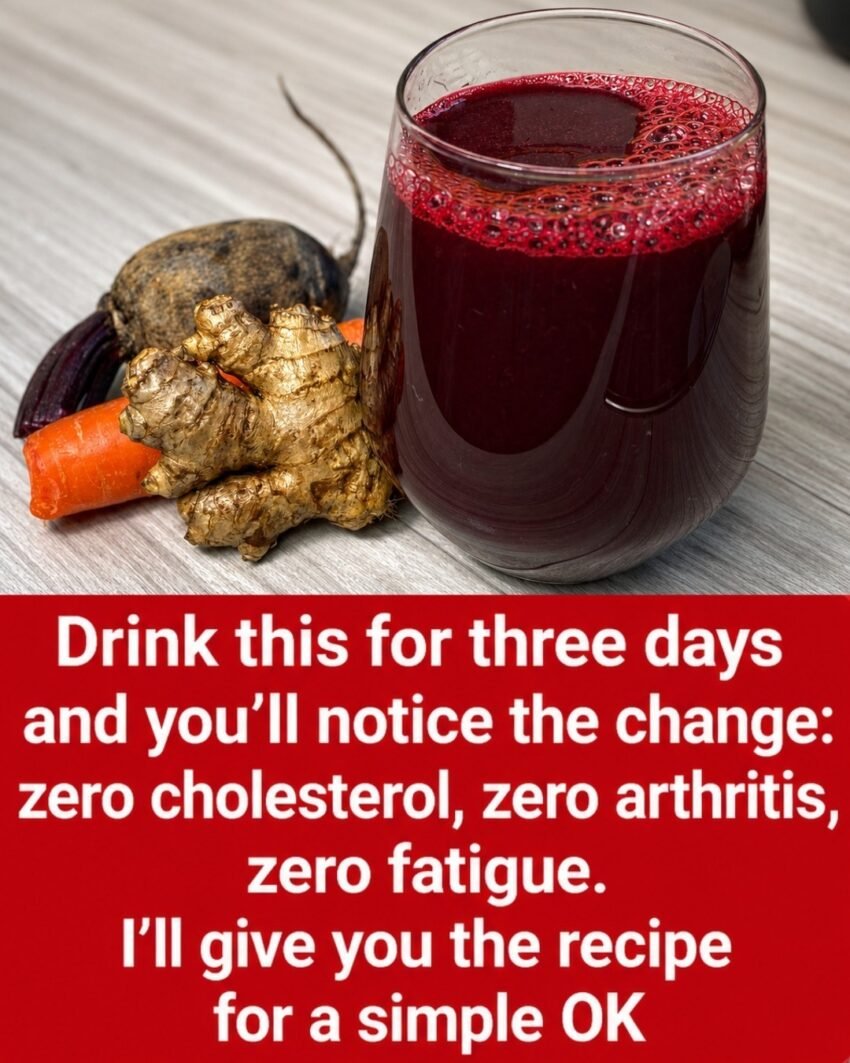
Drink This for 30 Days and Feel the Difference: A Natural Beetroot Recipe for Energy, Heart Health, and Everyday Vitality
Discover a simple beetroot drink recipe many people use for energy, circulation, and joint comfort. Learn benefits, science, and how to make it safely.
You’ve probably seen bold claims online: “Drink this for 30 days and transform your energy.”
Most of the time, those headlines overpromise and underdeliver.
But every now and then, there’s a simple habit hiding inside the hype that actually deserves attention.
Beetroot is one of them.
Not because it’s a miracle cure—but because it contains naturally occurring compounds that can support circulation, stamina, and overall wellness when included consistently in a balanced diet.
If you’ve been feeling low on energy, sluggish during workouts, or simply looking for a natural addition to your routine, this beetroot drink is worth understanding.
Let’s break it down properly—without exaggeration, without myths, and without shortcuts.
Why Beetroot Has Become So Popular
Beetroot (also called beet) has moved from a traditional root vegetable into a modern wellness staple.
The reason is a compound group called dietary nitrates.
When consumed, nitrates can convert in the body into nitric oxide, which plays a role in:
- Blood vessel relaxation
- Circulation support
- Oxygen delivery efficiency
- Exercise performance
This is why beetroot is often discussed in sports nutrition and heart-health research.
It’s not magic—it’s physiology.
What Happens When You Drink Beetroot Juice Regularly?
When included consistently (like a 30-day habit), beetroot juice may support:
1. Energy and Stamina Support
Some studies suggest dietary nitrates may improve how efficiently the body uses oxygen during physical activity.
That doesn’t mean instant energy—but it may contribute to better endurance over time.
2. Circulation Support
Nitric oxide helps blood vessels relax, which supports healthy blood flow.
This is why beetroot is often associated with cardiovascular wellness.
3. Exercise Performance
Athletes sometimes use beetroot juice before workouts or endurance events.
It may help reduce the oxygen cost of exercise, meaning the body can work slightly more efficiently.
4. Nutrient Density
Beetroot also contains:
- Folate
- Potassium
- Manganese
- Vitamin C
- Antioxidants (betalains)
These support general cellular health and recovery.
Important Reality Check (Read This Carefully)
Beetroot juice is not a treatment for:
- Heart disease
- Arthritis
- Chronic fatigue disorders
- High blood pressure (as a replacement for medication)
- Any diagnosed medical condition
It can support wellness, but it does not replace medical care.
Think of it as a supporting habit, not a solution.
The Simple Beetroot Drink Recipe
This version is beginner-friendly, affordable, and easy to prepare.
Ingredients
- 1 medium beetroot (peeled and chopped)
- 1 apple (for taste balance)
- ½ lemon (fresh juice)
- 1 small piece of ginger
- 1 to 1½ cups water
Optional additions
- Carrot (for sweetness and beta-carotene)
- Honey (for taste, not required)
How to Make It
- Wash and peel the beetroot
- Chop into small pieces
- Add beetroot, apple, ginger, and water into a blender
- Blend until smooth
- Strain if you prefer a lighter juice texture
- Add lemon juice before drinking
Serve fresh whenever possible.
When and How to Drink It
Most people prefer:
- Morning on an empty stomach, or
- 1–2 hours before exercise
Suggested routine
- Start with ½ glass for the first few days
- Increase gradually if well tolerated
- Consistency matters more than quantity
What Changes Might People Notice in 30 Days?
Everyone responds differently, but some commonly reported experiences include:
- Slightly improved stamina during workouts
- More stable daily energy
- Feeling less “sluggish” in the morning
- Better hydration habits overall
- Improved dietary awareness
But again—these are subtle lifestyle effects, not dramatic transformations.
Who Should Be Careful With Beetroot Juice?
Beetroot is safe for most people, but caution is important in some cases:
People with kidney issues
Beetroot is higher in oxalates, which may not be suitable for everyone.
People with low blood pressure
It may contribute to further lowering in some individuals.
People prone to kidney stones
Oxalate intake may need monitoring.
Digestive sensitivity
Large amounts may cause bloating in some people.
If unsure, medical advice is always best.
Common Mistakes People Make
Expecting instant results
Real benefits come from consistency, not a single drink.
Drinking excessive amounts
More is not better. Moderation matters.
Using it as a medical substitute
Beetroot supports health—it does not replace treatment.
Ignoring overall diet
One juice cannot override poor nutrition habits.
Beetroot Juice vs Whole Beetroot
Both are beneficial, but slightly different:
| Form | Benefit |
|---|---|
| Juice | Faster absorption, nitrate-rich |
| Whole beetroot | More fiber, slower digestion |
| Cooked beetroot | Easier digestion for some people |
A balanced approach is often best.
A Simple Real-Life Example
Imagine someone who rarely drinks water in the morning, skips breakfast, and feels tired by mid-day.
They begin drinking a beetroot-apple-ginger juice three times a week.
Over time, they don’t suddenly “transform”—but they notice:
- Better hydration habits
- Slight improvement in workout energy
- Fewer mid-day crashes
The real change comes not from beetroot alone—but from the habit it creates.
Pros and Cons of Beetroot Juice
Pros
- Rich in antioxidants and nutrients
- Supports circulation and stamina
- Easy to prepare at home
- Naturally sweet and drinkable
- Fits into most diets
Cons
- Not a medical treatment
- May cause digestive discomfort in some
- Can stain teeth temporarily
- Requires consistency for noticeable effects
- Not suitable for everyone in large amounts
Frequently Asked Questions
Can beetroot juice really improve energy?
It may support stamina and circulation, but results vary from person to person.
How long does it take to see results?
Some people notice changes in a few days, but most benefits come with consistent use over weeks.
Is it safe to drink every day?
For most healthy individuals, moderate daily intake is generally considered safe.
Can it lower blood pressure?
Beetroot may support healthy blood pressure levels, but it should not replace prescribed medication.
What is the best time to drink it?
Morning or pre-workout is commonly preferred.
Can I mix beetroot with other fruits?
Yes—apple, carrot, and ginger are popular combinations.
Does beetroot help joint pain?
It does not treat joint conditions, but its nutrients may support overall wellness.
Can diabetics drink beetroot juice?
Some can, but it should be discussed with a healthcare provider due to natural sugar content.
Why does beetroot change urine color?
It can cause a harmless condition called beeturia in some people.
Can I store beetroot juice?
Fresh is best, but it can be refrigerated for up to 24 hours.
30-Day Beetroot Habit Checklist
What to Do
✔ Start with small portions
✔ Drink consistently (2–5 times per week)
✔ Combine with a balanced diet
✔ Stay hydrated throughout the day
✔ Observe how your body responds
✔ Prepare fresh whenever possible
What to Avoid
✘ Expecting instant or dramatic results
✘ Overconsuming juice daily in large amounts
✘ Using it as a replacement for medical treatment
✘ Ignoring underlying health symptoms
✘ Relying on juice alone for “energy”
Conclusion
Beetroot juice is not a miracle drink—but it is a nutrient-rich, evidence-supported addition to a healthy lifestyle.
Its natural nitrates, antioxidants, and vitamins may support circulation, stamina, and general wellness when consumed consistently as part of balanced habits.
The real value of a 30-day beetroot routine isn’t transformation overnight—it’s building awareness around nutrition and giving your body steady, supportive inputs over time.
A simple beetroot drink can support energy, circulation, and wellness habits—but its true benefit comes from consistency, not hype or quick-fix promises.