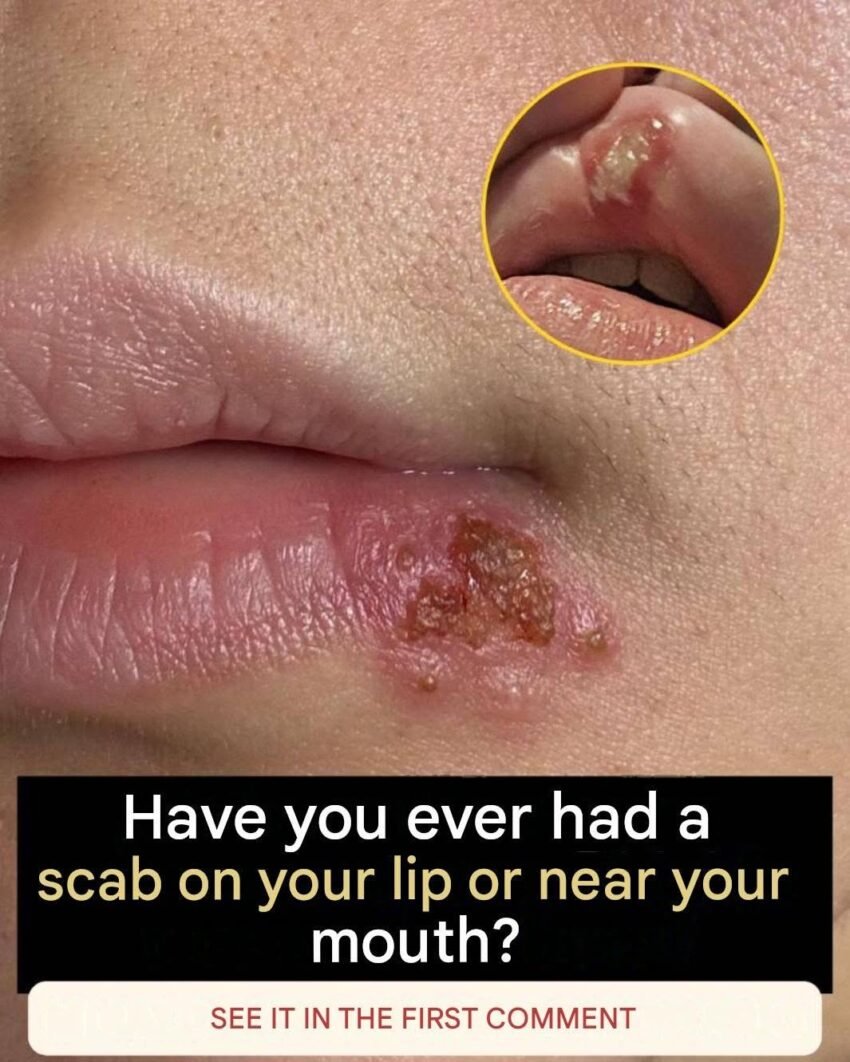
The Unwelcome Guest: Why You Keep Getting Scabs on Your Lips and How to Heal Them Fast
Few minor physical annoyances feel as disruptive or frustrating as a scab right on your lip or near the border of your mouth. Every time you speak, smile, take a bite of food, or brush your teeth, the skin stretches, the fragile seal breaks, and the healing process resets all over again.
Beyond the daily irritation, a visible crust or sore in such a prominent spot can trigger self-consciousness during work meetings, social gatherings, or casual outings. It makes you hyper-aware of your face, leading to the compulsive temptation to pick or peel at the drying skin—which only prolongs the ordeal.
If you have ever dealt with a stubborn scab in this sensitive zone, you are far from alone. Understanding why these sores form, what your body is trying to tell you, and how to treat them properly can save you weeks of recurring frustration.
The Delicate Biology of Lip Skin
To understand why lip scabs are so stubborn, you have to look at the unique anatomy of the lips. Unlike the rest of the skin on your face, your lips lack sweat glands and sebaceous (oil) glands. They possess only a very thin layer of stratum corneum—the outermost protective skin barrier.
Because lips cannot produce their own moisture, they rely entirely on external hydration and a rich network of surface blood vessels. When trauma, irritation, or an underlying virus damages this delicate barrier, the body rushes platelets and white blood cells to the site to form a protective clot, resulting in a scab. Because the mouth is in constant motion, that scab rarely gets the stable environment it needs to heal undisturbed.
1. The Usual Suspect: Cold Sores (Herpes Simplex Virus)
By far the most common cause of scabs near the mouth is the herpes simplex virus (HSV-1). While often stigmatized, HSV-1 is remarkably common, with a vast majority of the global population carrying the dormant virus.
-
The Tingle Phase: It usually begins with an unmistakable localized itching, tingling, or burning sensation right on the lip line.
-
The Blister Stage: Within 24 to 48 hours, a cluster of tiny, fluid-filled blisters erupts.
-
The Crusting and Scab Stage: The blisters eventually rupture, weeping fluid before drying out into a yellowish-brown crust or scab that eventually flakes off over the course of a week or two.
2. Environmental Trauma: Severe Chapping and Micro-Fissures
Not all lip scabs are viral. Sometimes, the environment is the primary culprit.
-
Windburn and Dehydration: Exposure to cold winter winds, dry indoor heating, or scorching summer sun can dehydrate your lips to the point where the skin splits open, creating vertical cracks (fissures) that bleed and scab over.
-
The Lip-Licking Cycle: Ironically, licking your lips makes them drier. As saliva evaporates, it strips away the skin’s natural moisture oils, leaving the barrier raw, cracked, and prone to scabbing.
3. Contact Dermatitis and Product Irritation
Have you recently switched toothpastes, lip balms, or cosmetic products? Allergic reactions or sensitivities to ingredients like sodium lauryl sulfate (SLS) in toothpaste, artificial fragrances in lip gloss, or certain flavoring agents can cause localized inflammation, blistering, and subsequent scaling or scabbing around the mouth.
4. Physical Injury or Trauma
Accidental bites while eating, aggressive dental procedures, or minor sports injuries can tear the delicate mucosal tissue of the lip. Because the mouth is a high-moisture environment teeming with natural bacteria, even a tiny cut can form a protective scab as it closes.
A Step-by-Step Healing Protocol
When a scab forms on your lip, patience and gentle care are your best allies. Rushing the process or picking at the skin delays recovery and increases the risk of scarring or secondary bacterial infection.
-
Step 1: Keep It Clean and Moisturized Wash the area gently with mild, fragrance-free cleanser and pat dry. Apply a clean, occlusive ointment (like pure petroleum jelly, aquaphor, or medical-grade honey) to keep the scab soft. A softened scab is less likely to crack when you speak or eat.
-
Step 2: Hands Off (No Picking!) Resist the urge to pick, scratch, or scrub at the crust. Tearing the scab away restarts the bleeding and opens the door for bacteria to enter the vulnerable underlying tissue.
-
Step 3: Target the Root Cause If it’s a cold sore, apply over-the-counter antiviral creams (like docosanol) at the very first sign of a tingle. If it’s chapping, increase your daily water intake and use a barrier balm containing beeswax or ceramides.
-
Step 4: Protect From UV Exposure Sunlight is a major trigger for cold sore flare-ups and can further dry out healing skin. Always wear a lip balm with an SPF rating of 30 or higher when heading outdoors.
Comparative Analysis: Identifying Your Lip Sore
Common Mistakes to Avoid (And How to Fix Them)
-
Mistake: Picking or Scrubbing the Scab. Trying to exfoliate a healing lip scab to make makeup sit smoothly or to speed up appearance.
-
The Fix: Let the scab fall off naturally on its own timeline. If it feels tight, apply a thick layer of ointment to soften the edges without pulling at the tissue.
-
-
Mistake: Using Minty or Fragranced Lip Balms on Open Sores. Slathering heavily scented commercial glosses over a raw, cracked lip.
-
The Fix: Stick to hypoallergenic, fragrance-free medical ointments or plain petroleum jelly until the skin barrier is fully restored.
-
-
Mistake: Sharing Utensils or Lip Products. Passing lip balms or cups around while dealing with an active cold sore.
-
The Fix: Practice strict hygiene. Use dedicated towels, wash your hands frequently after applying treatments, and avoid direct skin contact until the sore has completely healed.
-
Expert Insights: The Psychological Toll of Visible Sores
Dermatologists and psychologists note that skin conditions located on the face—particularly around the mouth, where we express emotion and communicate—carry a heavy psychological burden. Patients frequently report feeling anxious that others are staring or making false assumptions about hygiene. Recognizing that cold sores and chapping are normal physiological responses to environmental or viral triggers helps reduce shame and encourages proactive, compassionate self-care.
Mini Case Scenario: David’s Mid-Winter Breakout
David, an avid skier, spent a weekend on the slopes without applying lip protection. By Monday morning, a painful cluster of blisters had formed on his lower lip, which quickly dried into an unsightly, cracking scab. Frustrated by the tightness every time he spoke, David made the mistake of picking at the crust, causing it to bleed and linger for over two weeks. Learning his lesson, the next time he felt a similar tingle, he immediately applied an over-the-counter antiviral cream at the first sign, kept the area moisturized with a heavy ointment, and watched the sore resolve in record time without ever forming a major scab.
Frequently Asked Questions
-
How can I prevent cold sores from coming back? While you cannot eliminate the virus once contracted, you can minimize flare-ups by managing stress, getting adequate sleep, eating a balanced diet, and always wearing SPF lip balm to block UV-induced triggers.
-
Is a lip scab contagious? If the scab is caused by a cold sore (HSV-1), the fluid and crusting stages are contagious. Avoid kissing, sharing utensils, or touching the sore and then touching other parts of your body (especially your eyes) until it is fully healed.
-
Why do the corners of my mouth crack and scab instead of my lips? That specific condition is called angular cheilitis. It often happens when saliva pools in the corners of the mouth, fostering fungal or bacterial growth, or due to iron and B-vitamin deficiencies.
-
Can I wear lipstick over a healing lip scab? It is best to avoid makeup, lip gloss, or traditional lipsticks while the skin is actively broken, as cosmetic chemicals can irritate the wound and delay healing. If you must wear makeup, choose mineral-based products and apply a protective ointment underneath as a barrier.
-
How long does a typical lip scab take to disappear? A standard cold sore scab usually runs its course in 7 to 10 days. Environmental chapping scabs can heal in 3 to 5 days if proper moisture and protection are applied consistently.
-
What vitamins help support skin and lip healing? Nutrients like Vitamin C, Vitamin E, B-complex vitamins (especially B12 and B6), and zinc play vital roles in skin repair and immune function.
-
When should I see a doctor about a lip sore? If a sore or scab fails to heal after two to three weeks, grows larger, bleeds persistently, or spreads aggressively, consult a dermatologist to rule out other dermatological conditions or actinic changes.
-
Does toothpaste really help dry out cold sores? Using toothpaste to dry out a cold sore is an old myth. The mint, sodium lauryl sulfate, and chemicals in standard toothpaste often severely irritate the delicate lip tissue, causing more inflammation rather than healing.
Action Checklist
-
What to Do:
-
Keep the scab moisturized with pure petroleum jelly or medical ointment.
-
Apply antiviral treatments at the very first sign of a tingling sensation.
-
Protect your lips daily with an SPF-rated balm.
-
Wash your hands frequently and practice good hygiene during a flare-up.
-
-
What to Avoid:
-
Picking, peeling, or forcibly scrubbing at the crust.
-
Applying harsh, heavily fragranced cosmetics or minty toothpastes to open skin.
-
Sharing personal items like cups, towels, or lip balms while a sore is active.
-
Dealing with a scab on your lip is a test of patience, requiring you to resist the urge to pick while treating the delicate tissue with clean moisture, proper protection, and targeted care.