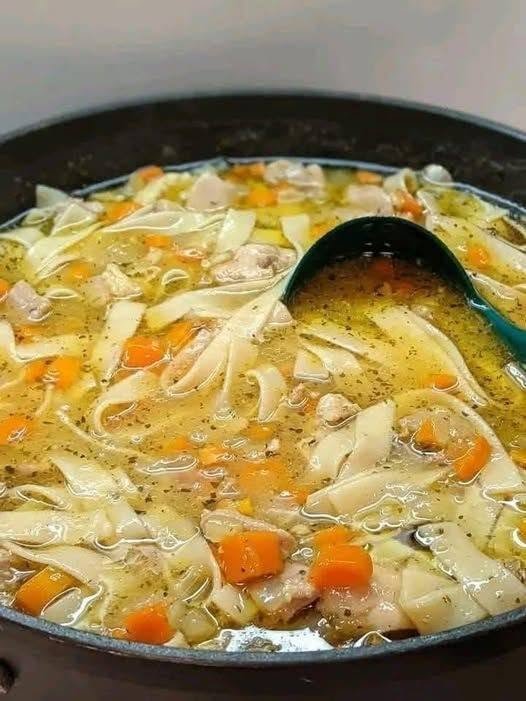
There is something almost magical about a pot of homemade chicken noodle soup simmering on the stove. The smell of tender chicken, sweet carrots, fresh herbs, and savory broth slowly filling the kitchen can turn an ordinary day into a comforting one. Then come the wide egg noodles—soft, hearty, and perfect for catching every drop of that rich broth. One spoonful is warm, satisfying, and familiar in the best possible way.
Homemade Chicken Noodle Soup with Wide Egg Noodles
When the weather turns chilly, someone in the family needs a little extra comfort, or you simply crave a meal that tastes like home, this easy chicken noodle soup is the answer. The secret is not complicated: build flavor slowly, use a well-seasoned broth, and add the noodles at just the right time. Keep reading, because a few simple chef tricks will help you make a bowl that tastes like it has been simmering all day—even when dinner is on the table in about an hour.
Meta description: Cozy homemade chicken noodle soup with tender chicken, wide egg noodles, sweet carrots, and rich seasoned broth. An easy, comforting family recipe perfect for busy weeknights and chilly days.
💛 Why You’ll Love This Recipe
- Easy enough for beginners: No fancy cooking skills are needed. If you can chop vegetables and simmer a pot, you can make this soup.
- Comforting and satisfying: The rich broth, tender chicken, and soft egg noodles make every bowl feel like a warm hug.
- Budget-friendly: Simple ingredients create a generous meal without an expensive grocery list.
- Weeknight-friendly: You can have a homemade pot of soup ready in roughly 55–65 minutes.
- Great for families: The mild flavor is naturally kid-friendly, while adults can add chili flakes, black pepper, or hot sauce.
- Perfect for sick days: Warm broth and tender ingredients make it a soothing choice when you are under the weather.
- Meal-prep friendly: Make a big batch and enjoy easy lunches throughout the week.
- Healthy comfort food: It is nourishing and protein-rich, although the egg noodles make it more filling than a very low-carb soup.
- Full of nostalgia: This is the kind of recipe that reminds you of family kitchens, rainy afternoons, and bowls passed around the dinner table.
🧾 Ingredients You’ll Need
Servings: 6
Prep time: 15 minutes
Cook time: 45–50 minutes
Total time: About 1 hour
Difficulty: Easy
For the soup
- 2 tablespoons (30 ml) olive oil — helps sauté the vegetables and gives the broth a smooth, rounded flavor.
- 1 medium yellow onion, about 150 g (5.3 oz), diced — the savory base of the soup.
- 3 medium carrots, about 240 g (8.5 oz), diced — add natural sweetness, color, and a soft bite.
- 2 celery stalks, about 100 g (3.5 oz), diced — bring a fresh, savory flavor that balances the sweetness of the carrots.
- 3 cloves garlic, about 9 g (0.3 oz), minced — adds warmth and depth.
- 1.5 lb (680 g) boneless, skinless chicken breasts or thighs — chicken thighs are juicier, while breasts are leaner.
- 8 cups (1.9 liters) low-sodium chicken broth — the main flavor carrier.
- 1 cup (240 ml) water — keeps the broth from becoming overly concentrated.
- 2 teaspoons (6 g) kosher salt, divided — season gradually rather than adding it all at once.
- 1 teaspoon (2 g) freshly ground black pepper
- 1 teaspoon (1 g) dried thyme
- 1 teaspoon (1 g) dried parsley
- 1 bay leaf
- 1/2 teaspoon (1 g) dried rosemary, crushed — optional, but excellent for a deeper herb flavor.
- 2 cups (170 g / 6 oz) wide egg noodles — the hearty star of the soup.
- 2 tablespoons (8 g) fresh parsley, chopped — adds freshness at the end.
- 1 tablespoon (15 ml) fresh lemon juice — optional, but a small splash brightens the entire pot.
Smart substitutions
No chicken breast? Use boneless chicken thighs or leftover cooked chicken.
No fresh lemon? A small splash of apple cider vinegar can provide a similar bright finish, though lemon is the better choice.
Need gluten-free soup? Use certified gluten-free noodles instead of regular egg noodles and check that your chicken broth is gluten-free.
Want a dairy-free meal? You are already in luck. This recipe contains no dairy.
Pro tip: Choose low-sodium broth whenever possible. It gives you much more control over the final flavor.
🥗 Nutritional Information Per Serving
Approximate values based on 6 servings:
- Calories: 390
- Protein: 38 g
- Carbohydrates: 37 g
- Fat: 11 g
- Fiber: 4 g
- Sodium: approximately 850–1,000 mg, depending on your broth
- Vitamin A: High, mainly from carrots
- Vitamin C: Moderate, especially with fresh lemon and parsley
- Iron: Moderate
- Potassium: Moderate to high
- B vitamins: Good source from chicken and egg noodles
This soup is not keto because of the egg noodles. It is not vegan because it contains chicken and chicken broth. It can easily be made gluten-free with suitable noodles and broth, and it is naturally dairy-free.
Is chicken noodle soup weight-loss friendly? It can be. The chicken provides plenty of protein, while carrots and celery add volume and fiber. For a lighter version, reduce the noodles slightly, use chicken breast, and increase the vegetables.
🍳 Kitchen Tools Needed
You do not need a kitchen full of gadgets for this recipe.
Basic tools:
- Large Dutch oven or heavy-bottomed soup pot
- Cutting board
- Sharp chef’s knife
- Wooden spoon
- Measuring cups and spoons
- Ladle
- Tongs
- Large spoon for skimming
Optional upgrades:
- Instant-read thermometer for checking chicken
- Fine-mesh strainer for an extra-clear broth
- Food scale for precise measurements
No Dutch oven? A large stainless-steel or nonstick pot works perfectly. The important thing is to use a pot large enough to comfortably hold the broth, chicken, vegetables, and noodles.
👩🍳 How to Make Homemade Chicken Noodle Soup
1. Prepare everything before you start
Dice the onion, carrots, and celery into small, fairly even pieces. Mince the garlic. Chop the parsley and measure your seasonings.
Pat the chicken dry with paper towels.
Having everything ready makes the cooking process much smoother, especially once the soup starts simmering.
Pro tip: Keep your vegetable pieces close to the same size. They will cook evenly and look much prettier in the finished bowl.
2. Sauté the vegetables
Place a large soup pot or Dutch oven over medium heat. Add the olive oil and warm it for about 30 seconds.
Add the diced onion, carrots, and celery. Cook for 6–8 minutes, stirring every minute or two.
You are looking for onions that become soft and slightly translucent. The carrots should begin to soften, but they should still hold their shape.
Add the minced garlic and cook for another 30–60 seconds.
The kitchen should now smell deeply savory and sweet.
What should NOT happen: Do not brown or burn the garlic. Burnt garlic can make the entire soup taste bitter.
3. Season the chicken
Season the chicken with about 1 teaspoon of the salt, the black pepper, thyme, parsley, and crushed rosemary if using.
Place the chicken into the pot with the vegetables.
Cook for approximately 2–3 minutes per side if using whole chicken pieces. You do not need to cook the chicken completely at this stage. You are simply giving it a little color and helping the seasonings stick.
Chef tip: Chicken thighs are especially forgiving here. If you prefer very lean meat, chicken breast works beautifully too.
4. Add the broth and herbs
Pour in the 8 cups of chicken broth and 1 cup of water.
Add the bay leaf and remaining salt.
Increase the heat to medium-high and bring the soup to a gentle boil. Once bubbling, immediately reduce the heat to low or medium-low.
The soup should settle into a gentle simmer.
Cover the pot partially and cook for 20–25 minutes.
A gentle simmer is important. You want small bubbles rising steadily—not an aggressive boil.
What should NOT happen: Do not let the soup boil violently. Hard boiling can make chicken breast tough and cause the broth to become cloudy.
5. Check the chicken
After about 20 minutes, check the thickest part of the chicken with an instant-read thermometer. It should reach 165°F (74°C).
Remove the cooked chicken from the pot and place it on a clean plate or cutting board.
Let it rest for 5 minutes.
Then shred or dice the chicken into bite-sized pieces.
Pro tip: Do not cut the chicken into tiny pieces. Larger tender chunks make the soup feel more generous and satisfying.
6. Add the wide egg noodles
Bring the broth back to a gentle simmer.
Add 2 cups (170 g) of wide egg noodles.
Cook according to the package directions, usually around 6–9 minutes, stirring occasionally so the noodles do not stick together.
Taste the broth.
Does it need more salt? Add a small pinch. Does it taste a little flat? Add freshly ground black pepper or a splash of lemon juice.
Important: Do not overcook the noodles. They continue softening as they sit in the hot broth.
7. Return the chicken to the pot
Once the noodles are almost tender, return the shredded or diced chicken to the soup.
Simmer for another 2–3 minutes.
Remove the bay leaf.
Turn off the heat and stir in the fresh parsley and 1 tablespoon of lemon juice, if using.
That little squeeze of lemon may seem insignificant, but it can completely wake up a broth that tastes heavy or dull.
8. Taste and finish
Give the soup one final taste.
You want a balanced bowl: savory broth, tender chicken, naturally sweet carrots, fresh herbs, and noodles that are soft but not mushy.
If the flavor needs more depth, add a little black pepper or a small pinch of salt.
If it tastes too salty, add a little water or unsalted broth.
If it tastes flat rather than salty, try lemon juice first.
Chef’s secret: Acidity does not necessarily make soup taste sour. Used in a tiny amount, it helps the other flavors taste brighter.
9. Serve it hot
Ladle the soup into warm bowls. Make sure every serving gets plenty of chicken, carrots, celery, and those beautiful wide noodles.
Finish with fresh parsley and a crack of black pepper.
Then serve immediately.
That first spoonful should be steamy, savory, and comforting, with the noodles slipping easily from the spoon and the chicken practically falling apart.
👨🍳 Chef-Level Tips & Mistakes to Avoid
Don’t rush the vegetable base
Those first 6–8 minutes matter. Softening the onion, carrot, and celery before adding the broth creates a much deeper flavor than simply throwing everything into the pot.
Don’t drown the soup in seasoning
Season gradually. Different chicken broths contain different amounts of sodium, so adding a large amount of salt at the beginning can leave you with an overly salty soup.
Use chicken thighs for maximum tenderness
Chicken breast is excellent for a lighter soup, but thighs have more fat and connective tissue, which makes them especially juicy and flavorful.
Keep the noodles under control
If you know you will have leftovers, consider cooking the noodles separately and adding them to individual bowls.
Why? Noodles continue absorbing broth in the refrigerator. By the next day, you may end up with delicious chicken noodle stew instead of soup.
Rescue bland soup
If your soup tastes boring, do not immediately add more salt.
Try this order:
- Taste for salt.
- Add black pepper.
- Add a little lemon juice.
- Add fresh parsley.
- If needed, add a tiny amount of garlic powder or dried herbs.
Rescue salty soup
Add more unsalted broth or water. You can also increase the amount of vegetables or cooked chicken to spread the salt across a larger volume of food.
Pro Tip: A small amount of fresh lemon juice is one of the easiest ways to make homemade soup taste fresher and more polished.
🌶️ Variations & Customizations
Spicy Chicken Noodle Soup
Add 1/2–1 teaspoon red pepper flakes with the herbs. For serious heat, stir in sliced jalapeños or a spoonful of chili sauce before serving.
Healthy Low-Calorie Version
Use skinless chicken breast, increase the carrots and celery, and reduce the noodles to 1 cup (85 g). You will still get plenty of comfort with fewer calories and carbohydrates.
Kids-Friendly Version
Keep the seasoning mild. Cut the carrots into tiny cubes and use small pasta shapes if wide noodles are difficult for younger children to eat. Let kids sprinkle their own parsley or choose their favorite noodle shape.
Restaurant-Style Version
Brown the chicken lightly before simmering, use homemade or high-quality broth, add a little fresh thyme, and finish with lemon juice and fresh parsley.
For an especially rich broth, simmer with a small amount of chicken stock concentrate—but taste carefully because it can add a lot of sodium.
Asian-Inspired Fusion
Add grated ginger, a splash of low-sodium soy sauce or tamari, sliced mushrooms, and green onions. Swap the egg noodles for ramen-style or rice noodles.
Creamy Chicken Noodle Soup
For a richer twist, stir in 1/2 cup (120 ml) of half-and-half near the end. Keep the heat low and avoid boiling after adding dairy.
🧊 Storage & Reheating Guide
Refrigerator
Cool the soup promptly and transfer it to airtight containers.
Store in the refrigerator for 3–4 days.
If possible, keep noodles separate from the broth for the best texture.
Freezer
Chicken soup freezes well, but egg noodles can become soft after thawing.
For the best results, freeze the chicken, vegetables, and broth without noodles. Cook fresh noodles when you reheat the soup.
Freeze in airtight, freezer-safe containers for up to 3 months for best quality.
Leave some space at the top of the container because liquid expands as it freezes.
Stovetop Reheating
Pour the soup into a saucepan and heat over medium-low heat until steaming hot, stirring occasionally.
If the broth has thickened, add a splash of water or unsalted broth.
Microwave Reheating
Place a serving in a microwave-safe bowl. Cover loosely and heat in 60–90 second intervals, stirring between each interval.
Be careful when removing the bowl—the broth can become extremely hot.
Oven
The oven is not the best choice for a single bowl of soup. If reheating a large oven-safe pot, cover it and warm at about 325°F (165°C) until hot throughout.
🍽️ Serving Suggestions
Chicken noodle soup can easily stand alone as a complete meal, but a few simple sides can make it feel extra special.
Bread
Serve with warm crusty bread, garlic toast, dinner rolls, or homemade biscuits. There is something irresistible about dipping a piece of warm bread into the savory broth.
Salad
A crisp green salad with cucumber, lettuce, tomatoes, and a bright lemon dressing adds freshness and crunch.
Crackers
For a nostalgic pairing, serve the soup with buttery crackers or whole-grain crackers.
Drinks
Try sparkling water with lemon, unsweetened iced tea, or a warm cup of herbal tea.
Garnishes
A beautiful bowl does not need much.
Try:
- Fresh parsley
- Fresh thyme leaves
- Cracked black pepper
- A tiny drizzle of olive oil
- Thinly sliced green onions
- A squeeze of lemon
For an aesthetic presentation, use wide, shallow bowls. Place several noodles and chicken pieces near the top rather than hiding everything beneath the broth. Finish with bright green parsley and a few thin carrot slices.
💡 Did You Know?
Chicken noodle soup has earned a reputation as classic comfort food partly because it combines several satisfying elements in one bowl: warm liquid, protein, carbohydrates, vegetables, and aromatic herbs.
And there is a practical reason homemade soup often tastes better the next day: resting gives the ingredients more time to mingle. The broth picks up flavor from the chicken, vegetables, and herbs.
That said, the noodles are the exception. They become softer as they absorb liquid, which is why cooking them separately is the best meal-prep trick.
❓ Frequently Asked Questions
1. Can I use leftover cooked chicken?
Absolutely. Leftover roasted or rotisserie chicken works wonderfully. Skip the raw-chicken cooking step and add about 3 cups (420 g / 15 oz) shredded cooked chicken during the final 5–10 minutes of cooking.
2. Can I make chicken noodle soup without celery?
Yes. Celery adds a classic savory flavor, but it is not essential. You can replace it with extra carrots, diced zucchini, mushrooms, or a little more onion.
3. How do I keep egg noodles from getting mushy?
The best method is to cook the noodles separately and add them to each bowl. If cooking them directly in the soup, add them toward the end and avoid overcooking.
4. Can I make this soup ahead of time?
Yes. In fact, the broth often tastes even better after resting. For the best texture, prepare the soup without noodles, refrigerate it, and cook fresh noodles when you are ready to serve.
5. Why does my chicken noodle soup taste bland?
Usually, the problem is not a lack of ingredients but a lack of balance. Check the salt first, then try black pepper, fresh herbs, and a small splash of lemon juice. Also make sure your vegetables had enough time to soften and release their flavor.
6. Can I use chicken thighs instead of chicken breast?
Definitely. Chicken thighs are one of the best choices for soup because they stay tender and add extra richness. Use boneless, skinless thighs for easy preparation.
7. Is homemade chicken noodle soup gluten-free?
Traditional wide egg noodles usually contain wheat, so this recipe is not automatically gluten-free. To make it gluten-free, use certified gluten-free noodles and confirm that your chicken broth is also labeled gluten-free.
❤️ Final Thoughts
There are meals that impress people, and then there are meals that comfort them.
This homemade chicken noodle soup belongs firmly in the second group.
It is the soup you make when rain taps against the windows. The soup you bring to someone who needs a little extra care. The soup that makes a kitchen smell wonderful before anyone has even sat down to eat.
And the best part? You do not need a complicated recipe or expensive ingredients to create that feeling.
Grab a pot, chop a few vegetables, add tender chicken and wide egg noodles, and let that beautiful seasoned broth do its work.
Now it is your turn. Make a pot of this cozy homemade chicken noodle soup and tell me how it turned out in the comments. Did you use chicken breast or thighs? Did you make it spicy? Share your bowl with friends and family, and if you post it on social media, tag your fellow soup lovers so they can enjoy a little comfort too.
From my kitchen to yours, I hope every spoonful brings you warmth, comfort, and a reason to slow down for a few delicious minutes.